
Reviewed · CHRISTIAN & HOLY LAND TOURS
In The Footsteps of Jesus Day Tour – Dguide Self Guiding App
The most appealing part of this four-hour Jerusalem walk is its route. You begin above the Old City on the Mount of Olives, follow the traditional Palm Sunday Road, pass Gethsemane and the Via Dolorosa, then finish at the Garden Tomb. That gives the day a clear story, not just a string of stops.
I like the freedom of the DGuide app. You can pause, replay information, linger at a church, or step off the route and return later. I also like the small extras along the way, including the view from the Austrian Hospice and a quiet stop among ancient olive trees.
The trade-off is that this is not a live walking tour. If you want a guide pointing out exact stones, answering questions, and managing every turn, the app may feel thin. The route also requires stairs and steady walking, and the Garden Tomb is closed on Sunday and Monday.
Key points to know before you go
- Start high above Jerusalem: The route begins at Seven Arches on the Mount of Olives, with a sweeping view toward the Old City.
- Follow a biblical route: You walk the Palm Sunday Road, visit Gethsemane, then continue through the Old City toward the Via Dolorosa.
- Use your time your way: The app lets you follow the suggested path or leave it briefly and return to the tour.
- Budget for small extras: Bethesda charges 5 shekels, and the Austrian Hospice rooftop costs another 5 shekels.
- Save the right day for the finish: The Garden Tomb is closed Sunday and Monday, so Tuesday through Saturday works best.
- Expect a physical half-day: Stairs, slopes, and city streets make moderate fitness necessary.
Why this route works for understanding Jerusalem
Jerusalem can feel like several cities pressed together. The Mount of Olives gives you the broad view first. Then the route brings you downhill through churches, a valley, an ancient gate, and crowded market lanes before ending in a peaceful garden.
That order matters. You can see the Old City from above, then move into the places linked with Jesus’ final days. The route also shows you how religious memory and later architecture overlap. Some sites are traditional locations rather than proven historical points, and the experience is strongest when you keep that distinction in mind.
Uri Goldflam created the content for the app. He has 30 years of experience as a guide and educator and founded Travel Trailer Israel. The app is free, but your purchase supplies a coupon code for this particular tour.
At $7 per person, the price is modest for a self-guided route that covers most of a half-day. You still pay small entrance fees at the Pools of Bethesda and the Austrian Hospice rooftop, and any food or drink at the hospice costs extra. Even with those additions, this is inexpensive compared with a private guide.
The value depends on what you need. I see it as a useful companion for an independent visit, especially if you want structure without committing to a group. I would not choose it as your only source of information if you want detailed archaeological explanation or frequent personal guidance.
Other Holy Land itineraries from Jerusalem:
- Travel To Bethlehem, Jericho & Jordan River – Group Guided Tour from Jerusalem
★ 4.5 · 128 reviews - From Jerusalem: Jordan River, Nazareth & Sea of Galilee Tour
★ 4.3 · 86 reviews - Bethlehem, Jericho & Jordan River Tour from Jerusalem
★ 4.0 · 78 reviews
Mount of Olives: begin with the view
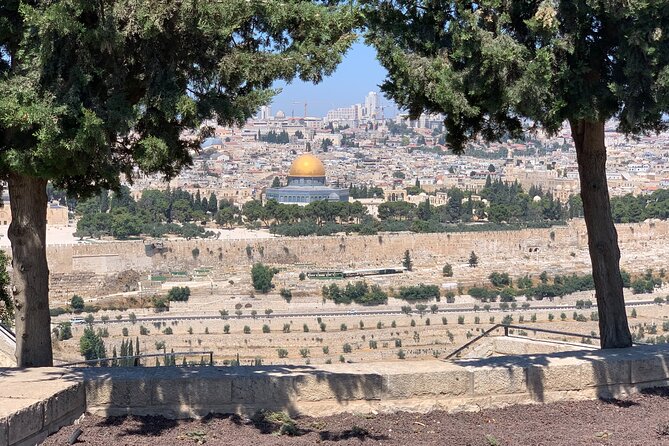
The starting point is Seven Arches on the Mount of Olives. This is the right place to get your bearings. From the observation area, Jerusalem’s Old City spreads out below, with the historic walls and major religious landmarks forming the main view.
The app begins with an introduction to Jerusalem before leading you down the Palm Sunday Road. You spend about 15 minutes here, and there is no admission fee.
The observation deck can be lively, with peddlers and often a camel available for rides or photographs. Treat this as a place to stay alert with your belongings and your money. You do not need to buy anything to enjoy the view.
The main drawback is the exposed setting. Take your time before starting downhill, but do not linger so long that the rest of the route becomes rushed. The total schedule allows about four hours, and several later stops reward a slower pace.
Dominus Flevit and the view over the Old City
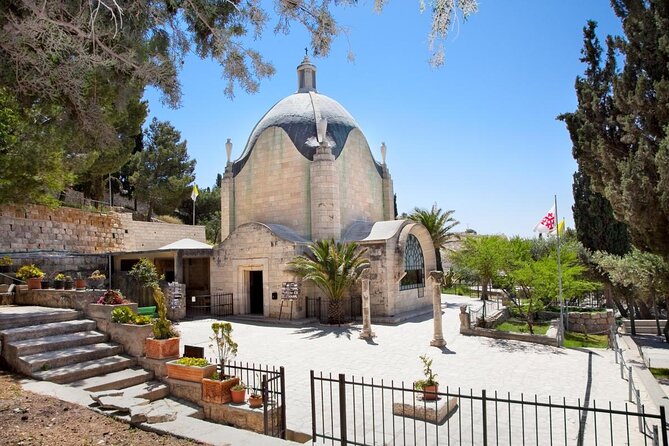
The route continues to Dominus Flevit, a small church shaped like a teardrop. It is traditionally linked with Jesus weeping over Jerusalem and predicting the city’s destruction.
You have about 20 minutes here. The church itself is worth a quiet look, especially the window that frames the Old City and the Church of the Holy Sepulcher. There is also an adjacent viewing area where you can pause in silence.
I like this stop because it combines religious meaning with a simple architectural idea. The teardrop shape makes the story visible without a long explanation. The view from inside also gives you a different frame of Jerusalem than the wide panorama at the Mount of Olives.
Keep in mind that the route is already heading downhill. Comfortable shoes matter, and you should expect more walking rather than a series of quick vehicle stops.
Gethsemane: a quiet break among old olive trees
The Palm Sunday Road winds toward the Kidron Valley and the Garden of Gethsemane. The route takes about 30 minutes here, with no admission fee listed.
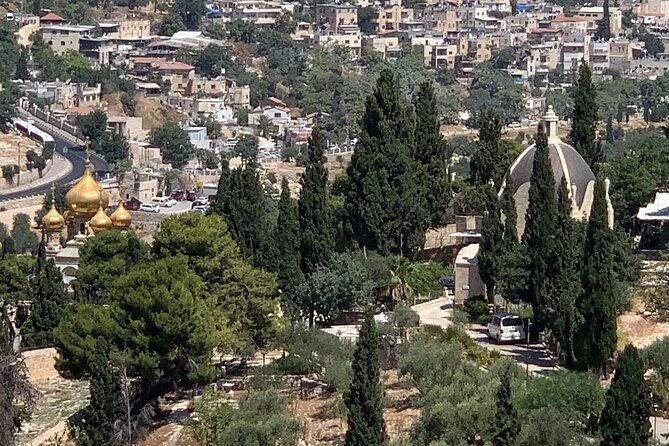
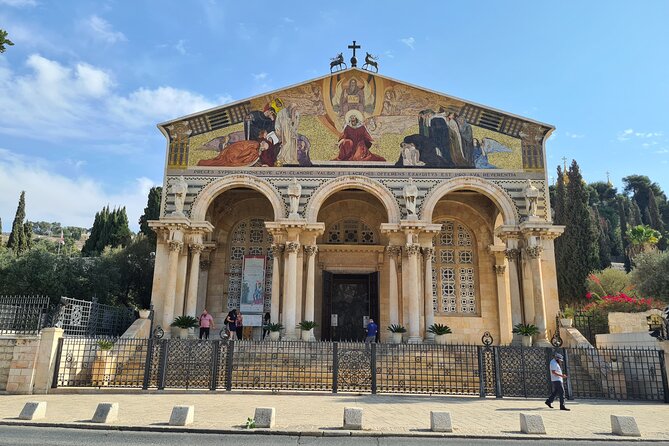
The setting changes quickly. The city road gives way to a quieter olive garden, and the Church of All Nations, also called the Church of the Agony, occupies the traditional site. The garden is associated with Jesus’ prayer on the night of his arrest.
This is one of the best places to slow down. You can sit, pray, or simply let the app’s information settle before moving on. The olive trees are described as hundreds or even thousands of years old, though their exact ages are difficult to establish. Either way, their age and shape give the garden a strong sense of time.
The Church of All Nations adds another layer. You get a traditional religious site, a functioning place of worship, and a garden that invites quiet reflection. I would not rush through this stop just to stay on schedule.
Same base, a different sort of day:
- From Jerusalem: Masada & Dead Sea Full Day Tour with Pick Up
★ 4.5 · 815 reviews - Masada and the Dead Sea Day Trip from Jerusalem
★ 4.5 · 757 reviews - From Jerusalem: Nazareth and Sea of Galilee Tour
★ 4.5 · 588 reviews - Nazareth and the Sea of Galilee Day Trip from Jerusalem
★ 4.5 · 446 reviews
The Tomb of the Virgin Mary in the Kidron Valley
From Gethsemane, the route reaches the Tomb of the Virgin Mary. Allow about 10 minutes. The tomb is below street level, reached by a broad stairway, and is a striking example of Crusader-period construction.
The remains are part of what was once a much larger basilica. On the right side of the stairs, you can see the tomb of Queen Melisende of Jerusalem, daughter of King Baldwin II.
This is a short stop, but it adds useful historical context. The route is not only about the Gospel stories. It also shows how later rulers, builders, and religious communities shaped Jerusalem’s sacred sites.
The stairs are the practical concern. If you have trouble with steps or uneven walking, this part deserves extra attention. The tour requires a moderate level of fitness, and the Tomb of Mary is one reason why.
Pools of Bethesda and the acoustics of St. Anne’s
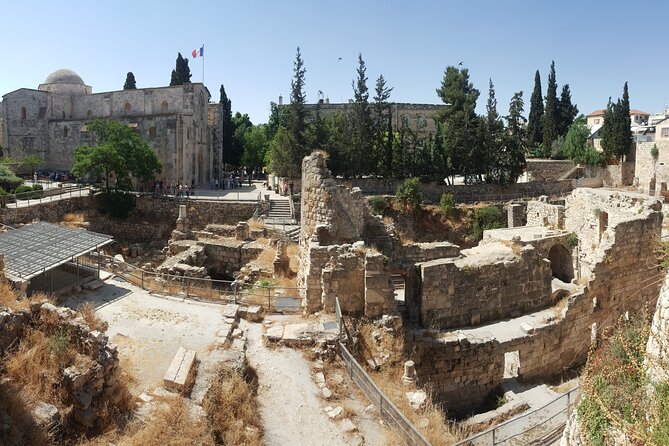
The Pools of Bethesda are connected with the story in John 5, in which Jesus heals a man who has been unable to walk for 38 years. You have about 40 minutes here.
The site is beside the Church of St. Anne, a neoclassical church managed by the French White Fathers. St. Anne is known for its remarkable acoustics, so it is worth taking a moment to listen inside, even if no service or singing is taking place.
Admission to this stop is not included. The stated entrance fee is 5 shekels per person. That is a small extra, but you should carry some local cash or confirm current payment arrangements before setting out.
This is one place where the app’s self-guided format can be useful. You can spend more time examining the remains or less time if your main interest is the route connected with Jesus. A live guide might add more detail about the archaeology, but the app lets you set the pace.
The Via Dolorosa and the Austrian Hospice
From Bethesda, you begin walking along the Via Dolorosa, also known as the Way of the Suffering or the Passion of Christ. The stations are marked by round bronze plates, and the route passes through busy market streets.
The Austrian Hospice is scheduled for about 45 minutes. Large wooden doors open onto a small pocket of European-style hospitality. The highlight is the rooftop view, which costs 5 shekels through a turnstile.
There is also a café serving coffee and the hospice’s well-known apple strudel. The food is not included, but this is a sensible place to rest. By this point, you have already walked downhill and through several major sites. A short break can make the final stretch much more pleasant.
I like the contrast here. The Via Dolorosa is narrow and energetic, while the hospice offers a calmer pause and a high view over the city. The stop also reminds you that Jerusalem’s religious routes have long passed through ordinary urban life, with shops, homes, food, and street noise all close together.
Do not confuse a stop at the Austrian Hospice with a fully guided explanation of every station on the Via Dolorosa. The app gives you a route and commentary, but you will need to pay attention to the bronze markers and the directions as you walk.
Damascus Gate and the final approach
After the hospice, follow the market alley slightly uphill until you reach Damascus Gate. Allow around 20 minutes for this part.
The present gate belongs to the Ottoman construction of Jerusalem’s walls from about 1536. Below it are remains of Roman-period gates. The contrast is typical of Jerusalem: several periods occupy the same small patch of ground.
From Damascus Gate, the road leads toward the Garden Tomb. This is a useful point to pause and check your phone, water, and remaining time. The route has covered a lot of ground, and you do not want to arrive at the final stop just before closing.
The gate is also a reminder that this is an urban walk, not a sealed religious park. Streets can be noisy and crowded, and the route passes through market areas. Keep the app accessible, but stay aware of your surroundings rather than walking with your eyes fixed on the screen.
The Garden Tomb: a quiet ending
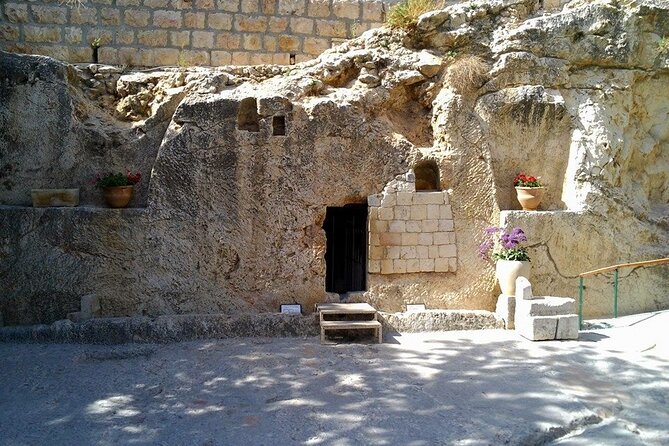
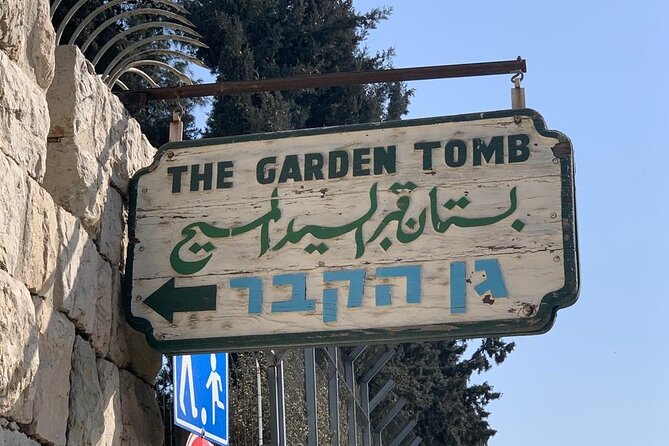
The final stop is the Garden Tomb, with about an hour suggested. It is one possible site for Jesus’ crucifixion, burial, and resurrection. The location was identified in the late 19th century and is owned and managed by the Protestant Garden Tomb Association, a charitable trust based in the United Kingdom.
The garden includes quiet corners and chapels for prayer and communion. You can also see the skull caves associated with the hill of Golgotha and enter the empty tomb.
The wording one possible site is important. Christian traditions also associate the Church of the Holy Sepulcher with the crucifixion and resurrection. The Garden Tomb is especially appealing if you want an open, peaceful setting for reflection, but you should understand that its identification is debated.
Entrance is free. Group visits require a reservation, with the listed phone number 02-539-8100. The Garden Tomb is closed on Sunday and Monday, so plan this tour for Tuesday through Saturday if you want to complete the route in one day.
If you visit on Sunday or Monday, you can still follow the rest of the route and return to the Garden Tomb later. That works only if you have enough time in Jerusalem for a second visit.
Using the DGuide app well
The free DGuide app is the main tool for this experience. After purchase, you receive a coupon code in the Before You Go section of the confirmation email. Use that code to access the In the Footsteps of Jesus tour.
The app lets you follow the suggested route, pause for a break, and leave the path temporarily. You can then return to the guided route. That flexibility is useful in Jerusalem, where a site may take longer than expected or a market lane may tempt you into a short detour.
The main weakness is the limit of a phone-based guide. You cannot ask it a question or ask for a clearer explanation of a confusing turn. Some people may also want more detail about exactly where a biblical event is thought to have happened. If that matters to you, supplement the app with a guidebook or a live tour on another day.
I would download and activate the app before reaching the starting point. The supplied information says the confirmation arrives at booking, so check the code before you set off. A charged phone is essential.
Who should book this Jerusalem walk?
I would choose this tour if you want a low-cost way to connect several major Christian sites without joining a group. It suits independent visitors who like to stop for photographs, prayer, food, or extra time at a church.
It also works well for a pair of people. The listed maximum is two travelers, which fits the personal nature of a self-guided walk even though no live guide accompanies you. You can move at your own speed instead of matching a large group.
I would think twice if you have limited mobility. The route includes slopes, stairs, and several hours on foot. It may also disappoint you if you expect a detailed, exact account of every location or a guide who handles navigation.
The cancellation terms are straightforward: cancel at least 24 hours before the local start time for a full refund. Changes or cancellations made later are not accepted for a refund.
Should you book it?
Book this tour if you value freedom, low cost, and a strong walking route more than personal attention. The sequence from the Mount of Olives to the Garden Tomb makes sense, and the stops include several places you might otherwise miss, such as the Tomb of the Virgin Mary and the Austrian Hospice rooftop.
Skip it if you want a live expert beside you or if you cannot manage stairs and several hours of walking. Also check your calendar carefully. The Garden Tomb closure on Sunday and Monday is the one detail that can change the whole plan.
For $7, this is a useful Jerusalem orientation and a thoughtful religious walk, provided you treat the app as a guide to the city rather than a replacement for one.
FAQ
How long does the In the Footsteps of Jesus tour take?
The tour takes approximately four hours. The suggested time includes eight stops, from the Mount of Olives to the Garden Tomb.
Where does the tour start?
The tour starts at Seven Arches on the Mount of Olives in Jerusalem.
Where does the tour end?
The tour ends at the Garden Tomb on Conrad Schick Street in Jerusalem. From there, you can walk back toward the Old City or uphill toward hotels and restaurants in the New City.
Is the DGuide app included?
The DGuide app itself is free. After booking, you receive a coupon code that gives you access to the In the Footsteps of Jesus tour.
Is the Garden Tomb open every day?
No. The Garden Tomb is closed to visitors on Sunday and Monday. You can complete the rest of the route on those days and return to the Garden Tomb from Tuesday through Saturday.
Are entrance fees included?
Most stops have no admission fee. The Pools of Bethesda charges 5 shekels per person, and the Austrian Hospice rooftop requires 5 shekels. Food and drinks at the hospice are not included.
How physically demanding is the walk?
You need a moderate level of fitness. The route includes walking and stairs, including the descent to the Tomb of the Virgin Mary and the walk through Jerusalem’s streets.
Can I cancel for a refund?
Yes. You can receive a full refund if you cancel at least 24 hours before the experience start time, based on local time. Cancellations or changes made less than 24 hours in advance are not accepted for a refund.
More Self-Guided Tours in Jerusalem
- Classic Jerusalem Old City Tour – Dguide Self Guiding App
★ 5.0 · 9 reviews - From Tel Aviv: Dead Sea Self-Guided Chill-Out Day Trip
★ 4.2 · 64 reviews
More Christian sites around Jerusalem
- Jerusalem Walking Tour: In the Footsteps of Jesus
★ 4.5 · 67 reviews - Full Day Private Christian Tour in Jerusalem with Tour Guide
★ 5.0 · 28 reviews - Full Day Jerusalem Tour: In Jesus’ Steps
★ 5.0 · 22 reviews - Bethlehem, Dead Sea, Jericho and Jordan River Private Tour From Jerusalem/TLV
★ 5.0 · 20 reviews
Just added in Jerusalem
- jerusalem classic tour★ 5.0 · 3 reviews
- kosher Israel wine tour★ 5.0 · 4 reviews
- Tour of Jerusalem & Dead sea private tour★ 5.0 · 4 reviews
- West Bank Tour from Jerusalem and Tel-Aviv – Bethlehem & Jericho★ 5.0 · 6 reviews
- full day tour Jerusalem price per van up to 6 people★ 5.0 · 8 reviews
- Magical Walking Tour in Old City of Jerusalem★ 5.0 · 27 reviews
- Tour of Masada-Dead Sea and Qumran from Jerusalem★ 3.5 · 11 reviews
- Full Day Private Christian Tour in Jerusalem with Tour Guide★ 5.0 · 28 reviews
Christian & Holy Land Tours, compared.

Travel To Bethlehem, Jericho & Jordan River – Group Guided Tour from Jerusalem
Read our review →

From Tel Aviv/Jerusalem: Galilee, Nazareth, Jordan River
Read our review →
Bethlehem, Jericho & Jordan River Tour from Jerusalem
Read our review →
Jerusalem Walking Tour: In the Footsteps of Jesus
Read our review →
Biblical Highlights of the Galilee Tour From Tel Aviv
Read our review →
Bethlehem, Jericho & Jordan River Tour from Tel Aviv
Read our review →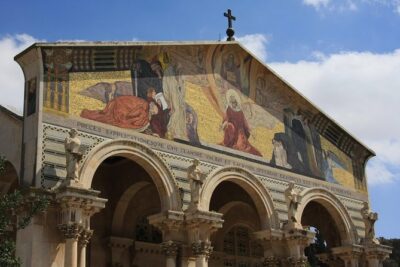
Jerusalem Tour from Tel Aviv: In the Footsteps of Jesus
Read our review →Browse the lists this tour appears in