
Reviewed · DEAD SEA TOURS
Jerusalem & Dead Sea Private Tour – Visit Holy Jerusalem & Dead Sea Relaxation
Jerusalem and the Dead Sea make an ambitious pairing, but that is exactly the point of this private full-day tour. You begin with wide views from the Mount of Olives, work through Jerusalem’s most important Christian and Jewish sites, then head east to float in the mineral-heavy Dead Sea.
I like the private vehicle and guide, which let your group keep a sensible pace instead of following a large coach through narrow Old City lanes. I also like the mix of sacred places and simple relaxation: the Western Wall and Church of the Holy Sepulchre require attention and respect, while the Dead Sea gives you time to sit back.
The tradeoff is time. Jerusalem alone can fill a day, and this schedule asks you to cover several major sites before driving to the Dead Sea. The listed duration varies between about 8 to 11 hours and a 12-hour day, so confirm the exact plan before booking.
Key points to know before booking
- Mount of Olives views begin the day: You get a useful visual introduction to Jerusalem before walking into the Old City.
- Several major holy sites are included: The route covers Gethsemane, Mount Zion, the Via Dolorosa, the Holy Sepulchre, the Cardo, and the Western Wall.
- The private format matters: Only your group takes part, with hotel pickup, drop-off, and an air-conditioned vehicle.
- The Dead Sea is the relaxing finale: You have about two hours at a resort area for floating and optional mud bathing.
- Guide quality is a major part of the experience: Enrique, Saul, Shaul, and Benjamin are praised for history, humor, punctuality, and careful time management.
- Pack for both worship and water: Comfortable shoes, sun protection, modest clothing, a head covering for holy sites, and a towel are all useful.
Why this Jerusalem and Dead Sea combination works
This tour is built for a common Israel travel problem: you have limited time, but you do not want to choose between Jerusalem and the Dead Sea. In one long day, you see the city from above, walk its oldest quarters, and end beside one of the world’s most unusual bodies of water.
The private setup makes the schedule more workable. Your guide can explain what you are seeing as you move through the city, then adjust the pace to your group. That is particularly useful in Jerusalem, where streets are crowded, religious observances can affect access, and a short walk may contain centuries of history.
You should still think of this as an overview, not a slow study of every site. The city portion includes many stops, while the Dead Sea requires driving time through the Judean hills. If you want long visits inside churches, extended shopping, or a relaxed beach afternoon, this itinerary will feel tight.
Other Dead Sea days people book from Tel Aviv:
- From Tel Aviv: Masada & Dead Sea Full Day Tour with Pick Up
★ 4.5 · 1,496 reviews - Masada and the Dead Sea Day Trip from Tel Aviv
★ 4.5 · 1,014 reviews - Tel Aviv: Jerusalem, Bethlehem & Dead Sea
★ 4.0 · 881 reviews
Starting above Jerusalem at the Mount of Olives
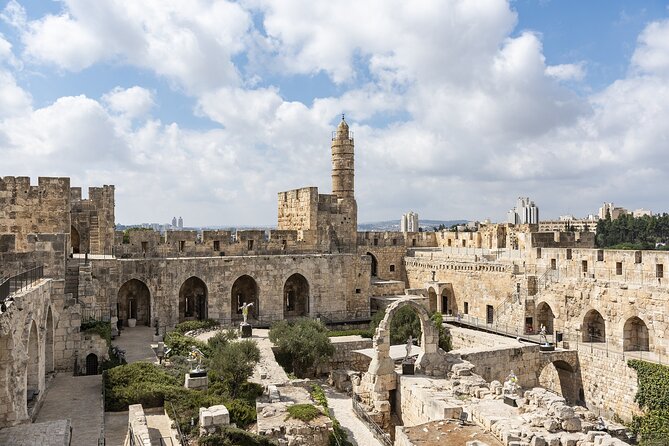
The Mount of Olives is a smart first stop because it gives you a clear view of Jerusalem before you enter its tight lanes. From here, the Old City and Temple Mount area sit below, while the Judean Desert stretches eastward.
Your guide can place the city’s religious geography in context. The Mount of Olives is important in Jewish and Christian tradition, and it appears often in the New Testament. The stop lasts about 30 minutes, enough for the panorama and an introduction rather than a long visit.
Bring a hat and sunglasses. Morning light can be strong, and there is little reason to begin the day uncomfortable. This is also a good place to ask your guide how the different quarters and holy sites fit together.
Gethsemane and the meaning of a small garden
At the foot of the Mount of Olives, Gethsemane offers a more intimate stop. The garden is associated with Jesus’ prayer and arrest before the crucifixion, making it one of Christianity’s most important locations in Jerusalem.
The visit lasts about 30 minutes. Do not expect a large open park or a long walking route. Several small olive groves connected with the biblical site sit beside church property, so the experience is focused and reflective.
This stop works best if you take a moment to look closely at the old olive trees and listen to the explanation rather than rushing for photographs. Modest clothing is appropriate here, as it is throughout the sacred sites on this tour.
Mount Zion, King David’s Tomb, and the Cenacle
The Mount Zion stop brings together Jewish and Christian traditions in one compact visit. You see the traditional Tomb of King David and the Room of the Last Supper, also called the Cenacle.
The tomb is an important Jewish prayer site, though the exact identification is not certain. That distinction matters. Jerusalem is full of places where religious tradition, archaeology, and history overlap, and a good guide should explain those layers without presenting tradition as settled fact.
The Cenacle is traditionally linked with the Last Supper. The room is simple, but its importance comes from the events associated with it. You have about an hour here, which gives your guide time to explain the setting and the different traditions connected with Mount Zion.
Guides such as Enrique and Saul are praised for explaining both ancient and current Israeli history in a clear, engaging way. That skill is especially useful at Mount Zion, where a short visit can otherwise feel like a list of names.
Same base, a different sort of day:
- From Tel Aviv: Jerusalem and Bethlehem Guided Day Trip
★ 4.3 · 1,316 reviews - From Tel Aviv: Jerusalem Old & New City Bus Tour
★ 4.2 · 824 reviews - From Tel Aviv: Guided Day Trip to Nazareth & Sea of Galilee
★ 4.4 · 824 reviews - From Tel Aviv: Caesarea, Haifa and Akko Day Trip
★ 4.4 · 744 reviews
Walking the Via Dolorosa to the Holy Sepulchre
The Christian Quarter is the heart of the walking section. You follow parts of the Via Dolorosa, the traditional route associated with Jesus’ final journey to crucifixion, and continue to the Church of the Holy Sepulchre.
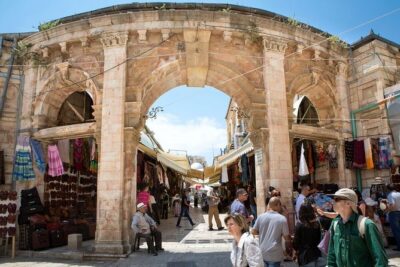
Allow about two hours for this part of the itinerary. The route passes through narrow stone lanes and active parts of the Old City. You may encounter religious processions, worshippers, small shops, and uneven walking surfaces. Comfortable shoes are more important here than stylish ones.
The Via Dolorosa is not a museum display. It is a living religious route used for prayer and ritual. That can make the visit powerful, but it can also make movement slow. Your guide’s job is to keep the group oriented while giving you enough time to understand the stations and surrounding quarter.
The Church of the Holy Sepulchre is especially important to Christians because tradition places the crucifixion, burial, and resurrection of Jesus here. Inside, the setting can feel crowded and visually complex, with different Christian communities sharing responsibility for the church.
You may not get a quiet, private moment at every location. Go in expecting a working place of worship, not a polished attraction. Dress modestly and follow instructions from your guide and the church staff.
The Cardo and Jerusalem’s Roman street plan
After the Christian Quarter, the route continues through the Armenian and Jewish quarters to the restored Cardo. This ancient Roman and Byzantine street helps you picture Jerusalem as a major city long before the modern state.
The exposed section in the Jewish Quarter dates in part to the reign of Emperor Justinian, from 527 to 565. It once helped connect important churches in Byzantine Jerusalem, including the Holy Sepulchre and the Nea Church.
The Cardo is a useful change of pace after the intensity of the holy sites. You are looking at columns, paving, and the remains of an urban street system, so this stop gives the day more historical range. It lasts about 30 minutes.
The Western Wall and the Jewish Quarter
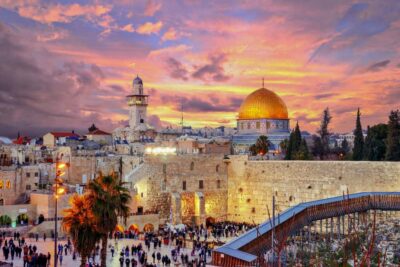
The Western Wall, also called the Kotel, is the final major Jerusalem stop. It is part of a much longer ancient retaining wall near the Temple Mount and is the holiest place where Jews are permitted to pray, given current access restrictions to the Temple Mount.
Your guide will explain the difference between the wall itself, the Temple Mount, and the Foundation Stone, which lies beyond it. That context helps prevent a common mistake: treating the Western Wall as an isolated monument rather than part of a much larger sacred complex.
You have about 30 minutes here. Expect a religious site first and a sightseeing stop second. Follow local customs, dress modestly, and be prepared for separate prayer areas. A head covering may be required in certain areas, so bring one or use the available arrangements at the site.
The drive through the Judean hills to the Dead Sea
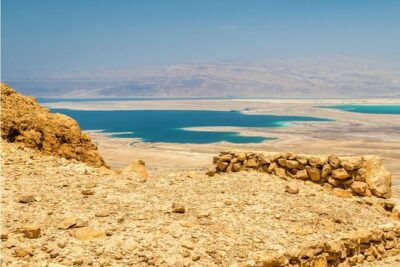
Once Jerusalem is behind you, the character of the day changes. The drive heads through the Judean hills toward the Dead Sea, also known as the Sea of Salt. The route moves from a dense, historic city to an open desert setting at the lowest point on earth.
The drive is one reason this tour needs a full day. You are not simply walking from one attraction to the next. The private air-conditioned vehicle gives you a practical break from the heat and from the long distances between Jerusalem and the Dead Sea.
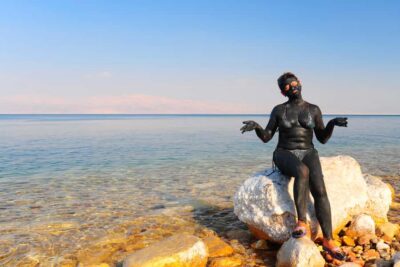
At the shore, you have about two hours at a resort area. The main activity is floating in the highly salty water. The water’s density makes it difficult to sink, creating the famous weightless feeling associated with the Dead Sea.
You can also cover yourself with Dead Sea mud. The tour describes this as an optional mud bath and highlights its mineral content. Treat the health claims sensibly: enjoy the texture and the tradition, but do not assume a short visit will provide medical benefits.
Take care around your eyes and any cuts, since salt water can sting. The supplied practical advice is sound: bring a towel, sunscreen, sunglasses, and a hat. You should also follow the resort’s instructions about where and how to enter the water.
What the private guide adds
The guide may be the most important variable in this experience. A private day packed with religious, political, and historical sites works best when explanations are clear and the timing is handled well.
Enrique is praised for humor, detailed history, and strong commentary on both ancient and current Israel. Saul, also referred to as Shaul, is praised for punctuality, patience, theology, and careful control of the day. Benjamin is described as a prompt and good-humored driver who helped adapt plans for a larger group.
Those names do not guarantee which guide you will receive, so confirm the assigned guide if that matters to you. The useful point is that the operator has a record of guides who do more than drive between stops. They explain, organize, and help you use limited time well.
The private format also allows your group to ask questions about Christianity, Judaism, archaeology, or modern Israel without holding up a coach full of strangers. That flexibility is valuable, though the tour is still bound by opening conditions, crowds, and the long route.
Price, inclusions, and the small print
At $220 per person, the tour is not the cheapest way to see Jerusalem. Its value depends on how much you want done in one day. The price includes hotel pickup and drop-off, a licensed professional guide, an air-conditioned vehicle, and a private group. Those services can justify the cost for a small party that wants convenience and direct commentary.
Food, drinks, and personal expenses are not included. The information also gives conflicting details about entrance fees: the highlights say all entrance fees are included, while the inclusion section says entrance fees are not included. Ask the operator to clarify this before paying, especially if you are comparing the total cost with other tours.
Pickup is offered, and the activity includes a mobile ticket. Confirmation is immediate. Free cancellation is available if you cancel at least 24 hours before the start time. Changes or cancellations inside that window are not accepted for a refund.
The tour is marked as suitable for most people, but it involves substantial walking in the Old City and a long day on the road. If you have mobility concerns, ask about the exact vehicle and walking plan before booking.
Who should book this day trip
I would choose this tour if you are staying in Tel Aviv or Herzliya, have only one open day, and want the major sights handled in a private setting. It suits first-time visitors, families who need a flexible pace, and people who want a guide to explain the religious meaning behind the sites.
It also works well for those who care about Christian and Jewish history but do not want a purely religious tour. The Cardo, Mount of Olives views, Roman street remains, and Dead Sea setting add variety.
I would not choose it if your main goal is slow photography, extended time at the Western Wall, or a full day at the Dead Sea. You should also think twice if you dislike early starts, long drives, or tightly scheduled sightseeing.
Should you book it?
Book it if you want an efficient first look at Jerusalem followed by a memorable Dead Sea stop, and if private transport and a strong guide matter to you. The combination is ambitious but practical, especially for a short Israel visit.
Before booking, confirm the exact pickup location, total duration, assigned guide, and entrance-fee policy. Pack modest clothing, a head covering, walking shoes, sun protection, and a towel. With those details settled, this is a useful way to cover two major destinations without giving up the comfort of a private day.
FAQ
How long does the Jerusalem and Dead Sea tour last?
The stated duration is approximately 8 to 11 hours, while the overview describes a 12-hour day. Confirm the exact schedule with Compass Travel Israel before booking.
Where does the tour start?
The tour is based in the Tel Aviv area and offers hotel pickup and drop-off. The summary also refers to departure from Herzliya, so confirm pickup eligibility for your hotel.
Is this a private tour?
Yes. Only your group participates in the activity.
What transportation is provided?
Hotel pickup and drop-off are included, along with an air-conditioned vehicle.
Which Jerusalem sites are visited?
The route includes the Mount of Olives, Garden of Gethsemane, Mount Zion, King David’s Tomb, the Room of the Last Supper, the Via Dolorosa, the Church of the Holy Sepulchre, the Cardo, and the Western Wall.
What happens at the Dead Sea?
You have about two hours at a resort area to float in the salty water and optionally use Dead Sea mud.
Are meals and drinks included?
No. Food and drinks are not included. Personal expenses are also excluded.
What happens if I cancel?
You can receive a full refund if you cancel at least 24 hours before the experience starts. Cancellations and changes made less than 24 hours before the start time are not accepted for a refund.
More Massage & Relaxation in Tel Aviv
- Dead Sea Relaxation Day from Tel Aviv
★ 4.0 · 40 reviews - From Tel Aviv: Full-Day Dead Sea Relaxation Tour
★ 4.6 · 9 reviews - Dead Sea Relaxation & Bedouin hospitality – Tiny group from Tel Aviv
★ 5.0 · 3 reviews - Private Couple Massage workshop
★ 5.0 · 3 reviews
Just added in Tel Aviv
- private Full-day Tour to Jericho + the Dead Sea★ 5.0 · 3 reviews
- VIP Tel Aviv airport Terminal 3 Fast Track Skip Line From plane★ 4.5 · 9 reviews
- Package VIP Skip Line Services in BGN Airport with Transfer to Tel aviv Hotels★ 5.0 · 3 reviews
- Private wine tour of Northern Israel★ 5.0 · 4 reviews
- Haifa Acre and Rosh Ha-Nikra Private Tour from Tel Aviv★ 5.0 · 5 reviews
- Israel Holy Land Christian Tour Package 7 days – Private Tour Package★ 5.0 · 31 reviews
- Jerusalem and Dead Sea Trip from Tel Aviv★ 4.0 · 6 reviews
- Tel Aviv & Old City of Jaffa – Tiny group from Tel Aviv★ 4.5 · 9 reviews
Dead Sea Tours, compared.
Masada & Dead Sea Full Day Tour with Pick Up
Read our review →
Masada and the Dead Sea Day Trip from Tel Aviv
Read our review →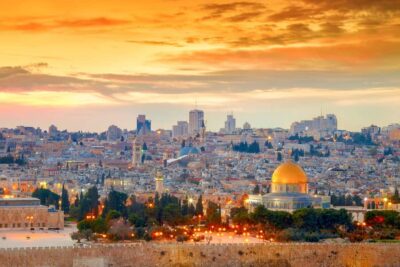
Masada and the Dead Sea Day Trip from Jerusalem
Read our review →
Browse the lists this tour appears in