
Reviewed · TOURS IN HAIFA
Druzeland – Cultural Private Tour on Mt. Carmel
The best part of this Mt. Carmel tour is the access to Druze village life, not simply a quick stop at a scenic overlook. In Isfiya and Daliyat al-Karmel, Daniel Sigalov or one of his local guide partners connects religion, food, family stories, politics, geology, and the long relationship between Druze and Jewish communities.
I like the small-group format, with the entire vehicle reserved for up to 10 people, and I like the personal encounters built into the day. The Druze Heritage Center brings women’s experiences into the story, while tea, folk medicine, and several kinds of knaffeh keep the tour grounded in daily life. The main consideration is the price: $895 per group is sensible for a full vehicle of several people, but costly for one or two.
Key points at a glance
- Isfiya offers more than a photo stop: You visit its old center, an olive press, ancient discovery sites, and a Druze cemetery.
- Women tell part of the story: Two sisters at the Druze Heritage Center explain changing roles and their own lives.
- Daliyat al-Karmel adds food and art: The route includes folk medicine, the House of Oliphant, Nabi Ibrahim, and an optional artist’s home.
- Knaffeh is part of the experience: You taste the famous pastry in several flavors with a broad view from the restaurant.
- Daniel shapes the day around you: The tour can be adjusted to your interests, with professional local guides and licensed vehicles.
- Cruise passengers get a useful safeguard: A back-to-ship-on-time guarantee is offered, and travel time is included in the five-to-eight-hour duration.
Why Mt. Carmel is the right place to learn about the Druze
This tour gives you a look at the Druze through villages where people live, work, worship, cook, and preserve family traditions. That matters because the subject can feel abstract when presented only as religion or regional politics.
The route treats the Druze story as a broad subject. You hear about religious ideas, connections with Israel and the Jewish people, village history, geopolitics, cuisine, and the geology of Mt. Carmel. I like that mix. It gives you several ways into the subject, even if religious history is not normally your favorite part of a trip.
You are not joining a large scheduled bus. This is a private activity for your own group, with up to 10 people in an air-conditioned vehicle. Daniel lives in one of the Druze villages, and his selected partners also live in the area. That local connection is central to the tour’s appeal. The guide is not simply passing through with a script.
The exact shape of the day can change. The advertised route lasts about five to eight hours, and travel time is included. Daniel can tailor the day to your interests, which is useful if you want more food, more history, or extra time with particular sites.
A few more things to do in Haifa worth a look
- Haifa Culinary Private Tour
★ 5.0 · 38 reviews - Holy Jerusalem Private Tour
★ 5.0 · 24 reviews - Haifa Highlights Private Tour
★ 5.0 · 20 reviews
Isfiya: old streets, olive oil, and Druze beliefs
The first major stop is Isfiya, a village described as a cultural mosaic in its own right. You spend about two hours here, making it the longest single stop on the route.
The old village center sets the tone. Rather than rushing from one landmark to the next, you get an introduction to Druze culture and to the village’s place in the wider story of Israel. Daniel’s approach links everyday places to larger questions, so an olive press is not just an old building. It becomes a way to discuss food, work, local customs, and the continuity of village life.
You also visit the site of two ancient treasures discovered in the area. These finds are presented as evidence of a particular connection between the Druze and Israel. This is one of the tour’s more distinctive historical details, since it gives the relationship a physical anchor rather than leaving it as a broad political idea.
The cemetery visit adds another layer. You hear about Druze ideas concerning life, death, and reincarnation, along with the community’s approach to religious identity. I would expect this section to be thoughtful rather than light entertainment. If you prefer tours that stay only with food and scenery, this part may feel more serious, but it is important to understanding the community on its own terms.
Isfiya is also where the tour can feel most personal. Meetings with local people are part of the experience, and the stated goal is not merely to point out buildings. You are meant to hear how people in these villages understand their own past and present.
The Druze Heritage Center and two women’s stories
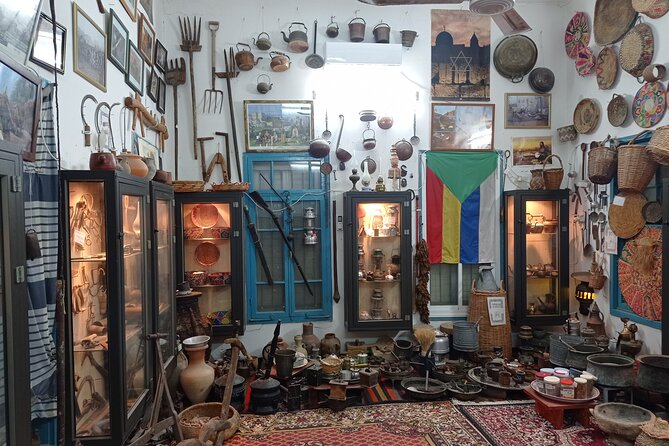
The next stop lasts about 45 minutes and takes place at the Druze Heritage Center. Two sisters lead the presentation, discussing Druze life in earlier times and the position of women within the culture.
This is a useful change of pace. Many cultural tours explain a community through men, religious leaders, political events, and old buildings. Here, women’s lives take the center of the conversation. The sisters also share their own experiences, including how they pushed past limits placed on women. Their story is framed as breaking the glass ceiling, which makes the stop about present-day change as well as tradition.
I would give this stop your full attention. It is short, but personal accounts can do what a list of dates cannot. You get a sense of how cultural expectations affect real choices, and how women negotiate a place within a society that has its own rules and customs.
Because this is a private tour, you can ask questions as they arise. That is a real advantage over a large group where a guide has to keep moving. The center is also an included admission, so you do not need to budget an extra entrance fee for it.
Daliyat al-Karmel: the biggest Druze village on the route
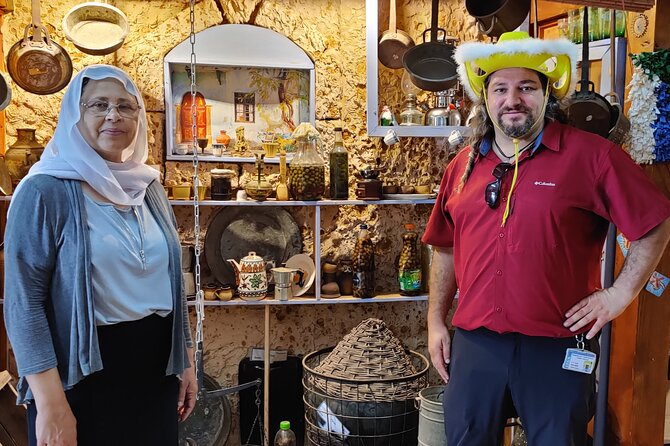
The tour then moves to Daliyat al-Karmel, identified as the largest Druze village in Israel. You spend about an hour and a half here, with time in the old center and at several cultural sites.
The old center is known for art and welcoming local businesses. This is where the tour’s mix of culture and food becomes especially useful. You are not looking at an isolated museum display. You are seeing a living village center, with people conducting daily business around the historic core.
The Herbs and Folk Medicine Center adds another practical subject. You learn how plants and traditional remedies fit into Druze life. The experience is not presented as a medical consultation, so I would treat it as cultural education rather than advice for treating illness. Still, it offers a direct look at the knowledge passed through families and communities.
The House of Oliphant is another stop in the village. The itinerary also includes the holy site of Nabi Ibrahim, plus other surprises. The exact order may change because the tour is tailor-made, but you should expect a mixture of sacred places, local history, art, and village stories.
Daliyat al-Karmel is also the setting for much of the food side of the day. Several past outings with Daniel included substantial tasting, and one version ended with a dinner-style meal. The supplied details list lunch as not included, however, so you should clarify exactly what food is planned when you book. The included tasting at Knaffeh El Amin is separate and clearly specified.
Same base, a different sort of day:
- From Haifa: Guided Day Trip to Nazareth and Sea of Galilee
★ 3.9 · 51 reviews - Haifa Port Shore Excursion: Nazareth and Sea of Galilee Day Tour from Haifa Port
★ 4.0 · 36 reviews - Jerusalem & Bethlehem Tour from Haifa Port 2024 – Small Group
★ 4.5 · 30 reviews - In the Footsteps of Jesus – Private Tour of Nazareth & the Sea of Galilee
★ 5.0 · 16 reviews
Sam Halaby’s colorful house, an optional artistic detour
If you want an extra art stop, you can add Sam Halaby’s House of Colors. The visit takes about 45 minutes and is optional.
Halaby is described as an internationally famous painter who turned the house where he grew up into a museum of color. That gives the stop a personal quality. You are not simply entering a formal gallery. You are seeing how an artist transformed a family home into an expression of his work.
I would ask about this stop before the day begins. It is a good match for anyone interested in art, design, or unusual homes. If your priority is Druze religion, village history, or food, you may prefer to use the time elsewhere. Since the tour can be adjusted, the optional nature of the stop is helpful rather than a weakness.
Knaffeh El Amin and the sweet finish
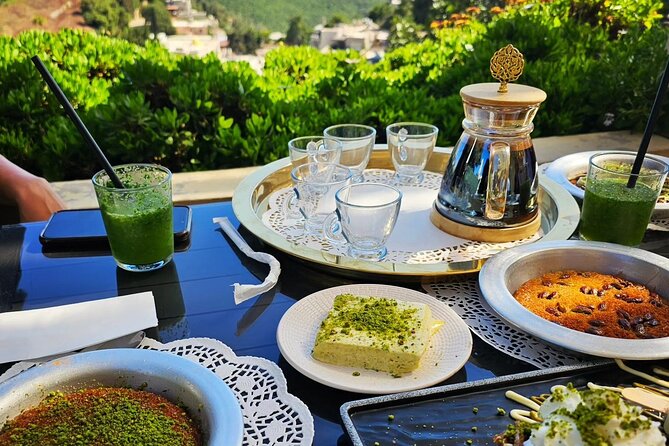
The final listed stop is Knaffeh El Amin, with about 40 minutes set aside for tasting. Knaffeh is a baked cheese-and-syrup dessert that inspires strong opinions in Israel about where the best version can be found.
Here, you get more than the standard preparation. The venue offers five additional flavors besides the regular one, giving you a chance to compare rather than simply eat one sweet portion and move on. The setting also has a broad view, so the stop combines food with scenery.
This is one of the most memorable details of the tour because it turns a familiar local argument into something you can test yourself. I like food stops that explain a place without pretending every dish has a single correct version. Knaffeh gives you a playful end to a day that otherwise covers serious subjects.
Coffee, tea, bottled water, and traditional Druze tea called Marli are included. Lunch is not included, and the food plan can vary with the tailored format, so ask if you want a full meal rather than tastings.
What the $895 group price really means
The listed cost is $895 for a group of up to 10 people. That is a high total for a couple, but the calculation changes if you fill the vehicle. Ten people would bring the cost to about $89.50 per person, before considering any meal that is not included. A group of five would pay about $179 per person.
For that price, you are paying for a private air-conditioned vehicle, private transportation, bottled water, coffee or tea, WiFi on board, admissions where specified, and a guide who can shape the day around your group. You are also paying for local contacts and meetings that would be difficult to arrange independently.
I would see the tour as better value for a family, a group of friends, or a cruise group than for one or two people. The flexibility is valuable when several people have different interests. One person can ask about religion, another about food, and another about local politics without being stuck with a fixed commentary meant for a large bus.
Cruise passengers should note the back-to-ship-on-time guarantee. That does not remove the need to confirm your ship’s departure time and pickup details, but it is an important feature when booking a shore excursion. The stated duration already includes driving time.
Guide style and the value of local voices
Daniel Sigalov is the named guide and provider, and he lives by himself in the villages covered by the experience. He also works with handpicked professional guides who live in those villages, use licensed touristic vehicles, and speak fluent English.
The personal tone is a major part of the appeal. Daniel’s style includes stories about the connection between Druze and Jewish communities, humor, food suggestions, and practical local tips. The guide may also introduce you to small-business owners and other local people, which brings the village beyond its official sights.
One guide named Evelyn has also led a Haifa food-focused version of the experience. The available information indicates that guides can vary, so ask who will lead your date if having Daniel specifically is important to you.
I would not book this expecting a formal lecture delivered at a fixed pace. The tour is designed to respond to your group. That can make the day feel more natural, but it also means your final experience depends partly on your chosen interests, guide, and timing.
Who should book this private Mt. Carmel tour?
I would recommend it most strongly if you want:
- A cultural experience that goes beyond standard Haifa sightseeing
- A private vehicle for family or friends
- Direct discussion of Druze religion and village life
- Food tastings linked to local customs
- A flexible day rather than a fixed group schedule
- A shore excursion with a stated return-to-ship promise
It is also a good choice if you enjoy meeting people and asking questions. The local stories are the heart of the day.
I would hesitate if you want a short, low-cost excursion, a simple scenic drive, or a tour focused only on famous monuments. Five to eight hours is a substantial commitment, and the price is hard to justify for a very small group unless the personal access and flexibility matter greatly to you.
The tour is listed as suitable for most people, and service animals are allowed. It is near public transportation, though pickup is offered. Since weather can cancel the experience, keep the cancellation terms in mind: cancel at least 24 hours before the start time for a full refund. Poor weather may lead to a different date or a full refund.
Should you book it?
Book this tour if you want to understand the Druze through village life, personal stories, food, and local guides rather than through a quick museum visit. Isfiya gives you religion and old village history, Daliyat al-Karmel adds art and folk traditions, and Knaffeh El Amin supplies a memorable finish.
The decision comes down to group size and interests. For up to 10 people, the private rate can be fair, especially for a cruise group that values dependable timing. For one or two people, the cost is steep. Ask in advance about the guide, lunch arrangements, and whether you want the optional House of Colors stop. If those details fit your plans, this is a thoughtful way to spend a day around Haifa.
FAQ
How long does the Druze Cultural Private Tour on Mt. Carmel last?
The tour lasts approximately five to eight hours. Travel time is already included in the total duration.
How many people can join the private tour?
The $895 price covers one private group of up to 10 people. Only your group participates in the activity.
Is pickup available?
Yes. Pickup is offered, and private transportation in an air-conditioned vehicle is included.
Is lunch included?
Lunch is not included. Coffee, tea, traditional Druze tea called Marli, bottled water, and the specified Knaffeh El Amin tasting are included.
Can the tour be changed to suit my interests?
Yes. The tour is designed to be tailor-made, so you can discuss your interests with Daniel or the assigned local guide.
What is the cancellation policy?
You can cancel at least 24 hours before the experience start time for a full refund. Cancellations or changes made within 24 hours are not accepted for a refund. If poor weather causes the tour to be canceled, you will be offered another date or a full refund.
Just added in Haifa
- VIP Culinary Tour in Haifa★ 5.0 · 13 reviews
- In the Footsteps of Jesus – Private Tour of Nazareth & the Sea of Galilee★ 5.0 · 16 reviews
- Full-Day Holy City of Jerusalem and Bethlehem Private Guided Tour★ 5.0 · 9 reviews
- Full Day Tour to Nazareth and the Sea of Galilee★ 5.0 · 4 reviews
- Holy Jerusalem Private Tour★ 5.0 · 24 reviews
- Haifa and Acre Private Tour★ 5.0 · 7 reviews
- Full-Day Private Tour from Haifa to Old City of Acre★ 5.0 · 5 reviews
- Haifa’s specials spots★ 5.0 · 6 reviews
Tours in Haifa, compared.
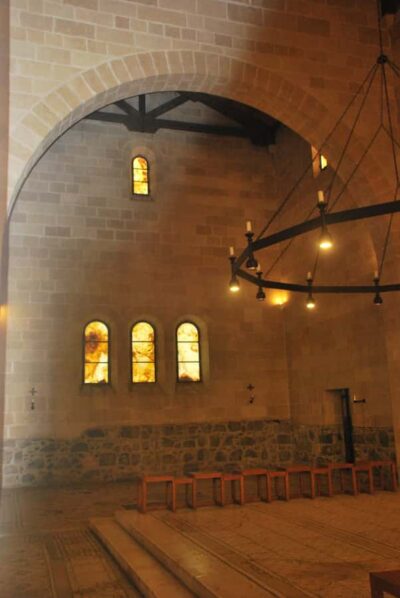
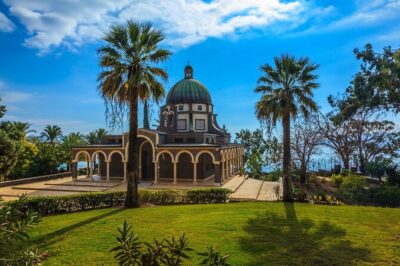
Haifa Port Shore Excursion: Nazareth and Sea of Galilee Day Tour from Haifa Port
Read our review →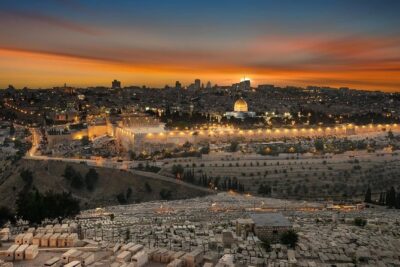
Jerusalem & Bethlehem Tour from Haifa Port 2024 – Small Group
Read our review →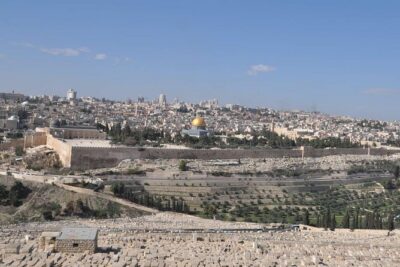
In the Footsteps of Jesus – Private Tour of Nazareth & the Sea of Galilee
Read our review →
Browse the lists this tour appears in