
Reviewed · CAESAREA, HAIFA & ACRE TOURS
Caesarea and Haifa Private Tour from Tel Aviv
The best part of this private tour is the contrast: you move from King Herod’s Roman port and theater to Haifa’s hillside views, then into the carefully ordered Baha’i Gardens. It packs two very different sides of northern Israel into one day without making you manage trains, taxis, or a rental car.
I like the private vehicle and dedicated guide, especially for a site as spread out as Caesarea. I also like the mix of archaeology, religion, architecture, and city views. The main drawback is time: six to seven hours is enough for the major stops, but not enough for a slow, museum-heavy visit or a long meal.
Key points to know before booking
- Caesarea takes about two hours: See the Roman theater, hippodrome, palace area, villas, baths, port, Crusader walls, and aqueduct.
- The route is private: Your group of up to four has its own vehicle, guide, and schedule within the planned stops.
- Haifa is viewed from several angles: The tour includes Mount Carmel viewpoints, the Baha’i Gardens, Stella Maris, and the German Colony.
- The Baha’i Gardens have a dress rule: Shorts and sleeveless clothing are not admitted there.
- The price favors a full group: At $1,149 per group, four people pay about $287 each, before Caesarea entrance fees and food.
- Expect a focused day: The advertised duration is approximately six to seven hours, with pickup and drop-off in Tel Aviv, Herzliya, or Netanya.
Why this route works from Tel Aviv
Northern Israel is easy to visit in pieces, but the distances and connections can make a self-guided day awkward. Caesarea and Haifa sit along the northern coast, and this tour links them in a sensible order before returning you to your original pickup point.
You begin at 9:00 a.m. with hotel pickup in Tel Aviv, Herzliya, or Netanya. Transport is by private vehicle, and the guide also serves as driver. That matters here because Caesarea’s attractions are spread across a large archaeological area, while Haifa’s main sights sit at different points on Mount Carmel and below it.
This is not a small walking tour with a fixed meeting point. It is a private day built around transport, interpretation, and efficient sightseeing. Your party can ask questions as you go, rather than waiting for a guide to finish a speech aimed at a larger group.
The schedule is still fairly tight. The stated duration is six to seven hours, and the listed stops add up to roughly five and a half hours before driving time. You should think of it as a highlights tour, not a leisurely day in each city.
Other coastal days out of Tel Aviv:
- From Tel Aviv: Caesarea, Haifa and Akko Day Trip
★ 4.4 · 744 reviews - Caesarea, Rosh Hanikra and Acre Day Trip from Tel Aviv
★ 4.5 · 406 reviews - Walking Tour of Akko (Half-day)
★ 5.0 · 84 reviews
Caesarea’s Roman theater and royal shoreline
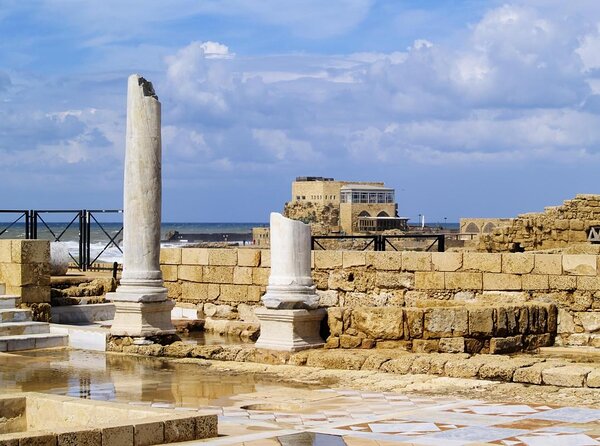
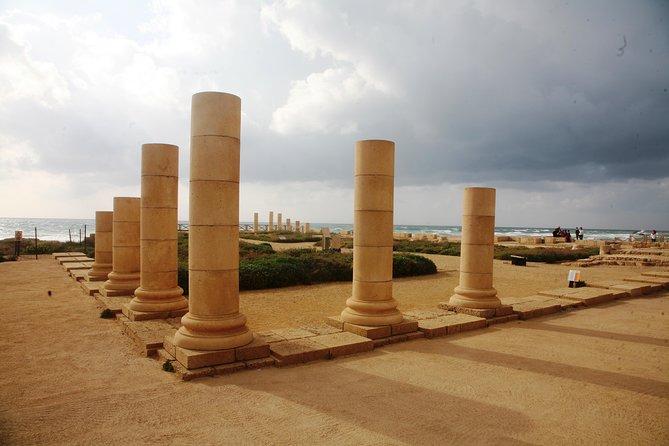
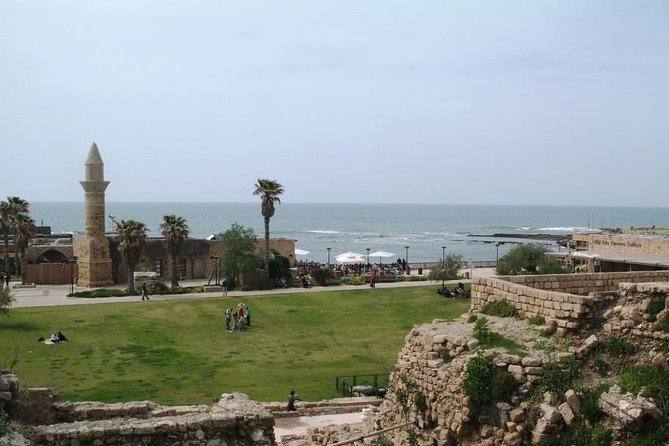
Caesarea is the historical anchor of the day. King Herod built it as a Roman city, and the archaeological park presents an unusually wide sweep of remains in one place. You are not looking at a single ruin. You move through the setting of a theater, racecourse, palace, bath complex, harbor, medieval fortress, and aqueduct.
The Roman theater is one of the first major sights. It once held more than 3,000 people, and its scale helps you picture Caesarea as a working city rather than an isolated monument. The theater is also a useful introduction to the guide’s role. Without context, the stones can blur together. With a professional art historian explaining how the pieces fit, the site becomes easier to read.
From there, the route continues toward the areas associated with King Herod’s palace. The remains of Roman villas and baths add a domestic side to the visit. You reach them by walking along the hippodrome, which gives the stop a nice sense of movement. Instead of only seeing grand public buildings, you get clues about how people lived, relaxed, and watched entertainment.
Herod’s port is another major point. The tour presents it as one of the largest ports in the ancient world, a reminder that Caesarea was built to function as a major coastal center. The sea gives this part of the visit a different feel from the inland ruins. You can connect the city’s wealth and political importance to its position on the coast.
The archaeological park also includes medieval Caesarea. You see the Crusader citadel, city walls, towers, and related architecture. This later layer is useful because it prevents the visit from becoming only a Roman-history lesson. Caesarea changed hands and purpose over many centuries, and the route lets you see that change in the same compact stop.
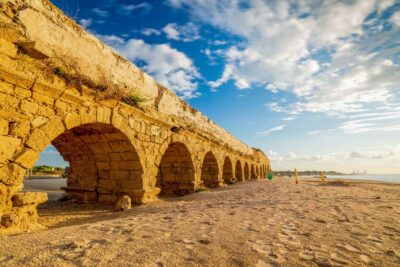
The Roman aqueduct is a fitting final image. It is described as perfectly preserved, and it shows the practical engineering behind the city’s grand public life. The theater and palace attract the eye, but the aqueduct explains how a large settlement could function.
Plan on about two hours at Caesarea. The entrance fee is not included, so allow for that extra cost. Wear sensible walking shoes and bring water, since the stop involves moving between several areas rather than standing at one viewpoint.
Haifa from Mount Carmel to the sea
After Caesarea, the tour continues along the northern coast to Haifa. The city spreads down the slopes of Mount Carmel toward the sea, so the best way to understand it is through changing viewpoints rather than one central square.
The guide introduces Haifa as Israel’s third-largest city and explains its mix of languages and religions. That commentary is one of the tour’s real advantages. Haifa’s identity is not obvious from a quick drive, but the city’s architecture, religious sites, and hillside position give you several ways to see how different communities shaped it.
The Mount Carmel viewpoints are especially important. From higher ground, you can look down toward the city and the water, then understand the steep relationship between upper Haifa and the coast. The views are a major part of the appeal, so have your camera ready, but do not let the photo stop replace the guide’s explanation of the city below.
The Haifa portion is listed as about two hours, including the garden visit and the later stops. That means you will see several key areas, but you will not have time to wander widely through the city or stop at every museum. If Haifa itself is your main interest, a longer independent visit would give you more freedom.
The Baha’i Gardens and their strict dress rule
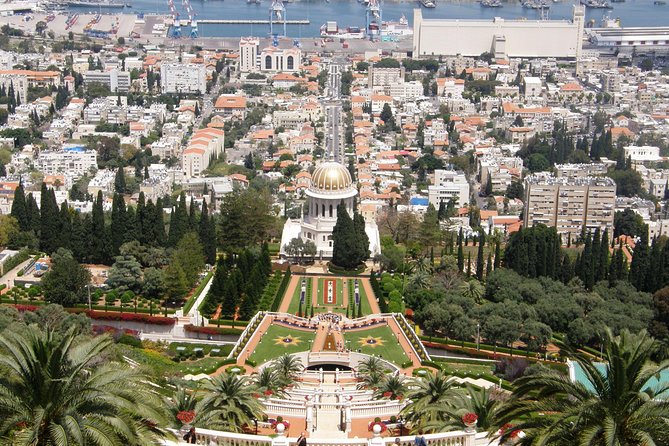
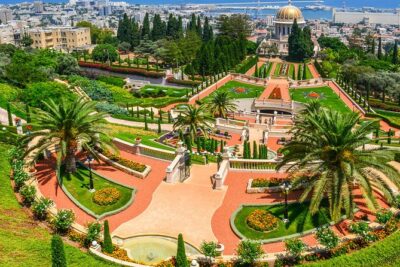
The Baha’i Gardens are one of Haifa’s most recognizable sights. They run down the slope in a carefully arranged series of terraces, with views across the city and toward the sea. The garden’s design is formal and highly maintained, offering a sharp contrast to the weathered stones of Caesarea.
You have about 30 minutes here. That is enough to appreciate the layout, take in the view from the upper part, and listen to an introduction to the Baha’i faith. It is not enough for a long, unhurried garden visit, so keep your expectations realistic.
The gardens are also a UNESCO World Heritage site, adding cultural importance to their visual appeal. Your guide can help explain why the site matters instead of treating it as only a scenic overlook.
Dress carefully. Shorts and sleeveless clothing are not admitted at the Baha’i Gardens. This is the most important practical tip for the day, particularly in warm weather. Choose modest clothing before pickup rather than hoping to adjust at the entrance.
Admission to the gardens is listed as free, but the site’s access rules still apply. Since the tour includes only a short visit, ask your guide how much time you have at the viewpoint and where to focus your attention.
A few more things to do in Tel Aviv worth a look
- Jerusalem Private Full Day Tour
★ 5.0 · 110 reviews - Exclusive Private Tour in The Israel Diamond Exchange
★ 5.0 · 60 reviews - Tel Aviv Airport (TLV) to Tel Aviv Hotels – Private Transfer
★ 4.0 · 59 reviews - Private Tour: Best of Jerusalem and the Dead Sea from Tel Aviv
★ 4.5 · 53 reviews
Stella Maris and the upper slopes of Haifa
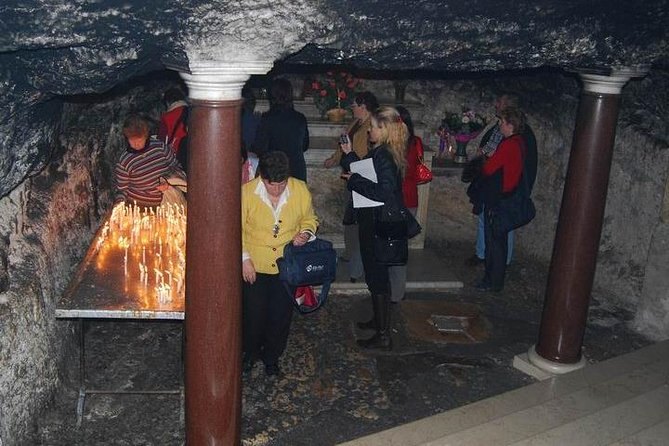
The next stop is Stella Maris, the Carmelite monastery and church on Mount Carmel. You have about 30 minutes to see the architecture and hear about its place in the area’s religious story.
The church is presented as a link between Christian tradition and the Jewish and Arab communities involved in the foundations of the faith. That makes the stop more than a quick architectural photo opportunity. It gives the day another way to examine Haifa’s layered religious identity.
The building’s appearance is described as distinctly European, connected to the neighborhood of early German settlers. You may find the setting surprising: after the Roman remains and the formal Baha’i terraces, the monastery offers another visual language, one tied to a later chapter of Haifa’s development.
This is a short stop, so the guide’s commentary is important. You will not have time to study every detail independently. Listen for the connections between the church, Mount Carmel, and the wider history of the city.
The German Colony at the foot of Mount Carmel
The German Colony is the final listed stop, with about 30 minutes to look around. German Protestant settlers established the area in the 19th century, and its preserved buildings reflect a period when Haifa was beginning a new phase of growth.
The neighborhood gives you a street-level counterpoint to the views from Mount Carmel. From above, Haifa is a city of slopes and terraces. Here, you see a more grounded urban setting shaped by European settlement and later city life.
Thirty minutes is enough for an introduction and a look at the architecture. It is not a full neighborhood exploration. If you enjoy historic streets and old buildings, you may wish the schedule allowed longer here, but the short visit makes sense within a route that also includes Caesarea and the gardens.
The German Colony also helps the day finish with a modern urban note rather than another ancient site. You see how Haifa’s past is not confined to religious landmarks or archaeological ruins. It also survives in ordinary streets and buildings.
What the private format adds
The private setup is the tour’s central practical benefit. Only your party participates, and the vehicle is reserved for your group. For up to four people, that gives you room to ask questions about Roman life, the Baha’i faith, Haifa’s communities, or the architecture you are seeing.
The guide is described as multilingual, a driver-guide, and a professional art historian. Those roles suit this particular route. Caesarea needs someone who can explain archaeological remains, while Haifa benefits from context about religion, architecture, and city development.
A private tour can also reduce the friction between stops. You do not need to locate a station, arrange separate taxis, or work out how to connect the upper slopes of Mount Carmel with the German Colony. Pickup and drop-off are included from hotels in Tel Aviv, Herzliya, or Netanya.
The tradeoff is flexibility within a planned private route, not unlimited customization. The listed attractions are the framework of the day, and the six to seven hour duration limits major detours. If you want to replace one stop with a long lunch or spend half a day in a single museum, this is not the right format.
Is $1,149 a fair price?
The price is $1,149 per group of up to four. With four people, that works out to roughly $287 per person. For two people, the per-person cost rises sharply, so the value depends heavily on your group size.
You are paying for private transport, hotel pickup and drop-off, a dedicated multilingual guide, and an art historian’s interpretation. You are not paying only for entrance tickets. The convenience is most valuable if you are staying in Tel Aviv and want to cover two northern destinations in one day without driving.
The cost does not include food, drinks, or the Caesarea National Park entrance fee. That makes it important to budget beyond the advertised price. The Baha’i Gardens and the other listed Haifa stops have no admission charge, according to the tour details.
I see the strongest value for a group of three or four people who want a private day and prefer not to navigate transport. A solo visitor or couple may find the price harder to justify unless a private guide and door-to-door service are priorities.
Who should book this day?
I would recommend it to first-time visitors who want a broad introduction to northern coastal Israel from Tel Aviv. It works especially well if you have one open day and want to combine ancient ruins, religious landmarks, city views, and historic architecture.
It also suits people who prefer explanation over simply taking photographs. The guide’s background as a professional art historian is useful at Caesarea, while the private format lets you pause for questions when a site raises something you want to understand.
Families and small groups may appreciate the private vehicle and direct pickup. The tour is also practical for people who do not want to rent a car for a single excursion.
You should think twice if you need long breaks, extensive independent walking, or a slow visit to Haifa. The day covers a lot. Its strength is range, not depth.
The experience has a 4.9 rating from eight reviews, and the available feedback gives particular emphasis to the guide’s excellent handling of history, culture, and scenery. That praise fits the design of the tour: the ruins and views are strong, but the guide is what connects them into one understandable day.
Final booking advice
Book this tour if you want one private, well-packed day covering Caesarea and Haifa, and you are comfortable with a six to seven hour schedule. It is a good choice for a group of up to four, especially when hotel pickup and a dedicated guide matter more than keeping the cost low.
Skip it if your priority is a relaxed beach day, a long meal, or detailed exploration of one site. For the best experience, dress modestly for the Baha’i Gardens, wear comfortable shoes, budget for Caesarea admission and food, and arrive ready to move between several very different places.
FAQ
Where does the tour pick me up?
Pickup and drop-off are offered from hotels in Tel Aviv, Herzliya, or Netanya. The listed start time is 9:00 a.m.
How long does the tour last?
The tour lasts approximately six to seven hours.
Is this a private tour?
Yes. Only your group participates, with a private vehicle and a dedicated multilingual guide. The vehicle can accommodate a group of up to four people.
Is food included?
No. Food and drinks are not included in the tour price.
Is admission to Caesarea National Park included?
No. The entrance fee to Caesarea National Park is not included.
What should I wear to the Baha’i Gardens?
Shorts and sleeveless clothing are not permitted at the Baha’i Gardens. Dress modestly for this stop.
Can I cancel for a full refund?
Yes. You can cancel at least 24 hours before the experience start time for a full refund. Cancellations or changes made less than 24 hours before the start time are not accepted for a refund.
Just added in Tel Aviv
- private Full-day Tour to Jericho + the Dead Sea★ 5.0 · 3 reviews
- VIP Tel Aviv airport Terminal 3 Fast Track Skip Line From plane★ 4.5 · 9 reviews
- Package VIP Skip Line Services in BGN Airport with Transfer to Tel aviv Hotels★ 5.0 · 3 reviews
- Private wine tour of Northern Israel★ 5.0 · 4 reviews
- Israel Holy Land Christian Tour Package 7 days – Private Tour Package★ 5.0 · 31 reviews
- Jerusalem and Dead Sea Trip from Tel Aviv★ 4.0 · 6 reviews
- Haifa Acre and Rosh Ha-Nikra Private Tour from Tel Aviv★ 5.0 · 5 reviews
- Tel Aviv & Old City of Jaffa – Tiny group from Tel Aviv★ 4.5 · 9 reviews
Caesarea, Haifa & Acre Tours, compared.
Caesarea, Rosh Hanikra and Acre Day Trip from Tel Aviv
Read our review →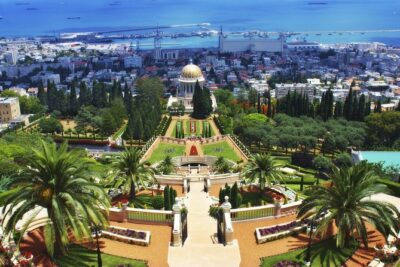
Haifa Shore Excursion: Nazareth and the Galilee – for cruise ship guests only
Read our review →
Caesarea, Acre & Rosh Hanikra Day Trip from Jerusalem
Read our review →
Unforgettable Tour to Caesarea, Haifa, Acre and Rosh HaNikra from Tel Aviv
Read our review →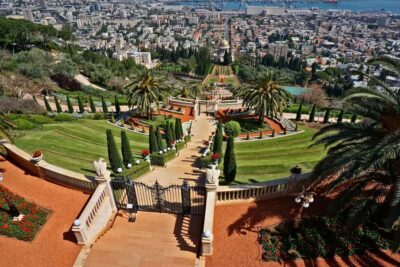
Tel Aviv/Jerusalem: Caesarea, Haifa & Akko Day Tour
Read our review →
Browse the lists this tour appears in