
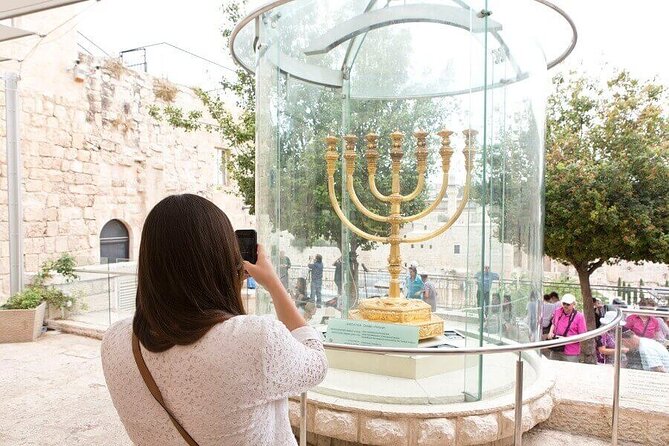
Reviewed · JERUSALEM OLD CITY TOURS
City of David and Underground Jerusalem Day Trip from Tel Aviv
Jerusalem’s oldest stories come alive on this long day from Tel Aviv, especially underground at the City of David, where ancient water systems and excavations reveal the first foundations of the city. I like that the tour links big viewpoints and sacred places with archaeological sites instead of treating Jerusalem as a quick photo stop.
I also like the range: Mount Scopus, the Garden of Gethsemane, Mount Zion, the Western Wall, the Jewish Quarter, the Cardo, and the Herodian Mansions all appear in one packed route. The tradeoff is clear: this is a brisk outing with hills, heat, and roughly five miles of walking, and the City of David entrance fee costs extra.
Key points at a glance
- Mount Scopus views: Begin with a broad look over Jerusalem and the Old City before walking into its historic quarters.
- Sacred Mount Zion: Visit King David’s Tomb and the Hall of the Last Supper, two sites wrapped in tradition and debate.
- Jewish Quarter archaeology: See the Sephardic Synagogues, the Byzantine Cardo, and Herodian Mansions with their marble and mosaics.
- Western Wall stop: You get personal time at one of Jerusalem’s most important religious sites.
- City of David below ground: Explore excavations and Warren’s Shaft, with a possible narrow water-tunnel option.
- Practical day trip: Hotel pickup, an air-conditioned vehicle, and a professional guide are included for about $99, before roughly $10 in entrance fees.
Why this Tel Aviv to Jerusalem day trip works
This is not a gentle sightseeing loop. It is a history-heavy day that moves quickly from biblical tradition to Roman and Byzantine remains, then into the archaeology of Jerusalem’s earliest settlement.
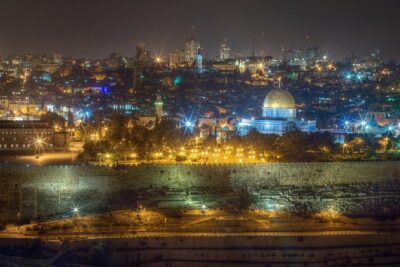
I like the way the route gives you a useful first look from above. Jerusalem can feel confusing at street level, with walls, slopes, domes, and narrow lanes folding into one another. The opening panorama helps you place the Old City before you enter it.
The day also has a strong narrative. King David’s city, the Temple Mount, the Second Temple period, Roman Jerusalem, Christian traditions, and the modern religious importance of the Western Wall all appear in sequence. A good guide can make those connections clear. Guides named Daniel, Charlie, Yoel, and Itamar have led this experience at different times, and the quality of the day depends heavily on who is holding the microphone.
The main caution is pace. There are several short visits, and some parts feel like a walking tour rather than a coach excursion. You need comfortable shoes, water, and enough energy for sloping streets and tight underground passages. At age 66, one person recorded about five miles of walking on a hot day, so do not treat the 10-hour duration as mostly sitting on a bus.
More of the Old City from Tel Aviv:
- From Tel Aviv: Jerusalem Old City & Dead Sea Guided Day Tour
★ 4.4 · 389 reviews - Jerusalem Half-Day Tour from Tel Aviv: Holy Sepulchre and Western Wall
★ 4.0 · 61 reviews - From Tel Aviv: Jerusalem Old City Guided Tour
★ 4.6 · 59 reviews
The early ride from Tel Aviv
Pickup begins around 7:15 a.m. from central Tel Aviv hotels. The air-conditioned coach is a practical choice because Jerusalem sits inland and the day involves several separate areas. You can rest during the ride and listen as the guide explains why Jerusalem matters to Jewish, Christian, and Muslim communities.
The group can reach up to 40 people, though the actual number may be smaller. One outing had only four participants, which made the day feel close to private. A larger group means less flexibility at busy sites, so keep close to the guide and pay attention to meeting instructions.
Transport arrangements may involve waiting or a transfer. One account describes delays before and after the main sightseeing and a route that was not fully direct. If you want a perfectly smooth private transfer, this is not that product. If you want a cost-conscious way to cover Jerusalem from Tel Aviv in one day, the coach keeps the price reasonable.
Mount Scopus and the first view of Jerusalem
The opening viewpoint is listed at the Mount Scopus National Botanical Garden, where you spend about 30 minutes looking toward the Old City. The views are one of the day’s strongest features. Your guide can point out the Temple Mount Esplanade and help you understand the Old City’s position above the surrounding valleys.
The tour description also refers to Mount of Olives views. Pay attention to the exact stop on your departure day, since the itinerary identifies Mount Scopus while the broader description emphasizes the Mount of Olives. Either way, this first high viewpoint gives you the visual orientation that Jerusalem needs.
Do not expect a long walk here. This is mainly a scenic and explanatory stop before the tour moves through the Kidron Valley. Bring a hat and water, especially during the warmer months, because shade may be limited at exposed viewpoints.
Kidron Valley and the Garden of Gethsemane
The coach passes through the Kidron Valley and by the Garden of Gethsemane. Christian tradition holds that Jesus prayed here before his crucifixion, making it an important stop even when you do not spend a long time inside the garden.
This portion is more about context than extended exploration. You may see the site from the vehicle or pause nearby, depending on timing and traffic. The valley also helps explain Jerusalem’s physical shape: the Old City is not flat, and many of the day’s uphill and downhill walks follow old ridges and valleys.
A few more things to do in Tel Aviv worth a look
- From Tel Aviv: Jerusalem and Bethlehem Guided Day Trip
★ 4.3 · 1,316 reviews - Masada and the Dead Sea Day Trip from Tel Aviv
★ 4.5 · 1,014 reviews - From Tel Aviv: Guided Day Trip to Nazareth & Sea of Galilee
★ 4.4 · 824 reviews - From Tel Aviv: Caesarea, Haifa and Akko Day Trip
★ 4.4 · 744 reviews
Mount Zion, King David, and the Last Supper
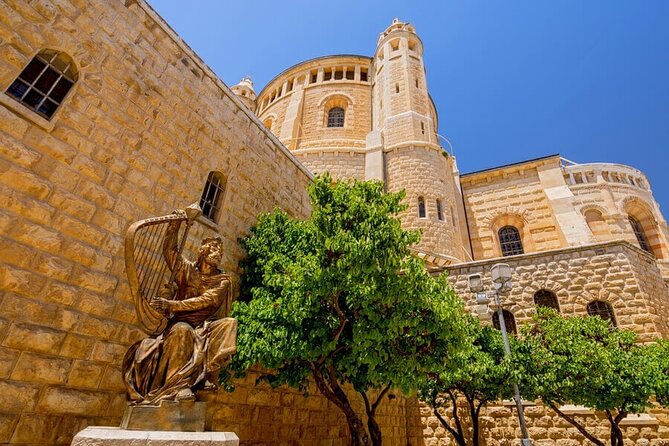
Near Mount Zion, you visit the Tomb of King David. The site is traditionally identified with the burial place of Israel’s famous second king, though the exact historical identification is disputed. The sarcophagus is treated with great reverence, and visitors should dress modestly and behave quietly.
The short 10-minute stop means you will not have time for a long historical lecture inside. A good guide should explain the difference between religious tradition and archaeological certainty. This is particularly useful here, because the site’s spiritual importance is stronger than the proof that King David was actually buried in this location.
The Hall of the Last Supper is associated with Jesus’s final meal with his disciples. The present building reflects later construction on a site connected with the tradition. As with several locations in Jerusalem, the value comes from understanding the layers of belief and history rather than expecting an untouched biblical room.
Entering through Zion Gate
The group enters the Old City through Zion Gate. The gate and its surrounding walls offer a quick reminder that Jerusalem’s present appearance was shaped by conflict as well as faith. The short stop is mostly an introduction to the walled city and a chance to gather before the walking portion begins.
From here, expect uneven paving, narrow passages, and a steady flow of people. The guide may need to move the group briskly. Stay aware of the meeting point because the Old City’s lanes can turn confusing in only a few steps.
Armenian Quarter and the Jewish Quarter
The Armenian Quarter receives about 20 minutes of walking time. It is one of the Old City’s four traditional quarters, and the route gives you a brief look at its distinct character before moving toward the Jewish Quarter.
The Jewish Quarter receives about an hour and contains several of the tour’s most revealing historical stops. You visit the Four Sephardic Synagogues, built in the 16th century and linked to the Sephardic Jewish community. Entrance is listed as an extra charge, and if those synagogues cannot be visited, the substitute is the Hurva Synagogue.
The quarter was destroyed during the period when Jordan controlled the Old City in the mid-20th century and was later rebuilt. That means much of what you see is not an untouched medieval neighborhood. The area still matters, but a careful guide should help you distinguish original remains, rebuilt structures, and modern reconstruction.
The Cardo and the Herodian Mansions
The Cardo is the Old City’s Byzantine-era main street, once part of the commercial spine of Jerusalem. The planned route gives it about 20 minutes. Look for the contrast between the ancient street layout and the modern shops and buildings around it.
The Herodian Mansions offer a more intimate view of elite life more than 2,000 years ago. Excavations revealed marble walls, mosaics, and homes built on terraces, allowing wealthy residents to take advantage of views toward the Temple. This is one of the best stops for imagining how Jerusalem’s upper class lived before the city’s later destruction.
I prefer this kind of archaeology to a simple list of rulers and battles. A mosaic floor or a marble wall tells you about money, taste, building methods, and social rank. The stop is still compact, so listen closely while the guide explains what is original and what has been reconstructed.
Time at the Western Wall
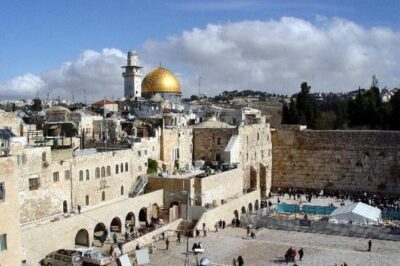
The route includes about 20 minutes at the Western Wall, also called the Wailing Wall. This is one of the day’s most important pauses because you are not only looking at a historic structure. You are entering an active place of prayer.
Dress respectfully, cover your shoulders and knees, and follow the customs explained at the site. Men and women may use separate prayer areas. The schedule allows some personal time here, which is valuable after the guide-led walking through the quarter.
Twenty minutes is not a long visit, but it is enough to approach the wall, observe the prayer area, and take in the setting. Keep in mind that the surrounding area can be crowded and emotionally intense. The guide may set a firm time to regroup, so do not wander far.
The City of David and the underground remains
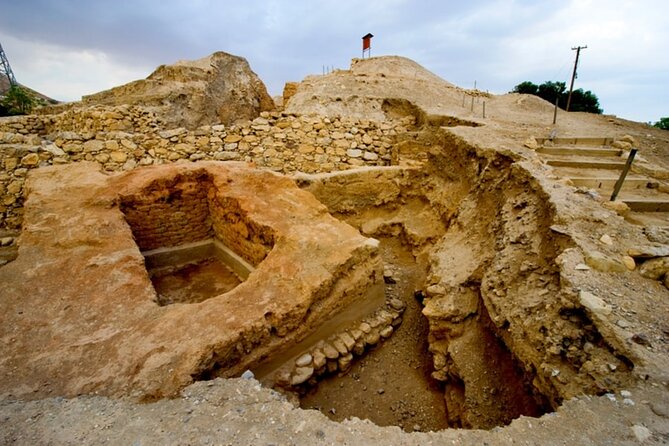
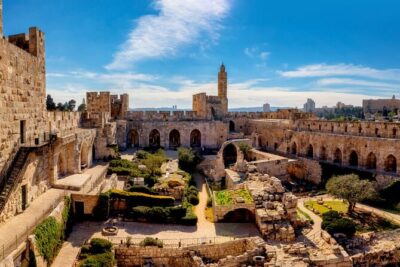
The final major section takes you south of the Old City to the City of David National Park. This was the settlement associated with Jerusalem’s earliest foundations, traditionally linked to King David’s capture of the city more than 3,000 years ago.
You spend about 90 minutes here, looking at excavations and the remains of ancient water systems. Warren’s Shaft is among the named features. The underground section gives the tour its most distinctive physical experience, since you are not simply viewing walls from a distance. You are moving through the spaces that once helped supply the city.
Construction can affect parts of the visit, and some areas may feel less polished than the major religious sites. That is part of the nature of an active archaeological area. You see a place still being studied, not a fully finished museum display.
The underground passages can be narrow. If you have a fear of enclosed spaces, take that seriously before booking. Some accounts also warn that the optional Hezekiah’s Tunnel route involves water reaching up to the knees. The supplied tour details do not make clear that every participant must take this water route, so ask the guide about the available option before entering and bring suitable clothing if you want to attempt it.
A flashlight is also useful for the darker tunnel sections. Do not assume your phone light will be convenient while walking through a wet or cramped passage.
How much walking and waiting to expect
The tour includes a reasonable amount of walking, but that phrase understates the effort for some people. You will walk through Old City lanes, across uneven surfaces, and up and down hills. The City of David adds another substantial stretch, and the underground passages require careful footing.
Wear supportive walking shoes. Avoid shorts, and cover your shoulders and knees for religious sites and selected museums. This dress rule applies to men and women, and entry can be refused if you arrive in unsuitable clothing.
The weather matters. A guide may help with water breaks and check on the group during hot conditions, but you should bring your own water and sun protection. The air-conditioned coach provides relief between areas, not during the walking sections.
What the $99 price really covers
At about $99 per person, the tour offers solid value if you want transportation from Tel Aviv and a guide to organize a difficult day across several Jerusalem districts. Hotel pickup and drop-off, the professional guide, and air-conditioned transport are included.
The price does not cover food, drinks, or entrance fees. The estimated additional entrance cost is about $10 per person, though the City of David and the Four Sephardic Synagogues are specifically identified as not included. Budget a little extra rather than treating $99 as the final cost.
The value depends on your priorities. You save time by avoiding the need to plan your own route between Mount Scopus, Mount Zion, the Old City, and the City of David. In return, you accept a fixed schedule, possible transport delays, limited time at each stop, and a group that can reach 40 people.
This is a better deal for a first Jerusalem visit than for someone who already knows the city and wants long, quiet hours at one site. Independent visitors may prefer to spend a full day on the Old City alone, or devote more time to the City of David than this schedule allows.
Guides can make or break the day
The guide is central to the experience. Daniel has been praised for looking after people in hot weather, while Charlie, Itamar, and Yoel have each been singled out for clear explanations, enthusiasm, and patience. Other accounts describe rushed visits, a guide who handled the schedule poorly, and an uncomfortable restaurant arrangement.
That range tells you something important: the route is good, but the guiding style can vary. The best version gives you historical context while leaving enough time to look around. The weaker version races through the morning and then slows down later, when there is less to see.
Food is not included, and you should not feel pressured into an expensive meal chosen by someone else. Carry snacks and water so you can manage the day without depending entirely on the group’s food stop.
Who should book this day trip
Book it if you want a first, wide-ranging look at Jerusalem and prefer organized transport from Tel Aviv. It suits adults who enjoy biblical history, archaeology, religious sites, and plenty of walking.
It is also useful for a short Israel visit when you cannot give Jerusalem several days. In one outing, you get high views, Old City quarters, the Western Wall, ancient mansions, and the City of David.
Think twice if you dislike enclosed spaces, have difficulty with hills, or want a relaxed pace. It is not suitable for children under four. The underground route may not suit anyone who is uneasy in narrow passages, and the full day can feel tiring in hot weather.
Should you book it?
I would book this tour if your main goal is to see Jerusalem’s major historical themes in one organized day from Tel Aviv. The views from the high ground, the Western Wall, the Jewish Quarter archaeology, and the City of David create a strong mix, and the underground section is the most memorable part for many people.
I would not book it expecting a leisurely Old City walk or a deep visit to every quarter. Add the entrance fees to the advertised price, prepare for about five miles of walking, and ask about the water tunnel before you go. If you accept those limits, this is a practical and content-packed introduction to Jerusalem.
Free cancellation is available when you cancel at least 24 hours before the start time. The tour needs at least two participants and operates with a maximum of 40.
FAQ
What time does the tour start?
Pickup begins at approximately 7:15 a.m. from a central Tel Aviv hotel.
How long is the day trip?
The experience lasts about 10 hours, including transportation between Tel Aviv and Jerusalem.
Is hotel pickup and drop-off included?
Yes. Hotel pickup and drop-off, a professional guide, and an air-conditioned vehicle are included.
Are food and drinks included?
No. You need to pay for your own food and drinks.
Are entrance fees included in the price?
No. Entrance fees are not included. The estimated additional cost is about $10 per person.
How much walking is involved?
The tour includes a reasonable amount of walking through the Old City and City of David, including hills and uneven surfaces. Comfortable walking shoes are recommended.
Is the underground City of David section suitable for everyone?
The underground passages can be narrow. An optional Hezekiah’s Tunnel route may involve water up to knee level, so ask about conditions and the available route before entering.
Just added in Tel Aviv
- private Full-day Tour to Jericho + the Dead Sea★ 5.0 · 3 reviews
- VIP Tel Aviv airport Terminal 3 Fast Track Skip Line From plane★ 4.5 · 9 reviews
- Package VIP Skip Line Services in BGN Airport with Transfer to Tel aviv Hotels★ 5.0 · 3 reviews
- Private wine tour of Northern Israel★ 5.0 · 4 reviews
- Haifa Acre and Rosh Ha-Nikra Private Tour from Tel Aviv★ 5.0 · 5 reviews
- Israel Holy Land Christian Tour Package 7 days – Private Tour Package★ 5.0 · 31 reviews
- Jerusalem and Dead Sea Trip from Tel Aviv★ 4.0 · 6 reviews
- Tel Aviv & Old City of Jaffa – Tiny group from Tel Aviv★ 4.5 · 9 reviews
Jerusalem Old City Tours, compared.


Jerusalem Half Day Tour: Holy Sepulchre and Western Wall
Read our review →
City of David and Underground Jerusalem Day Tour
Read our review →Browse the lists this tour appears in