
Reviewed · TOURS IN JERUSALEM
7-Hour Jerusalem Political Guided Tour from Jerusalem
Jerusalem is not just a holy city. It is also a city divided by history, law, walls, settlements, and competing claims. This seven-hour political tour takes you from the Old City to East Jerusalem and the West Bank, using streets, lookout points, and neighborhoods to explain how the conflict affects daily life.
I like the direct focus on places that standard sightseeing often skips, especially the Separation Barrier, Anata, and Ma’ale Adumim. I also like the small group of no more than 16 people and the air-conditioned vehicle between walking sections. The main consideration is the tour’s stated Palestinian nationalist perspective. That can offer a valuable counterpoint, but you should not expect a politically neutral survey.
Key things to know before you book
- The Old City sets the historical frame: You begin with roughly a century of political change, from the late Ottoman period to today.
- The tour examines occupation in visible places: Jewish settlements in the Christian and Muslim Quarters are discussed alongside the history of the Old City.
- The Western Wall is placed inside the wider conflict: The visit includes the plaza, the Temple Mount, and Al Aqsa’s importance in Judaism and Islam.
- East and West Jerusalem are compared from lookout points: You see differences in roads, development, neighborhoods, and access to city views.
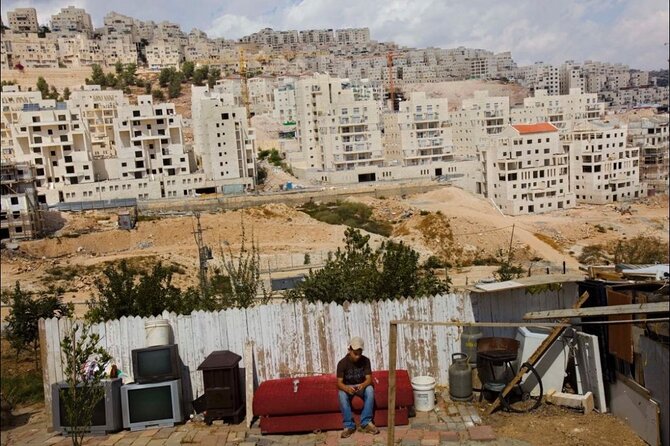
- The final section reaches the West Bank: Anata, Ma’ale Adumim, the Jahalin Bedouin, and the E1 planning zone bring settlement policy into view.
- The day is demanding but manageable: Expect walking, standing, road travel, and a moderate level of fitness.
Why this Jerusalem tour takes a different route
Many Jerusalem tours concentrate on churches, mosques, ancient stones, and famous viewpoints. This one uses those same places as evidence in a modern political story. You are not simply told that the Old City matters to three religions. You are asked to consider how religious importance, military control, settlement activity, and national identity overlap in a very small area.
The tour is especially useful if you have already seen the main monuments and want help making sense of the city around them. It can also serve as an introduction to the conflict before further visits around Israel and the West Bank.
You should know the point of view from the start. The tour is designed to move beyond a simple Israeli and Palestinian split, but its stated perspective is Palestinian nationalism. I see that as a strength for anyone who wants to hear a position often given less space on conventional sightseeing tours. I would pair it with other sources if you want a broader political picture.
The group size matters here. With a maximum of 16 people, the guide has a better chance of explaining complicated sites without turning every stop into a speech for a large crowd. Still, the subject is serious, and seven hours of political discussion can feel intense if you are looking for a light day out.
A few more things to do in Jerusalem worth a look
- Jerusalem: Guided Walking Tour of the Old City
★ 4.7 · 386 reviews - Travel to Bethlehem Half Day Guided Tour from Jerusalem & TelAviv
★ 5.0 · 239 reviews - Travel To Bethlehem, Jericho & Jordan River – Group Guided Tour from Jerusalem
★ 4.5 · 128 reviews
Starting at the Old City with a century of context
The tour starts at the Jerusalem Hotel on Antar Ben Shaddad Street at 9:00 am. The first briefing covers about one hundred years, beginning in the late Ottoman period and moving toward the present. That historical opening is important because the modern conflict did not appear suddenly at a wall or checkpoint. The guide connects the present city to earlier periods of rule, division, and competing claims.
The Old City is the right place to begin. Its lanes and walls compress religious devotion and political control into a very small area. You will hear about the importance of the city to Judaism, Christianity, and Islam, then look at visible signs of occupation and settlement activity in and around the Christian and Muslim Quarters.
This is not a traditional monument-by-monument tour. The emphasis is on what the built environment says about power. A building, a neighborhood, or a change in access can carry as much political meaning as an ancient inscription.
The first hour is listed as a briefing and Old City visit, with no separate admission fee. Wear shoes that can handle uneven streets and expect to spend time standing while the guide explains the setting. The details provided do not specify a particular guide by name, so the quality of the discussion will depend on the guide assigned that day.
Walking from Damascus Gate to the Western Wall
The walking portion enters through Damascus Gate and follows the Old City’s market streets. This route gives you a practical sense of how the city is used, rather than showing it only as a collection of sacred monuments. You will learn about the division of Jerusalem while passing through one of its most important entrances.
The Western Wall Plaza is a major stop. The tour explains that the plaza was created over the former Mugrabe neighborhood after the 1967 war. That detail changes how you see the open space. It is not only a place of prayer and national symbolism. Its present form is also tied to the removal and reshaping of a nearby community.
The discussion then turns to the Temple Mount and Al Aqsa. Their importance in Jewish and Muslim religious life is central to understanding why arguments over access, sovereignty, worship, and security are so charged. The guide links the sacred sites to the wider conflict rather than treating them as isolated attractions.
Plan on about two hours for this section. You will be walking through crowded market areas and stopping at sites where the subject matter can be emotionally heavy. If you prefer a purely religious tour, this approach may feel political at every turn. That is precisely the point for people who want to understand how faith and national claims meet in Jerusalem.
Seeing East and West Jerusalem from the road
After lunch, you receive another short briefing before continuing by vehicle. Lunch is not included, so you should plan for that expense and timing yourself. The tour then moves through East Jerusalem settlements and Palestinian neighborhoods, with stops at several lookout points.
The views are useful because they let you compare the physical character of East and West Jerusalem. The tour points to modern office towers and major highways in the western part of the city, then contrasts them with less developed roads and rural-looking scenes in the east. The description includes unsealed roads and donkeys being ridden, details intended to show the uneven conditions between areas.
I would treat these comparisons as a starting point for discussion, not as a complete measure of life in every part of Jerusalem. Cities are more varied than a single viewpoint can show. Still, from a high point, the connections between roads, neighborhoods, open land, and the Old City become easier to grasp.
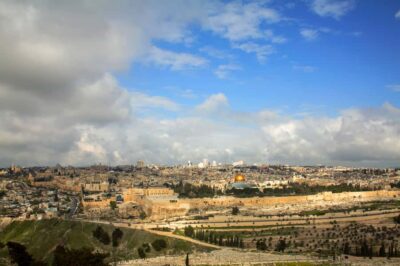
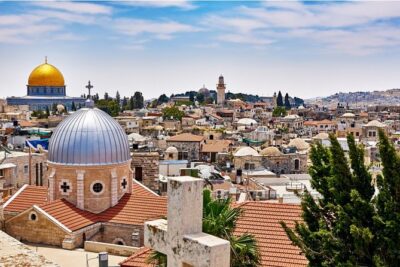
You also get panoramic views back toward the Old City. These are among the day’s most useful visual moments because you can place the walls and religious sites within the wider urban setting. Jerusalem stops looking like a separate ancient island and starts looking like a living city shaped by modern planning and political decisions.
This portion lasts about 90 minutes. The air-conditioned vehicle is a practical benefit, especially after the Old City walk. You will still be getting in and out for viewpoints, so this is not a day spent sitting continuously.
Same base, a different sort of day:
- From Jerusalem: Masada & Dead Sea Full Day Tour with Pick Up
★ 4.5 · 815 reviews - Masada and the Dead Sea Day Trip from Jerusalem
★ 4.5 · 757 reviews - From Jerusalem: Nazareth and Sea of Galilee Tour
★ 4.5 · 588 reviews - Nazareth and the Sea of Galilee Day Trip from Jerusalem
★ 4.5 · 446 reviews
Following the seam line through a divided city
The next section follows the road known as the seam line, the area that divides East and West Jerusalem. The route passes places connected to territory conquered in 1967 and shows how the division appears in ordinary streets and neighborhoods.
The value here is that the tour does not leave the political story at the Old City’s walls. You see how the division continues through the modern city, where roads, homes, settlements, and municipal boundaries affect movement and development.
This section is also where the guide’s interpretation matters most. The tour presents facts about settlement activity and Palestinian neighborhoods through a Palestinian nationalist lens. You should listen carefully, ask questions when appropriate, and remember that the tour offers one informed perspective rather than a final answer to every disputed issue.
The route can be challenging for visitors who want clear heroes and villains. The conflict is presented as a set of policies, claims, fears, and consequences. That is more useful than a slogan, but it requires patience.
Standing beside the West Bank Wall
The tour then reaches the wall often called the Separation Barrier. You get a close look at the structure and learn why it was built, how it affected Palestinian communities, and how surveillance works in relation to Palestinian residents.
This stop gives the security argument a physical form. A wall is easy to discuss in abstract terms, but standing beside it makes questions of movement, protection, control, and separation much more concrete. The tour also addresses the fact that the barrier divides some Palestinian communities, not only Arab and Jewish populations.
The political arguments here are sharply contested. The tour asks how effective the barrier was in preventing terrorism while also examining its cost to residents. You should expect a serious discussion rather than a simple claim that the wall is either only a security measure or only a political tool.
Allow about 90 minutes for this part. That is a long time at one subject, but it gives the guide room to explain both purpose and effect. If you are sensitive to political or military subjects, this may be one of the more difficult stops.
Anata, Ma’ale Adumim, and the E1 planning zone
The final section takes you toward the Palestinian village of Anata, described as being surrounded by the wall. You then learn about Ma’ale Adumim, one of the largest settlements in the West Bank, and may visit outlying parts of the town.
The guide also discusses the displacement of the Jahalin Bedouin. This brings the discussion down to the level of communities and homes, rather than leaving settlement policy as a map exercise. You are encouraged to consider how planning decisions affect people who live in or near the areas being developed.
Lookout points offer views of the Judean Desert and the E1 planning zone. E1 is presented as an area intended for additional settlement neighborhoods and tourist hotels. The view can be striking, but the main purpose is political and geographic. You are looking at land whose future has major implications for connections between Palestinian communities and for the expansion of settlements.
This final hour pulls together many of the day’s themes: land, roads, planning, displacement, security, and competing national visions. It is also a reminder that the conflict is not confined to old religious sites. It continues through decisions about where people can build, travel, and live.
What the $199 price includes
At $199 per person, this is not a low-cost sightseeing outing. The value depends on how much you want interpretation and access to a difficult subject, rather than how many attractions you can check off in a day.
The price includes the air-conditioned vehicle and a full seven-hour route with walking sections, briefings, viewpoints, and visits around East Jerusalem and the West Bank. There are no listed admission charges for the stops, so you are mainly paying for transport, the guide’s time, and the structure of the day.
For someone seeking a standard Old City tour, $199 may feel high. You could spend less on a shorter religious or historical walk. For someone who wants the Old City placed within the Israeli-Palestinian conflict and wants to reach places that are awkward to visit independently, the cost is easier to justify.
The average booking point is 51 days before the tour, which suggests you should not leave this until the last moment if your schedule is fixed. Confirmation is provided at booking, and the activity returns to the Jerusalem Hotel.
Who should book this political tour
I would recommend it most strongly to you if you want to understand how Jerusalem’s sacred places connect to present-day political life. It suits repeat visitors, students, journalists, history-minded tourists, and anyone who feels that a normal sightseeing route leaves too many questions unanswered.
It is also a good choice if you want an alternative Palestinian perspective presented openly rather than quietly folded into a standard tour. The best part of that approach is its clarity. You know what lens is being used, and you can judge the information with that in mind.
I would not choose it for a relaxed family outing, a first-day introduction to Jerusalem’s main religious sites, or a quick overview with little walking and discussion. The subject is demanding, the route is long, and the physical requirement is listed as moderate fitness.
Bring a current valid passport. That is required on the day of the tour. Wear comfortable walking shoes, allow for time in the vehicle, and remember that lunch is your responsibility. The tour has free cancellation up to 24 hours before the start time. Changes or cancellations inside that window are not accepted, and a minimum number of participants is required for the tour to operate.
Should you book it?
Book this tour if you want a serious, place-based look at the Israeli-Palestinian conflict and are comfortable hearing a clearly stated Palestinian nationalist perspective. The Old City, Western Wall, East Jerusalem viewpoints, Separation Barrier, Anata, and Ma’ale Adumim create a strong sequence, moving from sacred history to modern planning and settlement.
Skip it if you want political balance presented as the main goal, or if you prefer a day built around churches, markets, and archaeological highlights. At $199, the tour earns its price through context and access, not through admission tickets. For the right reader, it can shape how you see the rest of Israel. For the wrong reader, seven hours may feel like too much politics in one day.
FAQ
How long does the Jerusalem political tour last?
The tour lasts approximately seven hours.
Where does the tour begin?
It begins at the Jerusalem Hotel, at Antar Ben Shaddad 15, Jerusalem.
What time does the tour start?
The scheduled start time is 9:00 am.
Does the tour return to the starting point?
Yes. The activity ends back at the meeting point.
What is included in the price?
An air-conditioned vehicle is included.
Is lunch included?
No. Lunch is not included.
Is a passport required?
Yes. You must bring a current valid passport on the day of the tour.
How large is the group?
The tour has a maximum of 16 participants.
Just added in Jerusalem
- jerusalem classic tour★ 5.0 · 3 reviews
- kosher Israel wine tour★ 5.0 · 4 reviews
- Tour of Jerusalem & Dead sea private tour★ 5.0 · 4 reviews
- West Bank Tour from Jerusalem and Tel-Aviv – Bethlehem & Jericho★ 5.0 · 6 reviews
- full day tour Jerusalem price per van up to 6 people★ 5.0 · 8 reviews
- Tour of Masada-Dead Sea and Qumran from Jerusalem★ 3.5 · 11 reviews
- Full Day Private Christian Tour in Jerusalem with Tour Guide★ 5.0 · 28 reviews
- Magical Walking Tour in Old City of Jerusalem★ 5.0 · 27 reviews
Tours in Jerusalem, compared.
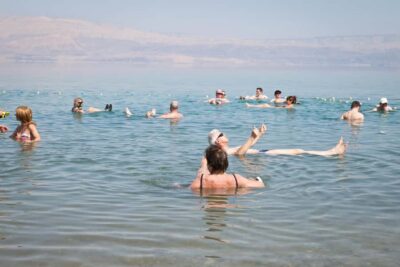
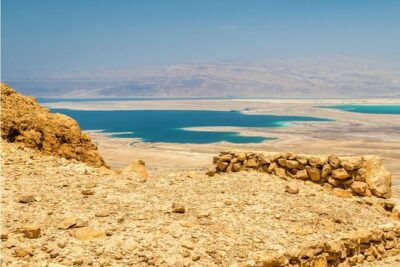
Masada and the Dead Sea Day Trip from Jerusalem
Read our review →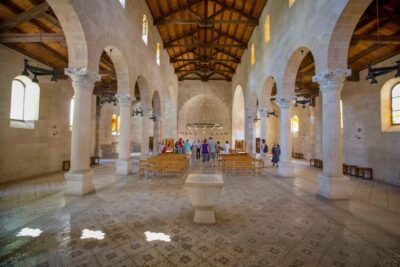
Nazareth and the Sea of Galilee Day Trip from Jerusalem
Read our review →
Browse the lists this tour appears in