
Reviewed · TOURS IN JERUSALEM
Jerusalem: Dual Narrative Tour
Jerusalem’s Old City is not just a collection of holy buildings. It is a place where several communities attach different meanings to the same stones. This tour puts that tension at the center, pairing a Jewish guide with a Palestinian guide so you can hear how both communities understand Jerusalem’s past and present. The two-guide format is the main reason to book.
I like the way the tour connects famous sights to the arguments around them, rather than treating them as isolated monuments. I also like its range: the Roman Cardo, an Armenian church, the Holy Sepulchre, the Western Wall, and Al Aqsa Mosque all appear in one half-day walk. The drawback is the pace. Four and a half hours is a long, hot stretch with no food break, and some people found it hard to hear or felt rushed at crowded sites.
Key points to know before booking
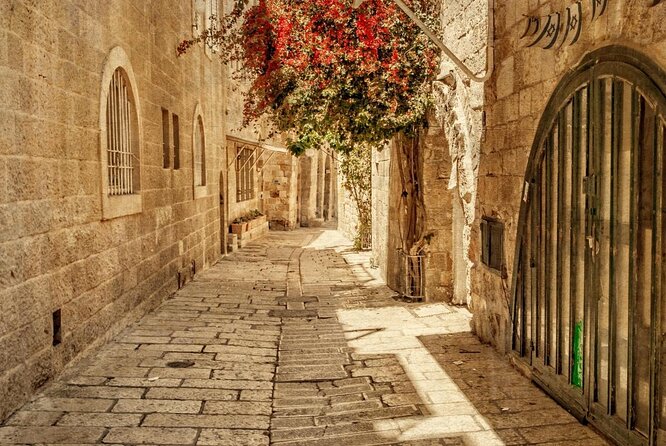
- Two guides, two lived perspectives: A Jewish Israeli guide and a Palestinian guide explain Jerusalem’s history and current disputes side by side.
- Nine major stops: The route covers Jaffa Gate, four Old City quarters and communities, the Holy Sepulchre, Via Dolorosa, the Western Wall, and Al Aqsa Mosque.
- History beneath the pavement: The Roman Cardo discussion looks at what was excavated, what was removed, and how modern claims are tied to earlier periods.
- A serious political tour: You will hear about borders, contested space, the 1967 capture of East Jerusalem, and the competing Jewish and Islamic traditions tied to the Temple Mount and Noble Sanctuary.
- Plan for heat and walking: Bring water and a hat, wear clothing covering your shoulders and knees, and expect a moderate level of physical effort.
- Good value for a first Jerusalem day: At $65, the tour gives you two professional guides and a broad introduction to the Old City without separate admission charges at the listed stops.
Why the dual narrative matters in Jerusalem
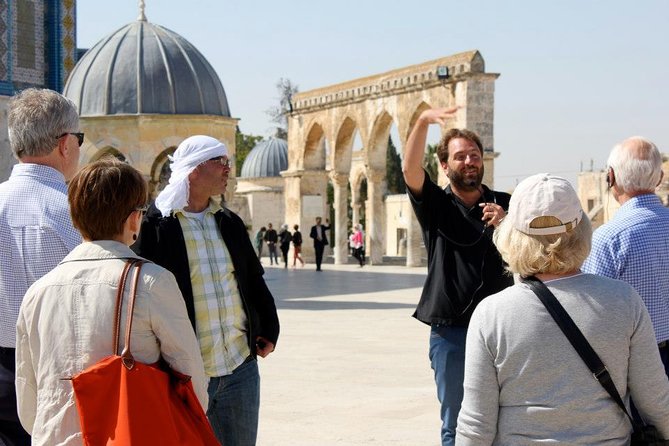
Many Jerusalem tours tell a clean story. This one does not. It asks you to notice how a sign, excavation, building, or open plaza can carry different meanings for Jewish, Christian, and Muslim communities.
That approach is especially useful if you are new to Israel and Palestine. You will not leave with every political question solved, but you should have a clearer sense of why the disputes are so difficult. The guides explain not only what happened, but also why different communities remember the same event in different ways.
The format works best when the guides treat each other with respect. The strongest moments come from hearing the two perspectives in the same place, rather than taking separate tours and trying to compare them later. The discussion is direct, but the tone is intended to remain civil. You should come ready to listen, ask questions, and accept that some answers will remain contested.
Other trips people book in Jerusalem:
- From Jerusalem: Masada & Dead Sea Full Day Tour with Pick Up
★ 4.5 · 815 reviews - Masada and the Dead Sea Day Trip from Jerusalem
★ 4.5 · 757 reviews - From Jerusalem: Nazareth and Sea of Galilee Tour
★ 4.5 · 588 reviews
Jaffa Gate: start with the city on a map
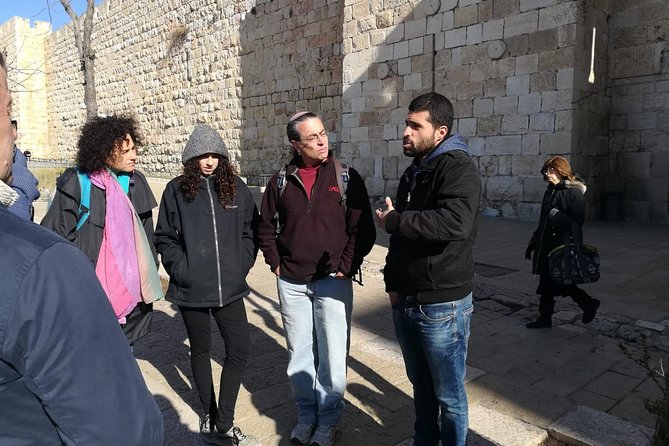
The tour begins at 9:30 a.m. in the plaza just outside Jaffa Gate. Look for a representative holding a Jerusalem: Dual Narrative Tour sign. This is a practical meeting point, close to public transportation and easy to identify within the Old City approach.
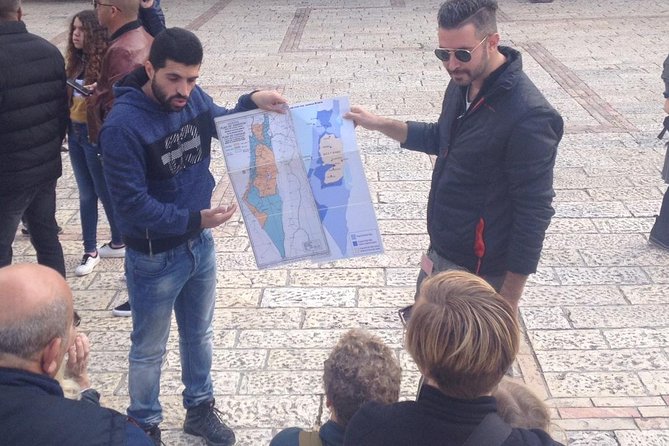
The opening talk gives you a basic sense of Jerusalem’s geography and the relationship between Israel and Palestine. The guide also points to the sign at the entrance and asks what it says about the way ruling powers mark and claim space.
That is a smart place to begin. Before you reach a church, mosque, or wall, you start thinking about who controls public language and how official symbols shape your understanding of a place. The 20-minute introduction helps you get your bearings before entering the narrow streets.
Armenian Quarter: a small community with a large story
The 10-minute stop in the Armenian Quarter focuses on Armenian identity and the signage commemorating the Armenian genocide. This is easy to miss if you are rushing between the better-known holy sites, yet it adds an important layer to the Old City.
You learn how an Armenian community fits into a city usually described through its Jewish, Christian, and Muslim connections. The stop also shows how memory is displayed in public and how communities preserve their own identity in a crowded political setting.
Do not expect a long visit here. It is a short explanation rather than a full tour of Armenian institutions. Its value comes from widening the story before the route moves into the Jewish Quarter.
Jewish Quarter and the Roman Cardo
The Roman Cardo gives the tour a chance to examine how archaeology is used to connect present-day Jewish life with earlier periods in Jerusalem. You will hear about the ancient street, the excavation, and the layers that were removed to reveal the current arrangement.
This is more than an archaeology lesson. The ground beneath the Old City is part of the argument about who belongs here and how modern claims are linked to ancient history. The guides explain the Israeli Jewish narrative without pretending that excavation is politically neutral.
The stop lasts about 20 minutes. That is enough for a clear explanation, but not enough for a detailed archaeological visit. If you want to study the ruins closely or take your time with the displays, plan a separate visit.
Same base, a different sort of day:
- Nazareth and the Sea of Galilee Day Trip from Jerusalem
★ 4.5 · 446 reviews - From Jerusalem: Masada&Dead Sea Tour INCLUDING ENTRANCE FEES
★ 4.3 · 392 reviews - Jerusalem: Guided Walking Tour of the Old City
★ 4.7 · 386 reviews - Full Day City Tour of Jerusalem
★ 4.1 · 367 reviews
St Mark’s Syriac Church and the rooftop view
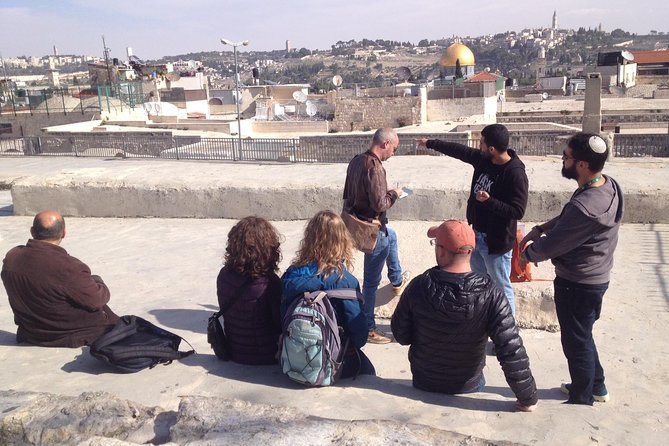
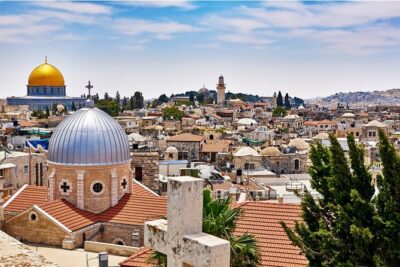
At St Mark’s Syriac Church, the tour stops above the church at a rooftop looking toward East Jerusalem. The view helps turn abstract borders and place names into something you can see.
The guide reviews Jerusalem’s main landmarks and the boundaries that shape life around the Old City. This is one of the more useful moments for getting the geography straight, especially if you have arrived without much background.
The stop is short, around 10 minutes. The rooftop view is used mainly as a teaching tool, not as a long photo break. Keep your camera ready, but listen closely because the explanation moves quickly.
Church of the Holy Sepulchre: three traditions in one building
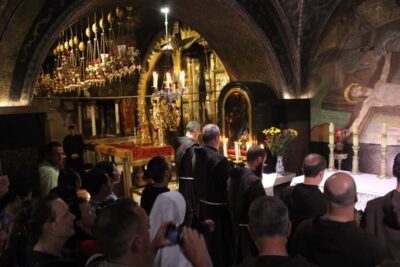
The Church of the Holy Sepulchre is the Christian center of the tour. The guides explain its importance in Christian tradition and place it within both Israeli and Palestinian narratives.
Inside, you visit major areas of the church. The site can be crowded and confusing, so the two-guide format is useful. One guide can help explain the religious meaning while the other adds political and historical context.
Allow about 30 minutes here. That is enough for an introduction and a look at major areas, but not necessarily enough to stand in every queue or examine the church at a slow pace. If seeing the tomb of Jesus is a personal priority, I would return separately. The tour’s purpose is interpretation, not an extended devotional visit.
The same advice applies to the Via Dolorosa. The route includes discussion of the Way of the Cross and concludes near the fifth station and the Austrian Hospice, but the walking portion may not feel like a complete pilgrimage route. You are getting context and orientation, not a leisurely procession through every station.
Muslim Quarter: communities, connections, and present tensions
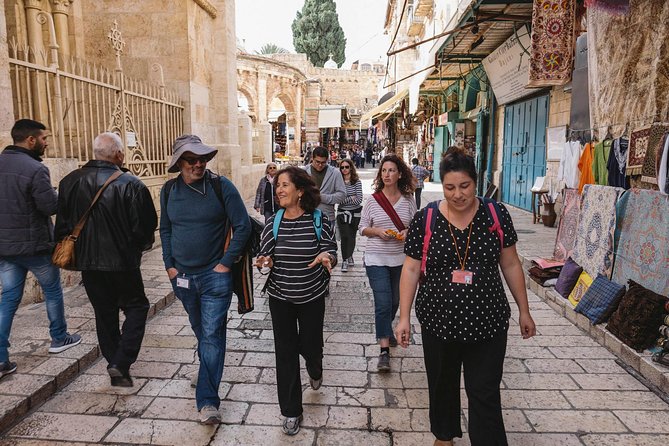
The walk through the Muslim Quarter lasts about 15 minutes. The guides discuss the communities that live in the Old City, the quarter’s links to the wider Muslim world, and present tensions.
This portion helps balance the focus on the Western Wall and Christian holy places. You see the Old City as more than a set of monuments. It is also a lived-in place with homes, businesses, religious institutions, and strong ties beyond Jerusalem.
The time is brief, so do not expect a detailed tour of every street. Instead, use it to notice how the quarter fits into the larger story and to ask questions while the points are fresh.
Via Dolorosa and the Austrian Hospice
The Via Dolorosa section brings the Christian route into the wider discussion. The tour concludes near the fifth Station of the Cross and the Austrian Hospice, where the guides offer final thoughts and answer questions.
This is a good place to pause mentally. By now, you have heard about Roman rule, Armenian memory, Jewish historical claims, Christian devotion, Muslim identity, and current political control. The final question period gives you a chance to sort out the parts that may seem tangled.
The tour is intellectually demanding, and this is where you may want more time. Some participants felt that the pace was too fast to cover the Via Dolorosa as fully as expected. If you want a slow walk along the route, schedule it independently.
Western Wall and Al Buraq Square
The Western Wall stop covers the Second Temple and the long Jewish tradition of pilgrimage to its remains. The guides also explain Al Buraq, the Islamic tradition connected to Muhammad’s flight to Jerusalem, and the significance of the adjacent square.
The important point is that the wall and plaza cannot be understood from one religious tradition alone. The same area is sacred in Jewish and Islamic memory, and its appearance and control changed after Israel captured East Jerusalem more than 50 years ago.
The stop is planned for about 25 minutes. Expect security procedures and a public space where clothing and conduct matter. The tour does not charge separate admission for this stop, but access can be affected by religious observances or local conditions.
Al Aqsa Mosque and the Noble Sanctuary
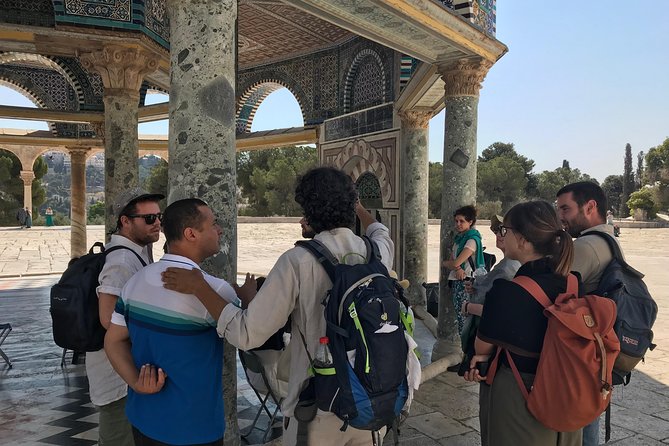
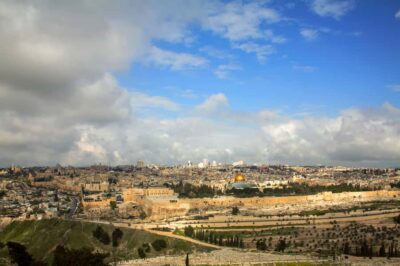
The final major site is the Temple Mount, known in Islamic tradition as the Noble Sanctuary. The tour allows about an hour here, making it the longest stop.
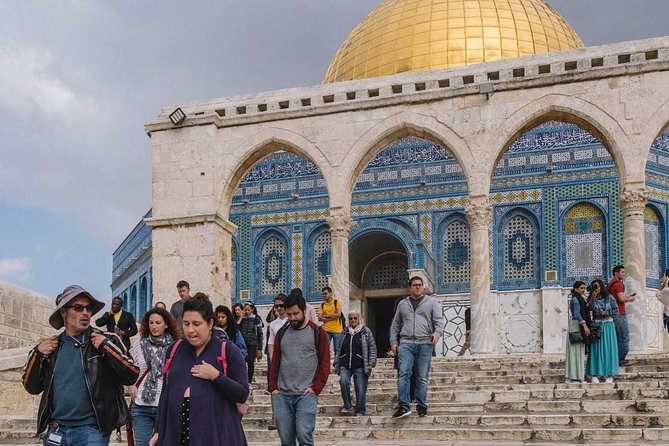
You view the tiled Dome of the Rock and Al Aqsa Mosque while learning why this platform matters to all three major monotheistic faiths. The guides explain the religious importance of the site and why it remains a flash point between Israelis and Palestinians.
This is likely the most politically sensitive part of the walk. You should expect careful explanations rather than a simple list of dates. The two narratives are especially useful here because the same stones carry different claims, memories, and fears.
Dress rules are important. Men and women must cover their knees and shoulders at places of worship and selected museums, and shorts or sleeveless tops are not allowed. Large electronics should not be brought. Bring a hat and plenty of water, but keep your belongings manageable.
What $65 buys you
The $65 price is fair if you want context as much as sightseeing. You receive two professional guides and a tour host for roughly four and a half hours, with no separate admission charges listed for the stops.
The value is not in skipping lines or using private transportation. You walk between the sites, and food, drinks, and transport to and from the Old City are not included. The real benefit is the paired presentation and the amount of political and historical explanation packed into one morning.
A private guide would give you more control over timing, while a standard Old City tour may cost less or move faster through the major monuments. This tour makes sense if you specifically want the Jewish and Palestinian perspectives presented together.
Pace, heat, sound, and group size
The group can include up to 20 people. That is small enough for a discussion, but not so small that everyone will always stand close to the guides. In narrow streets and crowded courtyards, hearing may be difficult.
The walk lasts about 4 hours and 30 minutes, with no listed meal break. One direct criticism of the format is that it can feel long, hot, and tiring, especially if you arrive without water or expect time to sit down.
Start early, eat beforehand, and wear practical shoes. A hat is specifically recommended. You need moderate physical fitness, and you should be comfortable standing and walking for most of the morning.
The tour is booked, on average, about 25 days ahead, so reserve early if your schedule is fixed. Your mobile ticket is confirmed at booking. Free cancellation is available until 24 hours before the local start time. If the minimum number is not reached and the tour is canceled, you are offered another date or experience, or a full refund.
Who will get the most from this tour?
I would choose this tour for a first visit to Jerusalem if I wanted a serious introduction to the city’s religious and political divisions. It suits people who enjoy history, current affairs, and open discussion more than those looking for a quiet sightseeing walk.
It is also a good fit for families with older children, students, and anyone trying to understand Israel and Palestine beyond headlines. The guides are expected to answer questions, and the format gives you a chance to test your own assumptions.
I would be more cautious about booking it for young children, anyone with limited walking ability, or anyone who wants a relaxed food-focused morning. The route is dense with information, and the lack of a planned break may be tiring.
Should you book the Jerusalem Dual Narrative Tour?
Book it if you want to see the Old City through more than one national and religious viewpoint. The strongest parts are the two-guide format, the explanation of contested places, and the range of sites covered in a single half-day.
Skip it if you prefer to explore at your own pace, spend a long time inside each church or shrine, or avoid political discussion while sightseeing. For most curious first-time visitors, $65 is a reasonable price for the context. Just arrive fed, covered, hydrated, and ready to walk.
FAQ
How long is the Jerusalem Dual Narrative Tour?
The tour lasts approximately 4 hours and 30 minutes.
Where does the tour begin?
It begins at Jaffa Gate in Jerusalem’s Old City. Meet in the plaza just outside the gate and look for a representative holding a Jerusalem: Dual Narrative Tour sign.
Where does the tour end?
The stated end point is the Austrian Hospice at Via Dolorosa Street 37.
What time does the tour start?
The listed start time is 9:30 a.m.
Who leads the tour?
The tour includes two professional guides, one Jewish and one Palestinian, along with a tour escort or host.
Which major sites are included?
The route includes the Church of the Holy Sepulchre, the Western Wall, Al Aqsa Mosque, the Dome of the Rock viewpoint, the Roman Cardo, the Armenian Quarter, the Muslim Quarter, Jaffa Gate, and part of the Via Dolorosa.
What should I wear?
Shoulders and knees must be covered for both men and women. Shorts and sleeveless tops are not allowed in places of worship and selected museums.
Can I cancel for a refund?
You can cancel for a full refund up to 24 hours before the experience starts. Cancellations or changes made less than 24 hours before the start time are not accepted for a refund.
Just added in Jerusalem
- 2-Day Northern Israel Tour from Jerusalem: Golan Heights, Nazareth and the Sea of Galilee★ 4.5 · 9 reviews
- Golan Heights Day Trip from Jerusalem★ 4.5 · 20 reviews
- Jerusalem Old City★ 4.5 · 43 reviews
- Jerusalem: The Center of the Universe – Walk the “Holy City” with GaryTheGuide★ 5.0 · 38 reviews
- Jerusalem and Bethlehem Tour from Jerusalem★ 4.0 · 45 reviews
- Jerusalem, Dead Sea and Bethlehem from Jerusalem★ 4.0 · 43 reviews
- Morning Private Tour to Discover Jerusalem★ 5.0 · 50 reviews
- Old Jerusalem Full-Day Tour★ 4.5 · 57 reviews
Tours in Jerusalem, compared.
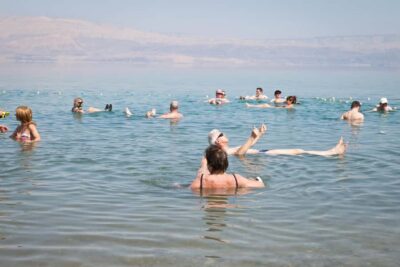
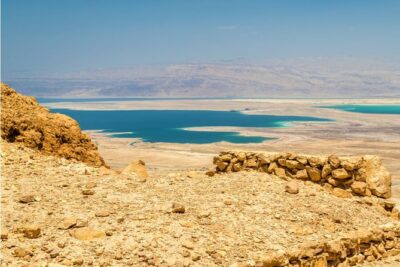
Masada and the Dead Sea Day Trip from Jerusalem
Read our review →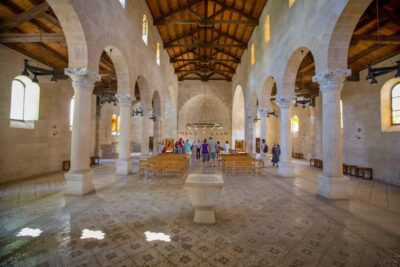
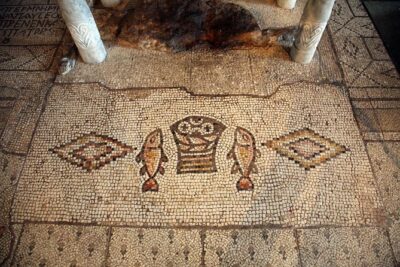
Nazareth and the Sea of Galilee Day Trip from Jerusalem
Read our review →
Browse the lists this tour appears in