
Reviewed · HISTORICAL TOURS
Jerusalem Heritage Private Tour
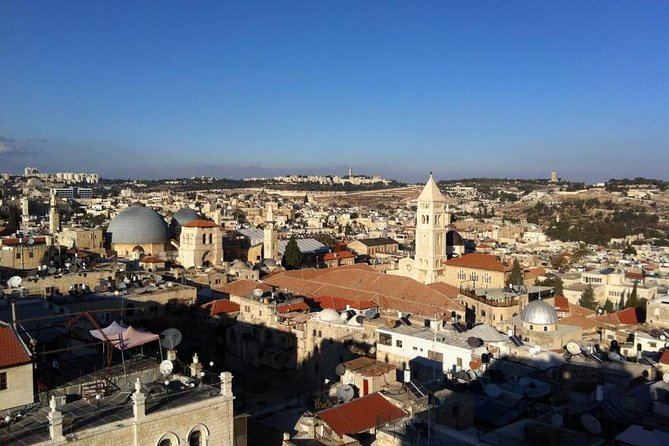
Jerusalem’s Jewish story comes into sharp focus on this private tour, which moves from the Western Wall and ancient priestly homes to the rebuilt Hurva Synagogue and Yad Vashem. It is a full day of sacred places, archaeology, destruction, survival, and modern Jewish life.
I like the way you can shape the day around your interests, and I like having private transport from Tel Aviv rather than sorting out the long trip yourself. The chance to work with a guide such as Levi Zelkind is another plus: he speaks several languages and has a reputation for listening closely to what each group wants.
The main drawback is cost. At $1,199 for up to four people, this makes the most sense for a family or small group that values a private guide. You will also need modest clothing, and the paid entrances to the Herodian Quarter and Hurva Synagogue are extra.
Key points to know before booking
- The Western Wall anchors the day: You visit the last surviving section of the retaining wall around the Second Temple.
- The Herodian Quarter reveals private life: Mosaic floors, ritual baths, wine cellars, tableware, and bathing rooms show how wealthy Jewish families lived nearly 2,000 years ago.
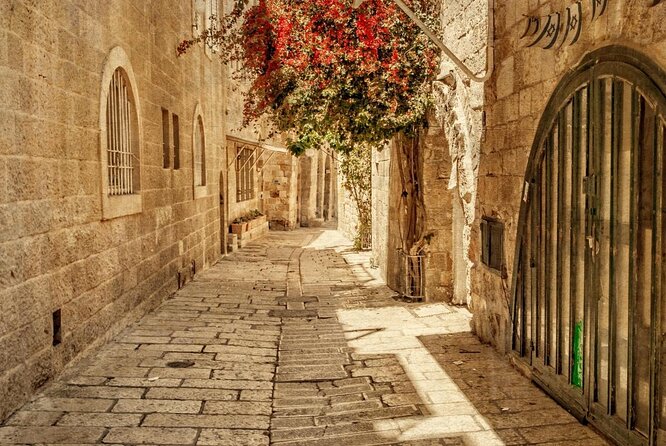
- The Jewish Quarter combines old and rebuilt Jerusalem: The Cardo, Wide Wall, and Hurva Synagogue tell a story of Roman rule, Jewish renewal, war, and reconstruction.
- Yad Vashem requires time and emotional energy: The two-hour visit covers the Nazi persecution and the Holocaust, then ends with views across modern Jerusalem.
- Private touring adds flexibility: Your guide can spend more time at a site that matters to you or adjust the order of the day.
- The price works best for four people: A full group brings the cost to about $300 per person, before any extra entrance fees.
From Tel Aviv to Jerusalem in a private vehicle

The day begins with a 9:00 am pickup at your Tel Aviv hotel. You ride east in a private air-conditioned vehicle, with hotel pickup and return included. That saves you from arranging separate transport and gives your guide time to set the scene before you reach Jerusalem.
The advertised duration is about six to eight hours. The listed visits account for roughly six hours, not including the drive between Tel Aviv and Jerusalem, so expect a substantial day. You will want comfortable shoes, water, and enough energy for stone lanes, museum galleries, and several hours of standing.
The private format is the tour’s biggest practical advantage. The group limit is four people, so you do not need to follow a fixed pace set by a busload of strangers. If your family wants more time at the Western Wall, or you would rather shorten a stop and give Yad Vashem your full attention, you can ask.
That flexibility also depends on clear communication. Tell the guide at the beginning if your priorities are prayer, archaeology, synagogue architecture, Holocaust education, shopping, or a broad overview. One past family outing included time for souvenir shopping, showing that the guide can respond to interests beyond the printed route.
A few more things to do in Jerusalem worth a look
- Jerusalem Yad Vashem Holocaust History Museum Tour
★ 5.0 · 98 reviews - Kabbalah Heritage Walk
★ 5.0 · 23 reviews - Jerusalem Christian Heritage Private Tour
★ 5.0 · 9 reviews
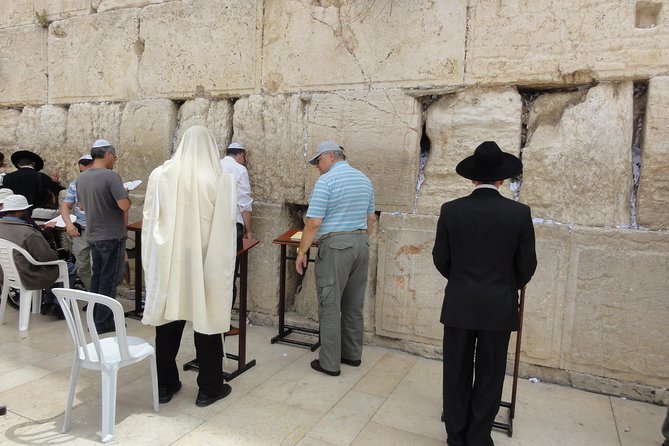
The Western Wall and the weight of the Second Temple
The first major stop is the Western Wall, also called the Kotel. The wall is part of the retaining structure built around the Second Temple complex under Herod. After the temple was destroyed in AD 70, this surviving section became the central Jewish place of prayer in Jerusalem.
Your visit lasts about an hour, and there is no admission charge. The value here is not simply the stones themselves. Your guide can explain how the wall fits into the larger Temple Mount area and why Jewish visitors come from around the world to pray beside it.
The setting asks for respectful behavior. Since this is an active religious site, dress appropriately and follow local customs. The stated rule for this tour requires knees and shoulders to be covered for both men and women, with no shorts or sleeveless tops. That same standard applies to selected museums and houses of worship during the day.
The Western Wall can feel crowded or intense, depending on the time and the religious calendar. A private guide cannot control the crowd, but can help you understand what you are seeing and keep the visit focused rather than turning it into a quick photo stop.
The Herodian Quarter: Jerusalem behind wealthy doors
The Herodian Quarter, also called the Wohl Archaeological Museum, changes the scale of the visit. At the Western Wall, you are looking at a monumental public and religious setting. Here, you see the homes of Jerusalem’s wealthy residents during the late Second Temple period.
The excavated buildings include mosaic floors, ritual baths, bathing rooms, wine cellars, pillars, tableware, and other household remains. These details help you picture the daily lives of the priestly and prosperous families who lived in Jerusalem nearly 2,000 years ago.
This is one of the strongest stops for anyone who enjoys archaeology. The remains do not present a polished modern neighborhood. Instead, you see foundations and preserved rooms, with objects and decoration that suggest money, status, ritual practice, and private comfort.
Admission is not included, so confirm the current entrance fee when booking. The visit is scheduled for about an hour. You will get more from it if you ask the guide to connect the rooms to the religious and political world of Herod’s Jerusalem, rather than simply pointing out mosaics.
The site may be less immediately moving than the Western Wall or Yad Vashem. Its appeal comes from close observation. If you prefer grand monuments, this could feel quiet. If you like seeing how people actually lived, it may be the most revealing archaeological stop of the day.
The Jewish Quarter and the rebuilt Hurva Synagogue
The Jewish Quarter brings together several centuries in a short walk. It was destroyed in 1948 during the war and later rebuilt. Today, ancient remains sit beside reconstructed streets and functioning religious buildings, giving you a direct view of Jerusalem’s repeated cycles of loss and renewal.
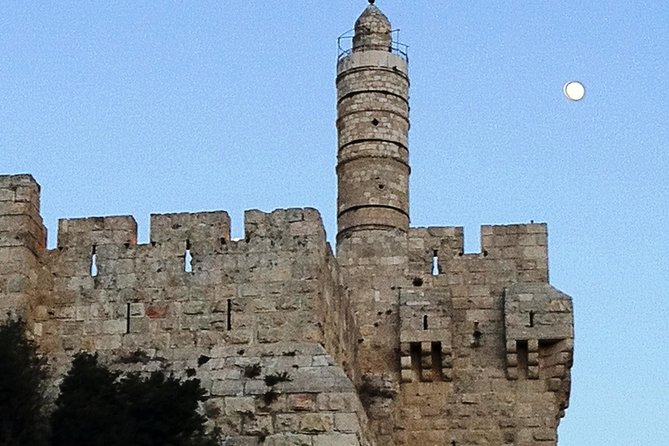
The quarter itself takes about an hour in the planned schedule. Along the way, you can see the remains of the Wide Wall, attributed to King Hezekiah and dated to 702 BC. It is a reminder that Jerusalem’s defensive story began long before the Roman period.
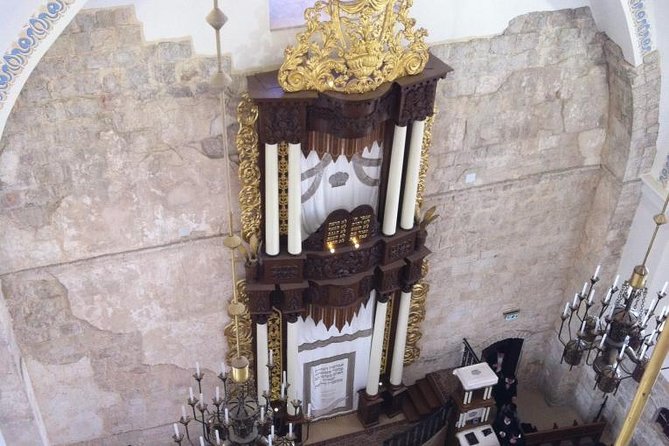
The Hurva Synagogue adds a more recent chapter. The original synagogue was linked to Ramban in the 13th century, and the building was destroyed and rebuilt several times. It was destroyed again in 1948 and reopened after reconstruction in 2010.
The present building represents a revival of Jewish life in the quarter. Its story makes it more than an architectural stop. You are seeing a building shaped by medieval settlement, repeated destruction, war, and modern rebuilding.
The scheduled visit lasts about 30 minutes, and admission is not included. That is enough for an introduction, but not a long architectural study. If the synagogue matters to you, tell your guide early so the stop receives the attention you want.
Same base, a different sort of day:
- From Jerusalem: Masada & Dead Sea Full Day Tour with Pick Up
★ 4.5 · 815 reviews - Masada and the Dead Sea Day Trip from Jerusalem
★ 4.5 · 757 reviews - From Jerusalem: Nazareth and Sea of Galilee Tour
★ 4.5 · 588 reviews - Nazareth and the Sea of Galilee Day Trip from Jerusalem
★ 4.5 · 446 reviews
Walking the Roman Cardo
The Cardo was Jerusalem’s main Roman-Byzantine thoroughfare. The restored section within the Jewish Quarter gives you a sense of the city’s later Roman identity, after the Second Temple period had ended.
The visit takes about 30 minutes and has no listed admission fee. Look for the street’s broad alignment, stonework, and columns. Your guide can help you understand how a public avenue fit into the city’s commercial and civic life.
The Cardo is easy to underestimate because only part of the ancient street is visible. It works best as part of the larger sequence: the Second Temple world at the Herodian Quarter, Roman Jerusalem at the Cardo, and the modern Jewish Quarter around you.
This stop is also practical. The Cardo lies within the Old City’s pedestrian lanes, so you get a break from the vehicle and experience Jerusalem at walking level. The stone surfaces can be uneven, so wear shoes that can handle a full day on foot.
Two hours at Yad Vashem

Yad Vashem is the final major stop and the most emotionally demanding. The museum and memorial center tell the story of the six million Jews murdered in the Holocaust, tracing the growth of Nazi persecution and the struggle of Jewish people to survive.
The planned visit lasts two hours. That is enough time for a serious introduction, but not enough to take in every part of the center at a slow pace. Pay attention to the guide’s timing, and do not expect this section to feel like a light ending to the day.
The museum’s approach follows the progression of Nazi atrocities and then presents the fight for life and freedom. The purpose is not only to record death, but also to preserve individual and collective memory for future generations.
The visit ends with a terrace offering broad views over modern Jerusalem. That change in viewpoint is carefully meaningful. After confronting the destruction of European Jewish life, you look across a modern Jewish state and a living city.
The museum is listed with free admission, but opening arrangements and access can change, so it is sensible to confirm details before you go. Most people can take part, but the subject matter may be difficult for children or anyone who wants a purely archaeological sightseeing day.
How the private guide changes the experience
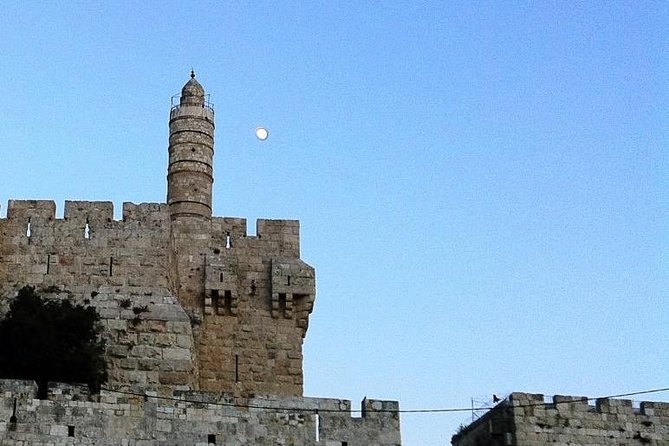
A private guide can make a major difference in Jerusalem because the city’s sites overlap in complicated ways. A wall may be sacred to one tradition, built by another ruler, and surrounded by remains from several later periods. A good explanation keeps the layers connected.
Levi Zelkind is identified with this tour and has guided families in several languages. The strongest practical detail about his style is his attention to personal interests. He has adjusted time for souvenir shopping and accepted a last-minute booking despite irregular communication, which suggests a flexible approach.
The operator also uses other guides when needed. One past booking was handled by a different guide after the usual guide had to leave Israel unexpectedly. The useful question here is simple: if you have a strong preference for Levi, ask who will lead your date before booking.
The private setting also lets you ask direct questions. You can pause at a mosaic, compare the Cardo with the Herodian homes, or ask how the Jewish Quarter changed after 1948. That kind of conversation is harder on a fixed group tour.
Is $1,199 good value?

The price is $1,199 per group, with a maximum of four people. At four participants, the cost works out to about $300 per person. For two people, it is roughly $600 each, before paid site entrances. That is a serious price for a day tour.
You are paying for the private vehicle, hotel pickup and drop-off from Tel Aviv, a private guide, and an itinerary that combines Old City walking with Yad Vashem. You are also paying for control over the pace and the chance to ask for adjustments.
The value improves if you are a family or group of four. It is harder to justify for one or two people unless private service and direct guiding are central to your plans. Lunch is not included, so plan for that separately. Paid admission to the Herodian Quarter and Hurva Synagogue is also extra.
There are cheaper ways to see Jerusalem, including public transport and group tours. Those options may suit you if price matters more than flexibility. This tour earns its higher cost through convenience and personal attention, not through a large number of included extras.
Who should book this Jerusalem day?
I would choose this tour if you want Jewish heritage to be the main theme of your Jerusalem visit. It gives you ancient worship, archaeological evidence, synagogue history, Roman remains, Holocaust remembrance, and modern Jewish identity in one carefully linked day.
It suits families, couples, and small groups who want a guide to adapt the discussion. It also helps if you are visiting Israel on a short schedule and need private transportation from Tel Aviv.
You should think twice if you want a relaxed day with little walking, or if you prefer to explore the Old City independently. The six to eight-hour schedule is full, and Yad Vashem can leave you emotionally tired. The dress requirements may also require advance planning.
Book at least 24 hours ahead if you want the option of a full refund after cancellation. Changes or cancellations made within 24 hours are not accepted for a refund, based on the stated policy.
My verdict
This is a serious, well-focused introduction to Jerusalem’s Jewish heritage. I especially like the movement from public sacred space at the Western Wall to private domestic remains in the Herodian Quarter, then onward to the rebuilt Jewish Quarter and Yad Vashem.
The cost is high, but the private vehicle, small group, flexible schedule, and guide access give it a clear purpose. Book it if you can fill the vehicle with up to four people and want context rather than a quick checklist of sights.
If you want the best value, confirm the guide, ask about current entrance fees, dress for every religious site, and tell the guide which stop matters most to you. If archaeology and ancient Jerusalem are your priority, protect time at the Herodian Quarter. If modern Jewish memory is central, allow Yad Vashem to remain the emotional centerpiece.
FAQ
Where does the tour start?
The tour starts with pickup at your Tel Aviv hotel at 9:00 am.
How long does the Jerusalem Heritage Private Tour last?
The tour lasts approximately six to eight hours.
How many people can join the private tour?
The maximum group size is four participants.
Is transportation included?
Yes. The tour includes transport by private air-conditioned vehicle, plus hotel pickup and drop-off.
Is lunch included?
No. Lunch is not included in the tour price.
Are entrance fees included?
Paid site entrance fees are not included. The Herodian Quarter and Hurva Synagogue are listed as sites where admission is not included. The Western Wall, Yad Vashem, Jewish Quarter, and Cardo are listed with free admission.
What should I wear?
You must cover your knees and shoulders. Shorts and sleeveless tops are not allowed for men or women at places of worship and selected museums.
Can the itinerary be changed?
Yes. This is a private tour with a customizable itinerary. You can tell the guide if you want more time at particular sights or have other interests.
What is the cancellation policy?
You can cancel up to 24 hours before the start time for a full refund. Cancellations or changes made less than 24 hours before the tour are not accepted for a refund.
Just added in Jerusalem
- jerusalem classic tour★ 5.0 · 3 reviews
- kosher Israel wine tour★ 5.0 · 4 reviews
- Tour of Jerusalem & Dead sea private tour★ 5.0 · 4 reviews
- West Bank Tour from Jerusalem and Tel-Aviv – Bethlehem & Jericho★ 5.0 · 6 reviews
- full day tour Jerusalem price per van up to 6 people★ 5.0 · 8 reviews
- Full Day Private Christian Tour in Jerusalem with Tour Guide★ 5.0 · 28 reviews
- Magical Walking Tour in Old City of Jerusalem★ 5.0 · 27 reviews
- Tour of Masada-Dead Sea and Qumran from Jerusalem★ 3.5 · 11 reviews
Historical Tours, compared.

Jerusalem Yad Vashem Holocaust History Museum Tour
Read our review →



Browse the lists this tour appears in