
Reviewed · TOURS IN JERUSALEM
Israel Museum Must See High-Lights
The most powerful part of this visit is the Dead Sea Scrolls, displayed inside the Shrine of the Book. You’ll see ancient biblical texts, including a full facsimile of Isaiah, then connect them to Jerusalem’s past through the Second Temple model and the museum’s archaeology galleries.
I like the tight focus and the private format. Uri Goldflam brings together Bible, archaeology, geography, Jewish culture, and modern Israeli history in a way that helps you understand how the pieces fit. I also like the chance to see the museum’s major sights without losing half a day to wrong turns. The main consideration is price: at $512.83 for up to six people, this is a strong deal for a full group but costly for one or two people.
Key points at a glance
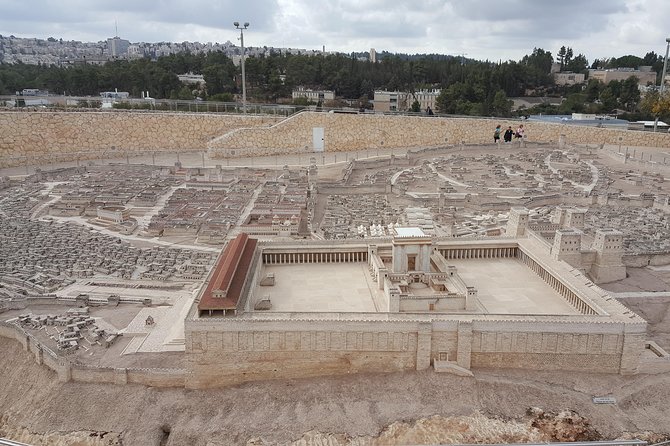
- The Second Temple model gives you instant bearings: A 1:50 model shows Jerusalem as it may have looked in the time of Jesus.
- The Shrine of the Book holds the tour’s headline object: Ancient Dead Sea Scrolls and a full facsimile of Isaiah are presented in a striking building.
- The archaeology section follows the biblical story: The guide uses objects and sites to connect written tradition with physical evidence.
- The Jewish Life and Culture wing broadens the visit: Weekly, seasonal, and annual traditions show what Jewish communities across continents share.
- A private group keeps the pace flexible: Only your party participates, with space for questions and discussion.
- The value improves with six people: The $512.83 group price works out far better when shared among family or friends.
Why this museum visit needs a plan
The Israel Museum is large enough to wear you out before you reach its best rooms. You can wander in with good intentions and still leave having missed the exhibits that give Jerusalem its strongest historical context.
This private highlights tour solves that problem by giving you a clear route. The planned visit takes about two to four hours, with the listed stops adding up to roughly three hours and 45 minutes. That leaves room for walking, questions, transitions, and the occasional pause when an artifact catches your attention.
I would choose this format if the museum is important to your Jerusalem plans but you do not want to spend a full day studying floor plans and labels. It is also useful if you are visiting with family members who have different levels of interest. A guide can explain the main point, answer follow-up questions, and keep the group moving.
The private setup matters here. You are not joining a large crowd that must stay on someone else’s schedule. Your group can ask about biblical passages, Jewish customs, excavation finds, or the modern meaning of an object without worrying about holding up a busload of people.
A few more things to do in Jerusalem worth a look
- Jerusalem Yad Vashem Holocaust History Museum Tour
★ 5.0 · 98 reviews
The Second Temple model puts Jerusalem in place
The first stop is the Second Temple Jerusalem Model, also called the Holy Land Model. Built at a 1:50 scale, it presents Jerusalem during the period associated with the Second Temple and the time of Jesus.
This is more than a model for taking a quick photograph. Ancient Jerusalem can be hard to picture from scattered sites and modern streets. The model shows how the city’s hills, walls, Temple complex, and surrounding areas related to one another. In a short walk around it, you can grasp the city’s basic shape far more easily than from a page of text.
I especially like this as the opening stop because it gives you a mental map for the rest of the visit. When you later see archaeological objects connected with biblical-era Jerusalem, you have a better sense of where they belonged and why the city developed as it did.
The planned time is about 45 minutes, and admission is listed as included. That should be enough for an explanation and a careful look, though your exact time may depend on how many questions your group has. If you already know Jerusalem well, this stop may feel familiar. For first-time visitors, it is likely to be one of the most useful parts of the tour.
The Shrine of the Book and the Dead Sea Scrolls
The Shrine of the Book is the emotional center of the experience. Its purpose is to display the Dead Sea Scrolls, ancient copies of biblical writings found in the Judean Desert.
The scrolls date from roughly 2,000 to 2,200 years ago. That age alone is impressive, but the real value is being able to see early versions of biblical texts and consider how they survived, were found, and reached a museum in Jerusalem. The presentation includes material connected with the discoveries and a facsimile of the complete Book of Isaiah.
The building itself is part of the visit. The unusual architecture was designed around the scrolls, so this is not a plain case-and-label museum room. The setting gives the display a sense of purpose and helps explain why the Shrine of the Book is treated as a major cultural site.
You should allow about 45 minutes here. Admission is listed as included. The stop suits religious pilgrims, history students, and anyone interested in how written texts endure across centuries. You do not need a religious background to appreciate it. The age, preservation, and discovery story are compelling on their own.
Still, keep your expectations realistic. This is a focused display, not a room filled with dozens of complete scrolls available for close inspection. Some pieces are fragile, and the full Isaiah text is represented by a facsimile. The guide’s explanation is important because the objects and architecture cannot tell the whole story by themselves.
Archaeology that connects objects to the Bible
The archaeology section takes about 90 minutes and forms the longest part of the museum visit. It is where the tour shifts from famous manuscripts to the physical remains of ancient societies.
The aim is to follow the biblical narrative through archaeological findings. That can include inscriptions, tools, vessels, decorative objects, and remains connected with daily life, worship, government, and trade. The value is not simply seeing old things. It is learning how material evidence can add context to familiar stories and show how people lived in the periods described by the Bible.
This is where Uri Goldflam’s approach appears especially useful. The supplied information about his guiding points to strong command of Israeli history, geography, biblical relationships, Jewish culture, Christianity, and the region’s politics. For this museum visit, that broad background should help him move between the object in front of you and the larger story around it.
I would expect the archaeology section to be the part that generates the most questions. You might want to ask how archaeologists date an object, what an inscription can prove, or where a find fits within the biblical timeline. A private tour gives you a better chance to stop and ask rather than simply follow a set lecture.
The drawback is that 90 minutes cannot cover every major archaeological period or exhibit in a museum this large. The word highlights matters. You are getting a selected route, not a full survey of the Israel Museum. If you have a special interest in one period, tell the guide early and ask how much time can be given to it.
Admission for this portion is listed as not included, unlike the other stops. Since the overall experience price is substantial, confirm exactly what the fee covers before booking. That detail is worth clearing up, especially for a group calculating its total cost.
Same base, a different sort of day:
- From Jerusalem: Masada & Dead Sea Full Day Tour with Pick Up
★ 4.5 · 815 reviews - Masada and the Dead Sea Day Trip from Jerusalem
★ 4.5 · 757 reviews - From Jerusalem: Nazareth and Sea of Galilee Tour
★ 4.5 · 588 reviews - Nazareth and the Sea of Galilee Day Trip from Jerusalem
★ 4.5 · 446 reviews
Jewish life across continents and generations
The final listed stop is the Jewish Culture and Life Cycle wing, scheduled for about 45 minutes. After the ancient texts and archaeological material, this section turns toward lived tradition.
The focus is on what Jewish communities have shared across different continents for hundreds of years. You can expect displays organized around weekly, seasonal, and annual events, along with customs connected with stages of life. This gives the visit a human scale. Instead of seeing Jewish history only through ancient objects, you see how traditions shape homes, calendars, celebrations, and family life.
I like the way this stop widens the story. The archaeology section is rooted mainly in the ancient past, while the Jewish culture galleries show continuity and variety over time. The two sections work well together, especially if you are trying to understand Jewish identity beyond a single country or period.
The visit may be especially helpful for families or groups with Jewish heritage. It can also give non-Jewish visitors a clear introduction to customs they may encounter elsewhere in Jerusalem. Since the tour is private, you can ask questions about unfamiliar practices without feeling self-conscious.
Admission is listed as included. The 45-minute schedule should give you an introduction, but not enough time for every case. If this is your main reason for visiting the Israel Museum, you may want to plan a separate return visit or ask whether the guide can adjust the balance among the stops.
Uri Goldflam’s guiding style
The strongest repeated theme in the supplied comments is Uri Goldflam’s ability to make large amounts of information feel lively and useful. People describe him as warm, engaging, and able to connect history, geography, religion, Bible studies, and current Israeli affairs.
That combination matters at this museum. The exhibits cover subjects that can quickly become technical. A guide who only recites dates may leave you with a headache. Uri’s reputation for making information enjoyable should help keep the visit conversational rather than classroom-like.
His background also appears well suited to mixed groups. He is described as proud of his Jewish heritage while respectful toward Christianity, and as someone who helps groups feel safe and comfortable. That balance is important in Jerusalem, where religious and political subjects can become personal very quickly.
You should still take an active role. Tell Uri what interests you before the tour begins. If your group includes teenagers, ask for explanations that connect objects to everyday life. If you are visiting for religious study, say so. If you are mainly interested in archaeology, request more time with the relevant exhibits.
The experience provider is Uri Goldflam through Travel Trailer Israel. The information provided does not promise that Uri personally leads every booking, so confirm the guide’s name when you receive booking confirmation if that matters to you.
What the $512.83 price really buys
The listed price is $512.83 per group of up to six people. It is not a per-person rate, so the math changes sharply depending on your group size.
For six people, the cost is about $85.47 each. For four people, it is about $128.21 each. For two people, it is about $256.42 each. One person would pay the full group rate. That makes this most attractive for an extended family, a group of friends, or several couples traveling together.
The price pays for a private guided experience and an air-conditioned vehicle. Pickup and drop-off can be arranged from locations in Jerusalem, which may save time and simplify the start of the day. Admission is included for the Second Temple model, Shrine of the Book, and Jewish Culture and Life Cycle wing, while the archaeology section is specifically listed as not included.
I would compare this cost with the value of your time. A self-guided museum visit is cheaper if you already know the collection and enjoy reading labels at your own pace. This tour makes more sense if you want the major sights explained in a logical order, or if your group would otherwise lose time wandering.
Because the admission details are not perfectly uniform, ask for a final breakdown before payment. That is not a reason to reject the tour, but it is an important budgeting step.
Timing, pickup, and practical details
The official duration is about two to four hours. The stop times suggest a visit closer to four hours if you see each section properly. Plan for an active museum visit with standing and walking, even though the pace is guided.
Pickup is offered from any location in Jerusalem on request, with front-door pickup and drop-off described as part of the service. The listed meeting point is at the museum, and the ticket redemption point is Israel Museum/Ruppin in Jerusalem. Confirm the exact meeting arrangement after booking, since the information gives both a museum meeting point and pickup as an option.
The listed opening information shows Tuesday hours from 4:00 PM to 9:00 PM for the stated period. Museum schedules can change, so check the time attached to your booking rather than relying on a general timetable. Confirmation is expected within 48 hours, subject to availability.
Service animals are allowed, public transportation is nearby, and most people can participate. The activity is private, so only your group joins. Free cancellation is available if you cancel at least 24 hours before the start time. Changes or cancellations inside that window are not refunded.
Who should book this private museum tour?
I would recommend it to first-time Jerusalem visitors who want the Israel Museum explained without spending hours planning a route. It also suits families, religious study groups, and anyone who wants ancient texts, archaeology, and Jewish tradition brought together in one visit.
It is a particularly sensible choice for groups of four to six. The fixed price becomes easier to justify, and a private guide can adjust explanations for adults, children, or mixed interests.
I would hesitate if you prefer unstructured museum time, want to see every gallery, or are traveling alone on a tight budget. The tour covers highlights, not the entire collection, and the cost is hard to defend for one person. You should also confirm admission charges and pickup details before committing.
Should you book it?
Book this if you want a focused, conversation-led visit built around Jerusalem’s ancient model, the Dead Sea Scrolls, biblical archaeology, and Jewish life. The strongest reasons are the private format, the clear route through a very large museum, and Uri Goldflam’s reported ability to connect history, scripture, geography, and culture.
Skip it if you already know the museum well or prefer to spend an entire day choosing your own exhibits. For a group sharing the price, though, this is a practical way to turn a potentially confusing museum visit into a clear introduction to Jerusalem’s past and Jewish life.
FAQ
How long does the Israel Museum highlights tour last?
The experience lasts approximately two to four hours. The listed stops total about three hours and 45 minutes, before allowing for transitions and questions.
How many people can join the private tour?
The price covers one private group of up to six people. Only your group participates.
What is the price?
The listed price is $512.83 per group of up to six people.
Is pickup available?
Yes. Pickup and drop-off can be requested from any location in Jerusalem. The listed meeting point is also at the Israel Museum, so confirm the exact arrangement after booking.
What does the tour visit?
The route includes the Second Temple Jerusalem Model, the Shrine of the Book, the Israel Museum archaeology section, and the Jewish Culture and Life Cycle wing.
Are museum admissions included?
Admission is listed as included for the Second Temple model, the Shrine of the Book, and the Jewish Culture and Life Cycle wing. Admission for the Israel Museum archaeology section is listed as not included.
Who guides the tour?
The experience provider is Uri Goldflam through Travel Trailer Israel. Confirm the assigned guide when your booking is confirmed if having Uri personally lead the visit is important to you.
Is the tour suitable for most people?
Yes. Most people can participate, and service animals are allowed. The visit takes place in a large museum, so expect walking and standing.
Can I cancel for a refund?
You can cancel at least 24 hours before the experience start time for a full refund. Cancellations or changes made less than 24 hours before the start time are not accepted or refunded.
Just added in Jerusalem
- jerusalem classic tour★ 5.0 · 3 reviews
- kosher Israel wine tour★ 5.0 · 4 reviews
- Tour of Jerusalem & Dead sea private tour★ 5.0 · 4 reviews
- West Bank Tour from Jerusalem and Tel-Aviv – Bethlehem & Jericho★ 5.0 · 6 reviews
- full day tour Jerusalem price per van up to 6 people★ 5.0 · 8 reviews
- Tour of Masada-Dead Sea and Qumran from Jerusalem★ 3.5 · 11 reviews
- Full Day Private Christian Tour in Jerusalem with Tour Guide★ 5.0 · 28 reviews
- Magical Walking Tour in Old City of Jerusalem★ 5.0 · 27 reviews
Tours in Jerusalem, compared.


Masada and the Dead Sea Day Trip from Jerusalem
Read our review →
Nazareth and the Sea of Galilee Day Trip from Jerusalem
Read our review →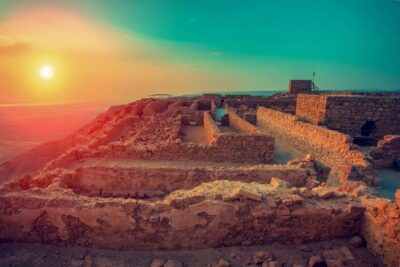


Browse the lists this tour appears in