
Reviewed · DEAD SEA TOURS
8-Night Israel Tour from Tel Aviv: Jerusalem, Dead Sea, Bethlehem, Nazareth, Northern Israel and Petra
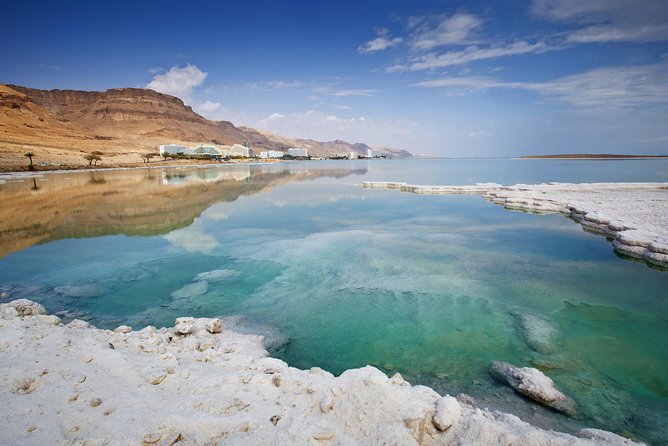
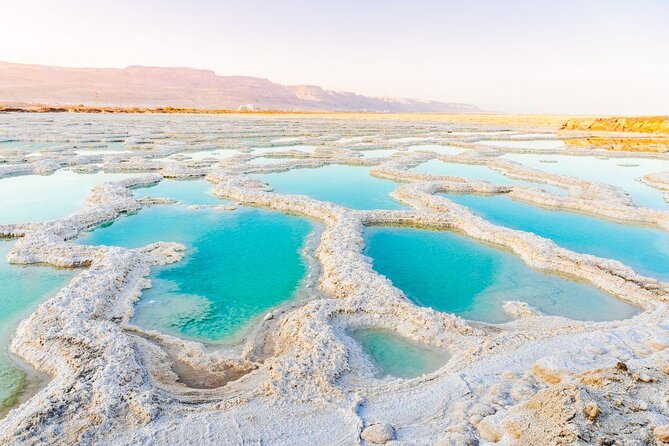
Petra is the headline, but Masada and the Dead Sea may be the most memorable opening act. You ride a cable car to Herod’s desert fortress, look across ancient Roman camps, then float in mineral-rich water at the lowest place on earth. It is a big first full day, but it tells you what this trip is about: major sights, long days, and little wasted time.
I like the way the tour brings together Jerusalem’s sacred quarters and modern food culture, especially the Via Dolorosa, Mount of Olives, and Mahane Yehuda Market. I also like the northern route, which adds Galilee, the Golan Heights, Nazareth, Akko, Haifa, and Caesarea instead of stopping with Jerusalem alone. The drawback is simple: this is a packed schedule, and some stops last only 40 to 60 minutes.
Key points to know before booking
- Masada by cable car and a Dead Sea stop make the second day an unusually strong introduction to Israel.
- Jerusalem receives a full sightseeing day, with the Western Wall, Via Dolorosa, Mount Zion, the Mount of Olives, and Mahane Yehuda Market.
- Petra is a very long day trip, lasting about 10 hours from Eilat and requiring a Jordan visa plus border fees.
- Northern Israel gets real attention, including Beit She’an, the Golan Heights, the Sea of Galilee, Nazareth, Akko, Haifa, and Caesarea.
- Hotels come in several standards, letting you match the $2,462 price to your budget.
- The pace suits an active sightseer, not someone looking for slow mornings and long free periods.
What this 8-night Israel tour is really like
This is a grand loop rather than a relaxed holiday. You arrive in Tel Aviv, travel south toward Masada and the Dead Sea, spend time in Jerusalem, head north through Galilee, return to the coast, fly to Eilat, cross into Jordan for Petra, and finish with an airport transfer.
The price of $2,462 per person includes eight nights of accommodation, breakfasts, two dinners, an air-conditioned vehicle, a professional guide, airport transfers in Tel Aviv, and return flights between Tel Aviv and Eilat. That is a substantial package, especially because the tour covers long distances and includes the Petra transport and sightseeing day.
Still, the price does not cover everything. Border and visa fees for Jordan are extra, and you need to provide passport details and flight information when booking. The group can reach 40 people, so you should expect a proper coach tour rather than a small private outing.
A guide named Avi is associated with one departure and is described as organized and well prepared. Guide assignments can vary, but a strong guide matters here. You are moving through several regions, religious traditions, and archaeological sites in a short time.
Other West Bank days out of Israel:
- From Tel Aviv: Jerusalem and Bethlehem Guided Day Trip
★ 4.3 · 1,316 reviews - Tel Aviv: Jerusalem, Bethlehem & Dead Sea
★ 4.0 · 881 reviews - Day Tour to Jerusalem and Bethlehem from Tel Aviv
★ 4.5 · 720 reviews
Day 1 in Tel Aviv, an easy arrival
Your first day is deliberately light. A representative meets you at Ben Gurion Airport with a sign bearing your name and transfers you to the hotel in Tel Aviv.
You can arrive on any flight on the arrival day, then spend the evening as you wish. That flexibility is useful after a long journey. It also means you should not expect a guided Tel Aviv sightseeing program on day one.
The airport transfer is included only on the designated arrival day. If you arrive earlier or stay longer after the tour, you arrange your own transport.
Masada and the Dead Sea, Israel’s dramatic southern opening
The second day gets straight to two of the country’s best-known sights. At Masada National Park, a cable car carries you to the plateau, saving your legs for the site itself.
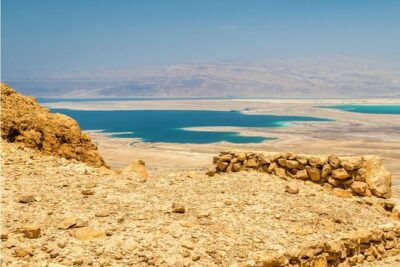
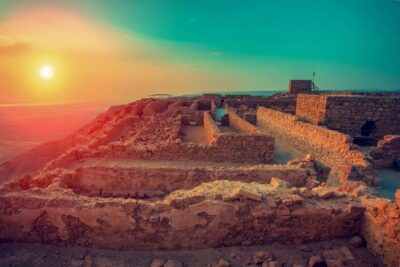
Masada was the last stronghold of Jewish Zealots during their war against Rome. The excavations include Herod’s palaces, a synagogue, bathhouse, cisterns, and Roman camps spread below the mountain. You also get wide views toward the Dead Sea, which help explain why this fortress was so difficult to attack.
The visit lasts about two hours. That is enough for a guided introduction and the main ruins, though not enough for a slow archaeological study. Wear shoes suited to uneven ground and bring water, since this is an exposed desert site.
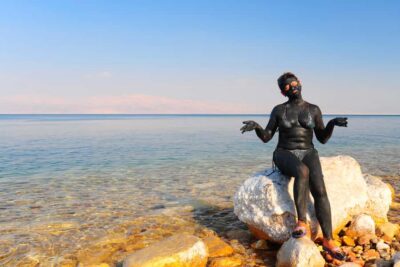
Next comes the Dead Sea. You have about two hours to enter the mineral-rich water and try the famous black mud. The water is extremely salty, so this is more about floating and feeling the unusual buoyancy than swimming laps.
The combination works well. Masada gives you archaeology and a hard-edged desert setting; the Dead Sea gives you an odd, relaxing pause. This is also one of the tour’s most practical days because transport, admission, and guiding are handled for you.
Jerusalem’s museums, memorials, and Bethlehem
Day three starts at the Israel Museum. At the Shrine of the Book, you see the Dead Sea Scrolls, then visit the large model of Jerusalem as it appeared during the Second Temple period.
That model is especially helpful before entering the Old City the next day. Jerusalem can feel confusing at street level, and the model gives you a clear picture of the city’s earlier layout and the scale of the Temple complex.
Yad Vashem follows. The World Holocaust Remembrance Center is an important but emotionally demanding visit. The scheduled time is about one hour, so expect an introduction rather than a complete museum visit. Give the subject the attention it deserves, and do not plan this as a casual stop.
The afternoon moves to Ein Karem, a small village connected by Christian tradition with the birth of John the Baptist. It adds a quieter setting after the museum and memorial.
Then you cross into Bethlehem for the Church of the Nativity and Manger Square. The visit lasts about two hours. Bethlehem is in the West Bank, so the guide and transport arrangement are useful, particularly for a first visit.
This day covers Jewish history, the Holocaust, Christian tradition, and modern political geography. It is intellectually full, and the shifts in subject can feel quick. If you want long museum visits, you will find the timetable restrictive.
Other northern days out of Israel:
- From Tel Aviv: Guided Day Trip to Nazareth & Sea of Galilee
★ 4.4 · 824 reviews - From Jerusalem: Nazareth and Sea of Galilee Tour
★ 4.5 · 588 reviews - Nazareth and the Sea of Galilee Day Trip from Tel Aviv
★ 4.5 · 541 reviews - Nazareth and the Sea of Galilee Day Trip from Jerusalem
★ 4.5 · 446 reviews
Walking Jerusalem’s Old City
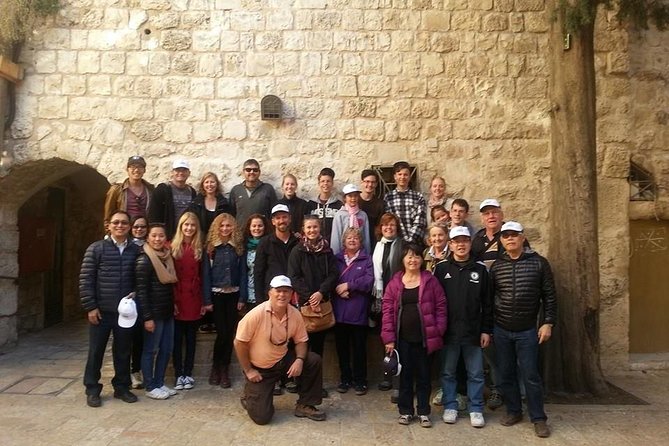
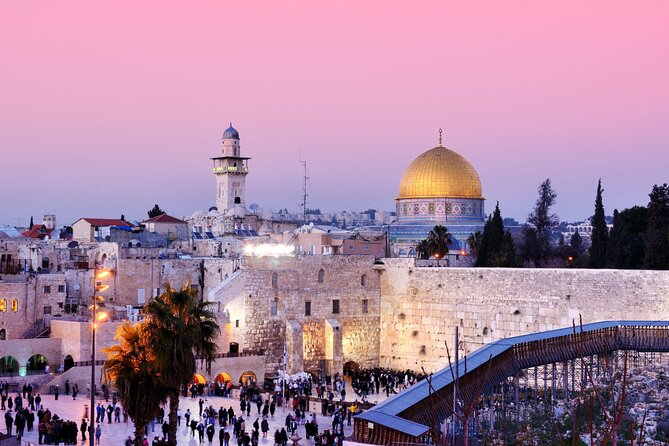
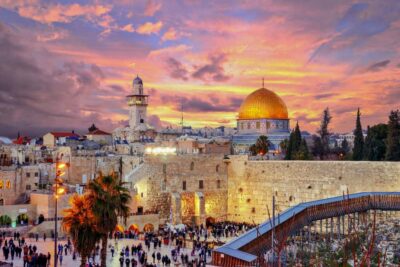
Day four is the tour’s most concentrated Jerusalem day. You enter the Old City and visit the Western Wall, one of the few surviving sections associated with the retaining walls of the Second Temple complex.
From there, the route follows the Via Dolorosa toward the Church of the Holy Sepulchre. The church contains traditional sites connected with the Crucifixion and the Tomb of the Resurrection. The visit is important for Christian pilgrims, but even nonreligious visitors will find the narrow lanes, competing traditions, and layered buildings compelling.
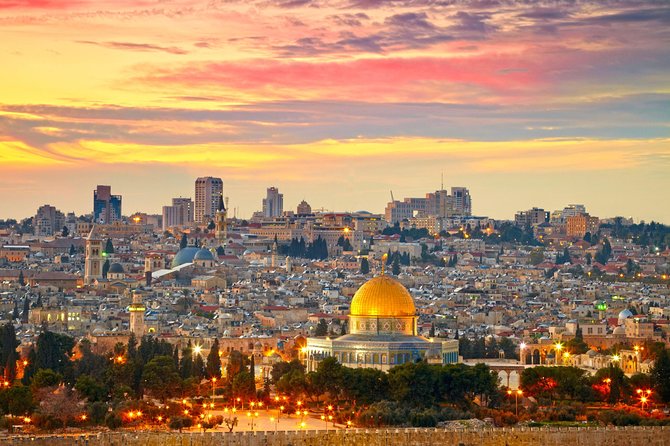
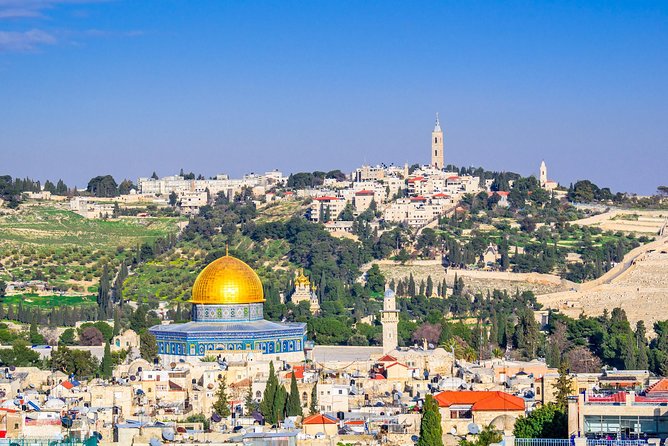
Mount Zion adds the traditional tomb of King David and the Room of the Last Supper. Then the coach takes you to the Mount of Olives for a broad view across Jerusalem.
The viewpoint is one of the clearest ways to understand the city’s geography. You can see the Old City below and place many of its major religious sites in relation to one another. At the Garden of Gethsemane, the stop is shorter, about 30 minutes.
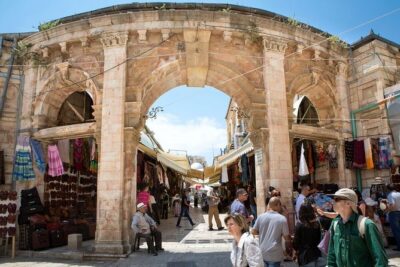
The day ends at Mahane Yehuda Market. This is a smart choice because it brings you into present-day Jerusalem after a day focused on sacred history. The market is filled with food stalls, produce, aromas, and lively trading. It gives you a chance to see how the city eats and socializes now.
The main limitation is walking time. The Old City has uneven paving, narrow passages, and crowds. Comfortable shoes are essential, and you should be ready to stay with the group.
Beit She’an, the Golan Heights, and the Sea of Galilee
On day five, you leave Jerusalem and travel north through the Jordan Valley. The route passes near Jericho, but Jericho is described as a drive-by rather than a full sightseeing stop. If Jericho is a priority, do not assume this tour gives you time to explore it.
Beit She’an National Park is the main stop. The Roman ruins are unusually well preserved, and the visit gives you a look at streets, public buildings, and the scale of a Roman city. The scheduled hour is brief, so you will see the principal remains without having time to inspect every corner.
The route then climbs toward the Golan Heights. Here you get a wine-country visit with a tour and tasting, along with views toward Mount Hermon and Syria. The area also includes Druze villages and former Syrian fortifications, giving the drive a mix of food, scenery, and recent military history.
The day ends in Tiberias on the Sea of Galilee. Tiberias is one of Judaism’s four holy cities and is linked with the compilation of the Talmud. The stop is more of an orientation than a long city visit.
Expect substantial coach time on this day. That is the tradeoff for reaching the north without adding several extra nights.
Capernaum, Tabgha, and Nazareth
Day six follows the Christian sites around the Sea of Galilee. At Capernaum, you visit the ruins of the ancient synagogue at Kfar Nahum National Park. The scheduled visit is about 50 minutes, enough for a guided look at the remains and their setting by the lake.
Tabgha is associated with the traditional site of the miracle of the loaves and fish. The Mount of Beatitudes is linked with the Sermon on the Mount. These sites are close in theme, but each has its own religious tradition and setting.
The stops are short, which helps the group cover several places but leaves little room for quiet reflection. If you are visiting for religious reasons, note the sites you most want to study before the day begins.
Nazareth receives about two hours. The Church of the Annunciation is the main focus, along with other Christian sites. This is one of the better-balanced stops in the northern section because the city visit has enough time for a proper introduction.
Akko, Haifa, Caesarea, and the flight to Eilat
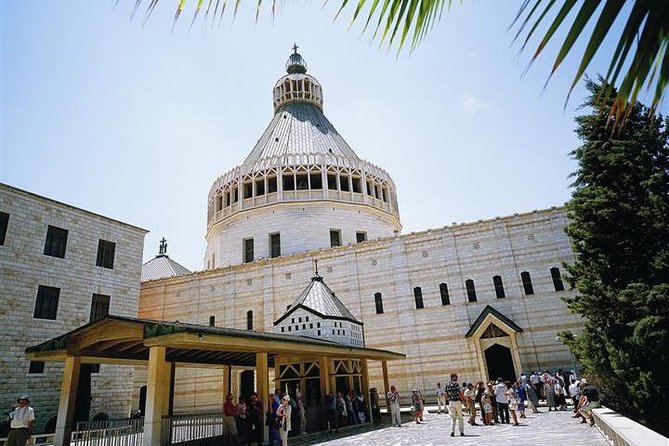
Day seven moves west through Galilee to Akko, also called Acre. The old town preserves Crusader fortifications and medieval defenses. The stop lasts about 40 minutes, so you get a quick look rather than a long wander through the old streets.
In Haifa, you go up Mount Carmel for views over the city, Haifa Bay, the Baha’i Shrine, and the Persian Garden. The viewpoint is the main attraction, and the short stop works well for photographs and orientation.
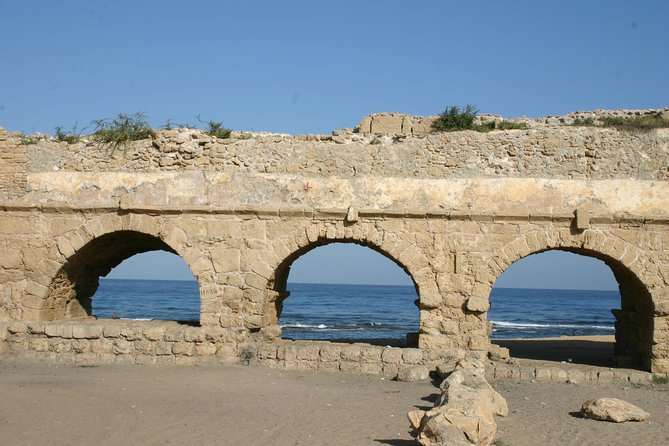
Caesarea follows along the Mediterranean coast. Herod the Great developed the city, and the archaeological park includes a Roman theater and Crusader fortress. This is a useful contrast with Jerusalem and Galilee because it shows Israel’s Roman and coastal past.
After Caesarea, you continue to Ben Gurion Airport for the short flight to Ramon Airport near Eilat. The flight saves a long overland journey to the Red Sea, but it also makes this a tiring day. You finish with a transfer to Eilat, where you spend the night before Petra.
Some departures may include shopping stops, and the schedule has limited room for delays. Ask at the beginning how much time is planned for shopping so you know what to expect.
Petra and Aqaba, a long but worthwhile final excursion
Day eight is the biggest day of the tour. You leave Eilat after breakfast, cross the Arava border into Jordan, and drive through the desert toward Petra, passing near Wadi Rum.
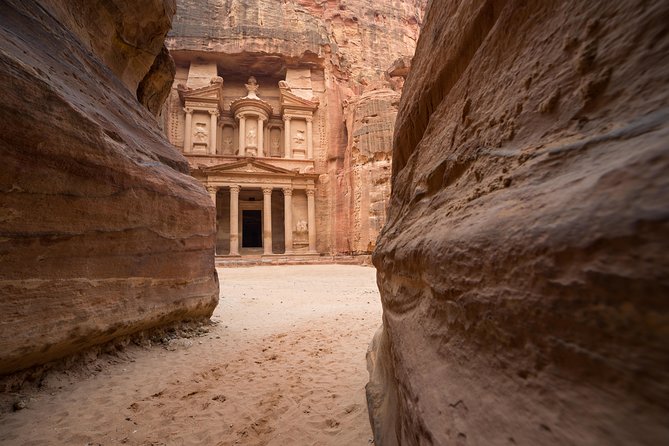
Petra begins with the Siq, a narrow passage between rock walls. At its end, the Treasury appears suddenly, framed by the gorge. This reveal is one of the great moments of the visit, but Petra is much larger than the Treasury.
You continue past tombs, monuments, and the amphitheater, which once held about 3,000 spectators. The site is carved into the mountains, and even the short route requires considerable walking. The visit is scheduled as part of a 10-hour day, so plan for heat, uneven surfaces, and a long return journey.
Lunch is provided in Wadi Musa, the modern town beside Petra. You also stop at Moses Spring before continuing to Aqaba for a short city tour and time near the Red Sea.
The Petra day is included in the overall tour, but border and visa fees are not. Every person going to Petra needs a visa to enter Jordan, and passport information is required at booking. Check those requirements carefully before paying, since a problem at the border can affect the entire day.
For many people, Petra alone justifies the extra logistics. For others, the 10-hour schedule and border crossing may feel too demanding. The tour gives you access to the major sights, but not the time for a slow, detailed Petra visit.
Hotels, meals, transport, and pace
You can choose from several hotel standards, which is helpful at this price point. The exact comfort level depends on the category you select, so compare carefully rather than treating all hotel options as equal.
Eight breakfasts and two dinners are included. Other meals are generally your responsibility, though lunch is described during the Petra day. Budget extra for meals, drinks, tips, and personal purchases.
The air-conditioned coach is important. Several days involve long drives, and the coach keeps the group together while the guide explains the regions you pass through. The maximum group size of 40 is manageable for a large escorted tour, but it will not feel intimate.
This trip is best for you if you want to cover many major sites in one booking and prefer organized transport. It is less suitable if you want free time, spontaneous detours, or a quiet pace.
Should you book this Israel and Petra tour?
Book it if you want a broad first look at Israel with Petra added, and you are comfortable with early starts, long drives, short site visits, and a large group. The strongest parts are Masada and the Dead Sea, the full Jerusalem day, the northern route, and the chance to reach Petra without arranging several separate tours.
Think twice if you want every advertised region treated equally. Jericho is passed rather than toured, and sites such as Banias, Ashdod, Ashkelon, and Beersheba are not part of the route described here. You should also ask about shopping stops and confirm the Jordan visa and border costs before booking.
At $2,462, the value is strongest for an active sightseer who would otherwise need to arrange hotels, intercity transport, airport transfers, flights to Eilat, and a Petra excursion separately. If that sounds like your ideal trip, this is an efficient and impressively wide-ranging choice. If you prefer depth over coverage, choose a slower itinerary with fewer regions.
FAQ
How long is the tour?
The tour lasts approximately nine days and includes eight nights of accommodation. Day nine is a departure transfer to Ben Gurion Airport.
Where does the tour begin?
The tour begins with an airport pickup at Ben Gurion Airport in Tel Aviv on the designated arrival day.
Is airport transportation included?
Arrival and departure transfers in Tel Aviv are included on the designated tour dates. Transfers are not provided if you arrive before the tour or leave after it.
Is Petra included?
Yes. The tour includes the Petra excursion from Eilat, including transport, the guided visit, lunch in Wadi Musa, Moses Spring, and a short Aqaba city tour.
Are Jordan visa and border fees included?
No. Border and visa fees for the Petra day are not included. All people traveling to Petra need a visa to enter Jordan.
How many people can be in the group?
The tour can have a maximum of 40 people.
Are flights included?
Yes. Return flights between Tel Aviv and Eilat are included in the tour price.
What meals are included?
Eight breakfasts and two dinners are included. Lunch is provided during the Petra day, while other meals are generally not included.
Other ways to reach the Dead Sea from Israel
- From Tel Aviv: Masada & Dead Sea Full Day Tour with Pick Up
★ 4.5 · 1,496 reviews - Masada and the Dead Sea Day Trip from Tel Aviv
★ 4.5 · 1,014 reviews - From Jerusalem: Masada & Dead Sea Full Day Tour with Pick Up
★ 4.5 · 815 reviews - Masada and the Dead Sea Day Trip from Jerusalem
★ 4.5 · 757 reviews
More Petra and Jordan trips from Israel
- Day Tour to Petra from Eilat
★ 4.0 · 237 reviews - 2-Day Petra Tour from Jerusalem
★ 4.5 · 212 reviews - 2 Day Tour to Petra and Wadi Rum from Tel Aviv
★ 4.0 · 154 reviews - Day Tour to Petra by Bus from Tel Aviv
★ 3.5 · 149 reviews
Just added in Israel
- A Day of Spiritual Discovery in the Upper Galilee★ 5.0 · 7 reviews
- Tour The Mystical City Of Safed★ 5.0 · 11 reviews
- Galilean Cooking Workshop 2-4 particpants★ 5.0 · 27 reviews
- Kabbalah Heritage Walk★ 5.0 · 23 reviews
- Sea of Galilee – Off the Beaten Track★ 5.0 · 3 reviews
- private Full-day Tour to Jericho + the Dead Sea★ 5.0 · 3 reviews
- Druze Culinary Tour of the Western Galilee★ 5.0 · 6 reviews
- VIP Tel Aviv airport Terminal 3 Fast Track Skip Line From plane★ 4.5 · 9 reviews
Dead Sea Tours, compared.
Masada & Dead Sea Full Day Tour with Pick Up
Read our review →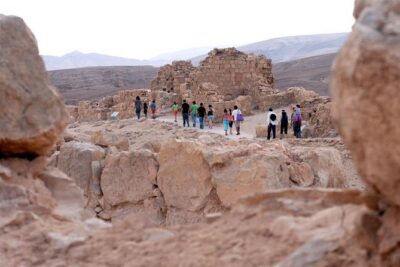
Masada and the Dead Sea Day Trip from Tel Aviv
Read our review →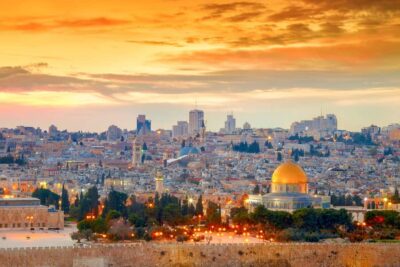
Masada and the Dead Sea Day Trip from Jerusalem
Read our review →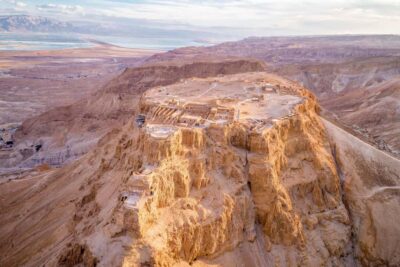
Browse the lists this tour appears in