
Reviewed · TOURS IN JERUSALEM
Jerusalem: Meet the Orthodox Jews Tour
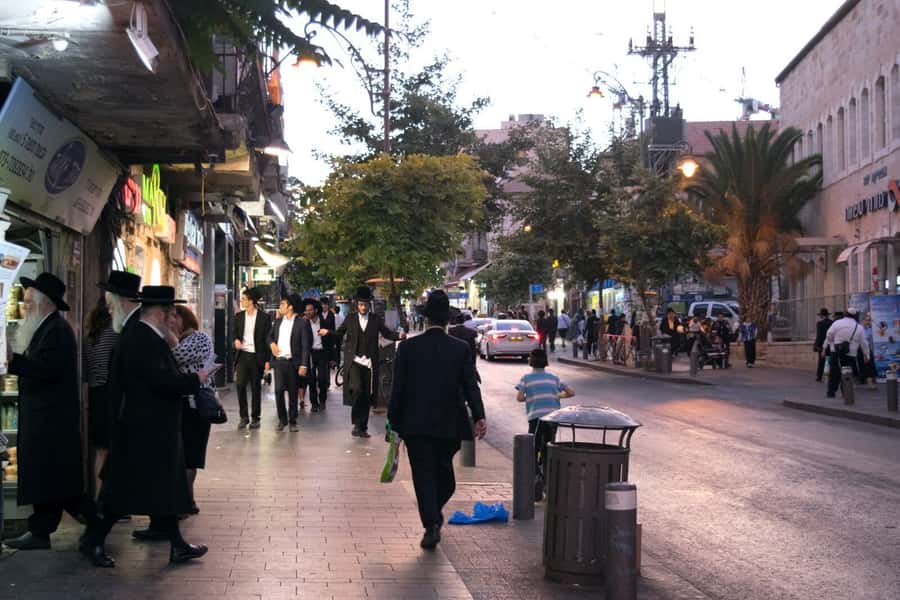
Jerusalem’s ultra-Orthodox neighborhoods can feel like a world set apart, even though they sit close to the city’s main streets. This 150-minute walking tour gives you a rare look at that world through a former community member who can explain not only what you see, but why it matters.
I like two things right away: the guide’s personal background makes difficult subjects easier to discuss, and the walk focuses on ordinary places such as a bakery, bookstore, clothing shop, restaurant, synagogue, and yeshiva. You get daily life, not just religious symbols. The main drawback is that some sites cannot be entered, and street noise can make it hard to hear the guide at times.
The tour costs $53 per person, a fair price for a small-scale cultural experience with a live English guide. Come dressed modestly, bring water and a hat, and leave room for honest questions.
Key points to know before you book
- Hear from a former insider: Your guide grew up in, or belonged to, the ultra-Orthodox community and can explain its customs from personal experience.
- Walk through a rarely visited neighborhood: The route takes you beyond the usual Jerusalem sightseeing circuit and into a traditional local area.
- See daily life from the street: Look for bakeries, shops, restaurants, synagogues, yeshivas, and religious signs along the route.
- Ask about sensitive subjects: Marriage, women’s roles, media, charity, kosher food, phones, Sabbath, and modern Israeli society are all part of the discussion.
- Dress for the setting: No shorts or bare shoulders. Women should bring a scarf or shawl.
- Plan for a walking tour, not a series of indoor visits: Some locations are closed to outsiders or forbidden to enter, so your guide explains them from outside.
Why this neighborhood walk is different
Many Jerusalem tours introduce you to major religious sites, ancient walls, and famous viewpoints. This one takes a different route. Its subject is a living community and the rules, habits, and choices that shape daily life inside it.
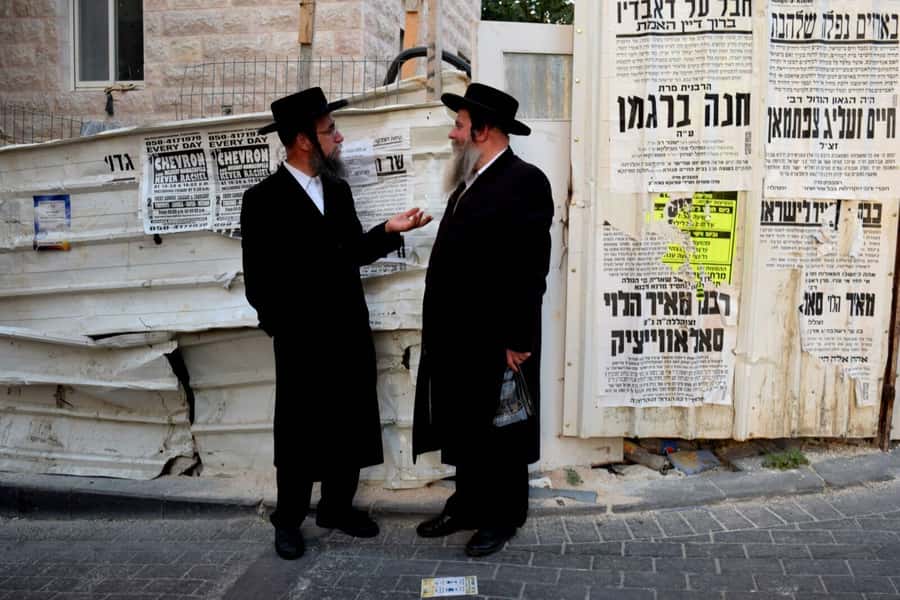
You walk through a traditional ultra-Orthodox neighborhood that is not usually part of a tourist’s Jerusalem plan. The value is not simply seeing people in distinctive clothing. Your guide helps you read the setting: religious symbols, storefronts, community spaces, and the way public life reflects religious practice.
That difference matters. From the outside, it is easy to make quick judgments about a community that follows strict customs. A guide with first-hand experience can provide context and explain the reasons behind practices that may otherwise seem puzzling.
This is also a discussion-based tour. You are encouraged to ask questions, including personal or difficult ones, as long as you do so with respect. The strongest part of the experience is likely to be the exchange between guide and group, not any single stop.
Other trips people book in Jerusalem:
- From Jerusalem: Masada & Dead Sea Full Day Tour with Pick Up
★ 4.5 · 815 reviews - Masada and the Dead Sea Day Trip from Jerusalem
★ 4.5 · 757 reviews - From Jerusalem: Nazareth and Sea of Galilee Tour
★ 4.5 · 588 reviews
Starting near Ha-Nevi’im Street
The meeting point is the bus stop outside Abraham Jerusalem at Ha-Nevi’im Street 67. Abraham Jerusalem is currently closed, so do not rely on entering the hostel for directions or waiting inside.
The activity lasts 150 minutes. That is long enough for a proper neighborhood walk and a substantial conversation, but short enough to fit beside other Jerusalem plans. You should arrive ready to walk outdoors for most of the session.
The supplied information does not give a detailed route map or group size. That means the exact order of stops may vary. Your guide may pause longer at a particular shop, street corner, or community building if it helps answer the group’s questions.
Meeting a guide with an insider’s view
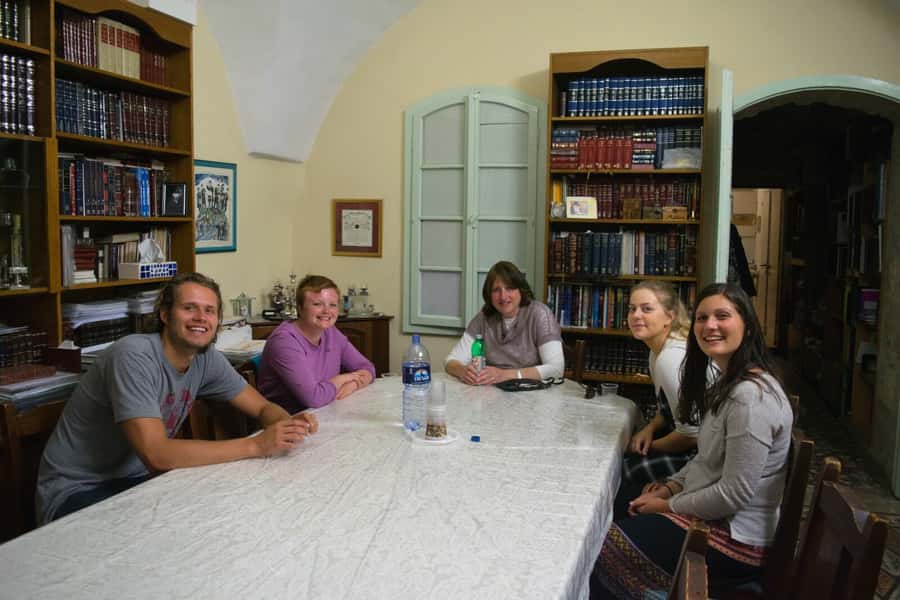
The guide is a former member of the local ultra-Orthodox community. That personal connection is the heart of the tour. You are not simply hearing a general explanation of Orthodox Judaism from a distance. You are hearing about a social world the guide once knew from within.
One guide named in participant feedback is Moti. The experience is described as warm, humorous, open to difficult questions, and able to handle disagreement calmly. Since guide assignments can change, you should think of Moti as an example of the kind of personal perspective associated with the tour rather than a guaranteed guide for every departure.
The guide’s background also adds balance. Someone who has left the community may be able to explain both its appeal and its pressures. One particularly moving part of the tour can be the guide’s own account of leaving the ultra-Orthodox way of life.
That personal story is not a substitute for hearing from people who remain in the community. It is one perspective, shaped by a major life change. Still, it can help you understand why some members stay, why others leave, and why the subject deserves more care than a quick tourist snapshot.
Reading the streets, shops, and religious signs
The route takes you past the kinds of places that reveal how a community functions day by day.
A traditional bakery can help explain food customs and the practical side of kosher observance. A bookstore and music store offer clues about the material people read, listen to, and share. A clothing shop can help you understand modest dress and the difference between clothing as personal style and clothing as a public religious marker.
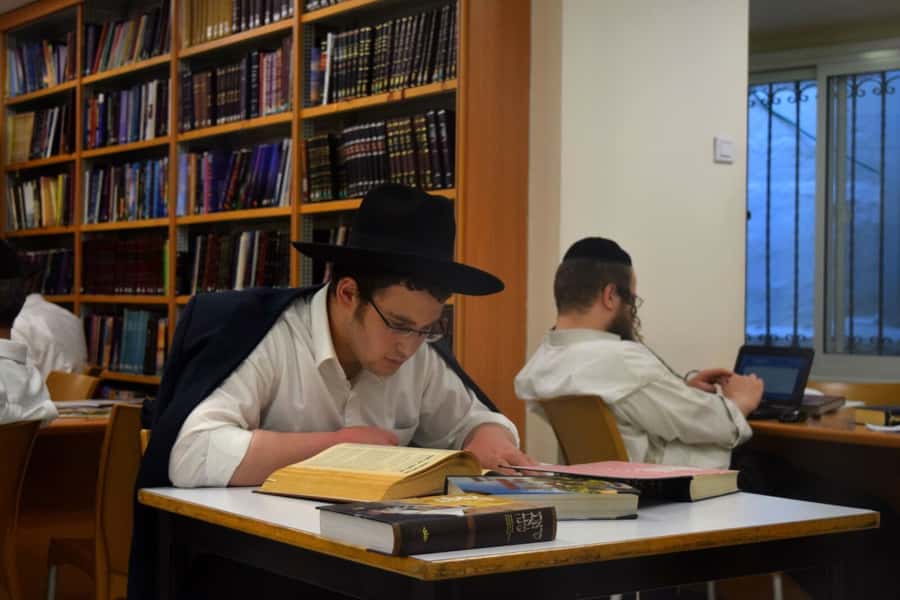
You may also see a restaurant, synagogue, yeshiva, and other community sites. A yeshiva is a center for Jewish study, and its presence points to the central place of religious learning in ultra-Orthodox life. The synagogue is not just a building to photograph. It is part of the neighborhood’s daily rhythm and communal structure.
Your guide also points out significant religious symbols and explains customs as you go. This is where the walking format works well. Instead of hearing a lecture in a room, you connect the explanation to actual streets and buildings.
Do not expect to enter every place. Some businesses or religious sites cannot be visited by outsiders, and the local community forbids entry in certain cases. You will sometimes look from the street while the guide explains what happens inside. That limitation is worth accepting because respecting local boundaries is part of having a responsible cultural experience.
Same base, a different sort of day:
- Nazareth and the Sea of Galilee Day Trip from Jerusalem
★ 4.5 · 446 reviews - From Jerusalem: Masada&Dead Sea Tour INCLUDING ENTRANCE FEES
★ 4.3 · 392 reviews - Jerusalem: Guided Walking Tour of the Old City
★ 4.7 · 386 reviews - Full Day City Tour of Jerusalem
★ 4.1 · 367 reviews
The questions that give the tour its depth

The subject matter goes well beyond clothing and architecture. You can discuss marriage, family life, and the role of women. You can ask about media, phones, charity, kosher food, the Sabbath, and religious holidays.
These topics are useful because they show how religious rules shape practical decisions. A question about phones, for example, may lead to a wider discussion of technology, privacy, entertainment, and contact with the outside world. A question about the Sabbath can open up the relationship between religious time and the modern Israeli workweek.
The tour also looks at the current place of the ultra-Orthodox sector in Israeli society. That gives the walk a present-day focus. You are not only learning about old customs. You are considering how a distinct community lives within a modern state and negotiates its relationship with the wider public.
The best approach is to ask open questions rather than treat the guide as a spokesperson for every ultra-Orthodox person. The community is not one single personality. Your guide can explain personal experience, common customs, and wider issues, but you should listen for nuance.
What you may not see from the inside
The activity is primarily an outdoor walking tour. It is not designed as a chain of private visits into homes, schools, shops, or synagogues.
That may disappoint you if you expect access to restricted spaces. It can also be a strength. You are not being given a staged display made for tourists. The neighborhood remains a real place with its own rules, and the tour works within those rules.
One practical issue is sound. A participant found that street noise sometimes made it difficult to hear and suggested headsets. If hearing every word is important to you, stay close to the guide and ask politely for repetition when needed. The discussion is central, so positioning yourself near the guide can make a real difference.
There is also limited time for simply wandering. The route lasts two and a half hours, but the guide has a lot to explain. If you want long pauses for shopping, photography, or independent exploration, this may feel structured. Think of it as a guided conversation on foot rather than free time in a neighborhood.
Dress and behavior matter here
Modest clothing is required. Do not wear shorts or sleeveless shirts, and avoid bare shoulders for both men and women. Women should bring a scarf or shawl.
These instructions are not minor packing advice. They are part of showing respect in a setting with clear community standards. If you arrive dressed for a hot beach day, you may not be able to take part comfortably.
Bring water, a hat, and a camera. Use the camera thoughtfully. The information provided does not set out a detailed photography policy, so ask your guide before photographing people, religious activity, or private-looking spaces.
A respectful attitude is just as important as suitable clothing. You are welcome to ask direct questions, but aim for curiosity rather than confrontation. The guide is there to explain a complex community, not to provide a debate stage.
Is $53 a good value?
At $53 per person, this is not the cheapest way to spend 150 minutes in Jerusalem. You can walk many neighborhoods on your own for free. The price pays for access to a former insider’s explanations, a planned route, and the chance to ask questions that guidebooks cannot answer in real time.
The value is strongest if you want cultural context. If you are mainly looking for famous buildings or dramatic photographs, a standard city walk may suit you better. If you want to understand how religion affects food, clothing, study, family life, weekly routines, and public identity, the price is easier to justify.
Food and drinks are not included. Plan to eat before or after the tour, and carry water with you. The activity does not promise tastings or shopping stops, even though you may see bakeries, restaurants, and stores along the way.
The booking terms also give you some flexibility. You can cancel up to 24 hours in advance for a full refund, and you can reserve now and pay later. Starting times vary, so check availability when choosing your date.
Who will get the most from this experience?
I would recommend this tour to you if you enjoy asking questions and listening to personal stories. It suits visitors who want more than a surface-level look at religious life in Jerusalem.
It is especially useful if you have wondered about:
- Why ultra-Orthodox communities follow distinctive clothing and food customs
- How marriage and women’s roles are understood within the community
- How Sabbath observance affects ordinary life
- How the community approaches phones, media, education, and charity
- How ultra-Orthodox Jews fit into modern Israeli society
- Why some people leave the community and how that decision changes a person’s life
The tour can also be valuable if you arrive with strong assumptions. A thoughtful guide may help you replace quick judgments with a more accurate picture of how people understand their own choices.
I would be more cautious about booking it if you dislike walking, want guaranteed indoor access, or prefer a quiet tour with little discussion. The experience depends heavily on the guide’s ability to explain and on your willingness to participate.
What the strongest feedback tells you
The most consistently praised feature is the guide’s personal insight. The former-member perspective is repeatedly described as informative, open, and unusually direct. Several participants considered the tour one of their best experiences in Israel.
The emotional response is also notable. For some people, hearing the guide’s account of leaving the community changed how they viewed ultra-Orthodox Jews. That does not mean every visitor will have the same reaction, but it shows the tour can go beyond facts and challenge preconceptions.
The guide’s handling of difficult questions receives particular emphasis. You are not expected to agree with every interpretation, and the experience appears designed to allow a frank exchange without turning hostile.
The one clear criticism concerns practical delivery: more time to look around and audio equipment might improve the walk. Keep that in mind if you have hearing difficulties or want plenty of unscheduled time.
Should you book the Meet the Orthodox Jews Tour?
Book it if you want a personal, candid introduction to a part of Jerusalem that many visitors only observe from the outside. The former insider guide, discussion of sensitive subjects, and street-level examples make this more useful than a simple neighborhood pass-through.
Go with modest clothing, water, and an open mind. Expect to spend much of the 150 minutes walking and listening, with some locations viewed only from the outside. At $53, it is good value for cultural understanding, but less suitable if your priority is entry to historic sites, food, or independent browsing.
FAQ
Where does the tour meet?
Meet at the bus stop outside Abraham Jerusalem at Ha-Nevi’im Street 67 in Jerusalem. Abraham Jerusalem is currently closed.
How long does the tour last?
The tour lasts 150 minutes, or two and a half hours.
What language is the tour in?
The live guided tour is conducted in English.
What does the tour include?
It includes a guided walking tour in Jerusalem through a traditional ultra-Orthodox neighborhood.
Is food included?
No. Food and drinks are not included.
Can I enter the shops, synagogue, or yeshiva?
Not always. Some places cannot be entered because access is forbidden by the local community. In those cases, the guide explains the site from outside.
What should I wear?
Wear modest clothing. Shorts and sleeveless shirts are not allowed, and both men and women should cover their shoulders. Women should bring a scarf or shawl.
What should I bring?
Bring a hat, water, and a camera.
Can I cancel the booking?
Yes. You can cancel up to 24 hours in advance for a full refund.
Can I reserve now and pay later?
Yes. The activity allows you to reserve your place and pay later.
Just added in Jerusalem
- 2-Day Northern Israel Tour from Jerusalem: Golan Heights, Nazareth and the Sea of Galilee★ 4.5 · 9 reviews
- Golan Heights Day Trip from Jerusalem★ 4.5 · 20 reviews
- Skip the Line:1.5Hour AudioTour – Yad Vashem Holocaust Remembrance Center Ticket★ 4.5 · 59 reviews
- Bethlehem Half Day Private Tour – Pick up from Jerusalem/Tel Aviv/Ashdod★ 5.0 · 54 reviews
- City of David and Underground Jerusalem Day Tour★ 4.5 · 53 reviews
- Full-Day Private and Guided Tour of the Jerusalem’s Old City★ 5.0 · 43 reviews
- Judean Desert Jeep Adventure from Jerusalem★ 4.5 · 50 reviews
- Jerusalem Old City★ 4.5 · 43 reviews
Tours in Jerusalem, compared.
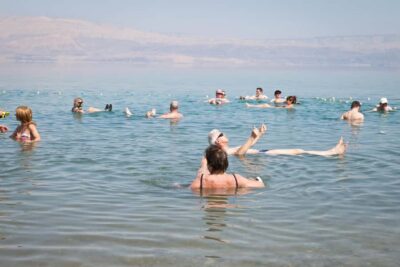

Masada and the Dead Sea Day Trip from Jerusalem
Read our review →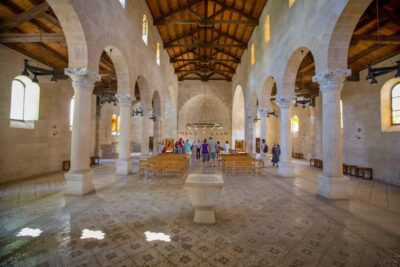
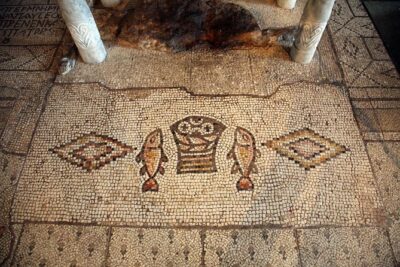
Nazareth and the Sea of Galilee Day Trip from Jerusalem
Read our review →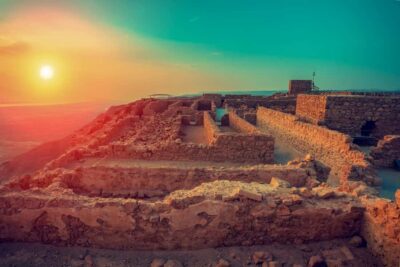
Browse the lists this tour appears in