
Reviewed · BETHLEHEM & WEST BANK TOURS
2024 Jerusalem & Bethlehem from Ashdod Port Small Groups
Jerusalem and Bethlehem in one day is a big ask, but this tour makes the most of your limited time ashore. I like the ship-timed port pickup and the small-group limit of 18, which keep the day practical. I also like the mix of panoramic views, Jewish and Christian holy places, Roman remains, and modern historical context. Guides such as Yaniv, Avi, and Abraham have led especially strong outings.
The trade-off is pace. You will cover a lot of ground in 8 to 10 hours, with several stops lasting only 30 minutes. Lunch is not included, and meal quality and price may vary, so this is best for you if seeing the major sights matters more than a relaxed, lingering visit.
Key points to know before booking
- Ashdod pickup is planned around your ship: The guide waits at the arrival-terminal exit with a COMPASS sign, then returns you to the port on a schedule tied to your ship.
- You see the major sights in both cities: Jerusalem includes the Mount of Olives, Old City, Western Wall, Via Dolorosa, Holy Sepulchre, and Cardo. Bethlehem adds the Church of the Nativity and Shepherds’ Field.
- The group can be as large as 18: That is still more personal than a large coach tour, though a microphone or earbuds would help during busy walking sections.
- This is a religious and historical tour: Expect biblical commentary, Jewish and Christian traditions, Roman archaeology, and discussion of present-day Israel.
- Dress carefully: Knees and shoulders must be covered for places of worship and selected museums. Shorts and sleeveless tops may lead to refused entry.
- The $225 price buys convenience as much as sightseeing: Port transfers, an air-conditioned vehicle, and a licensed English-speaking guide are included, while food and drinks are extra.
A long but worthwhile day from Ashdod Port
The value of this outing is simple: you avoid trying to arrange separate transport from Ashdod and get a guided route through two places that can be difficult to manage on your own. At $225 per person, it is not a bargain-basement excursion, but the price includes pickup, return transfer, transport during the day, and a government-licensed English-speaking guide.
For a cruise passenger, that convenience matters. You are not left to work out border procedures, city transfers, or the return journey by yourself. The schedule is designed around your ship’s docking, disembarkation, and re-boarding times. You must provide those details when booking.
The outing lasts about 8 to 10 hours, depending on the ship’s schedule. That makes it a full day, not a quick shore trip. You should expect a busy rhythm, with road time between cities and several walks through stone-paved areas.
The small-group format helps. The maximum is 18 people, and some departures may be much smaller. One particularly well-liked outing had a group of 10, which made the van and walking portions feel more personal. Still, the tour is not a private visit, and the Old City can make it hard to hear a guide. A microphone and earbuds would be useful, especially in crowded lanes.
Other West Bank days out of Israel:
- From Tel Aviv: Jerusalem and Bethlehem Guided Day Trip
★ 4.3 · 1,316 reviews - Tel Aviv: Jerusalem, Bethlehem & Dead Sea
★ 4.0 · 881 reviews - Day Tour to Jerusalem and Bethlehem from Tel Aviv
★ 4.5 · 720 reviews
Starting at the port with the right expectations
At Ashdod, your guide is scheduled to wait at the exit of the arrival terminal with a COMPASS sign. The group gathers there before setting out. Since a port can be confusing after disembarkation, keep your confirmation details handy and allow time to find the meeting point.
There has been at least one difficult pickup, with a passenger unable to find the group at first. That does not fit the stated pickup plan, but it is a reason to pay close attention to the meeting instructions. Look for the COMPASS sign and do not wander far from the designated exit while searching.
The vehicle is air-conditioned, a welcome detail in Israel’s warmer months. You will spend part of the day driving, so comfortable clothing and shoes are more useful than anything formal. The tour returns you to Ashdod Port at the end of the day, coordinated with the ship’s departure schedule.
Mount of Olives: Jerusalem from above
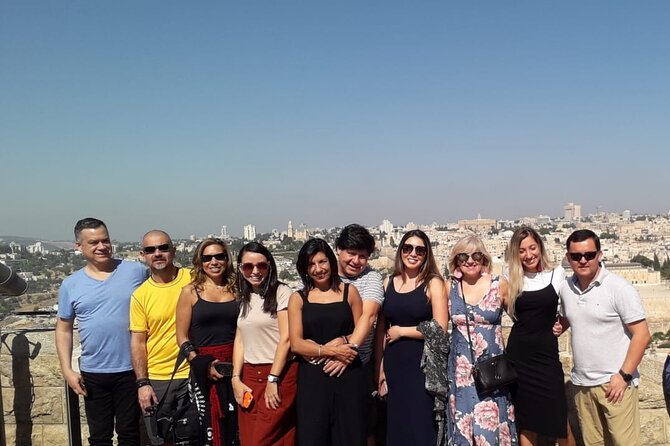
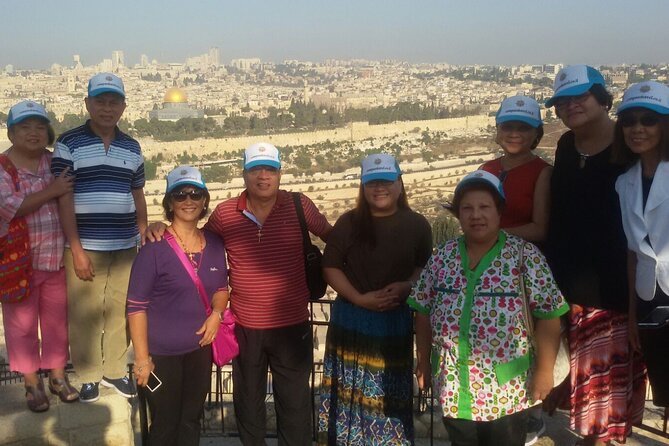
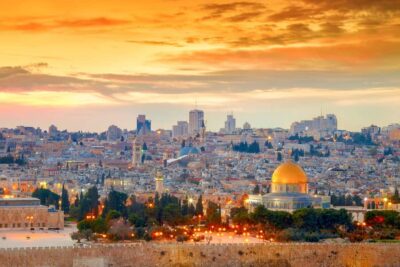
The first major view comes from the Mount of Olives. From here, you look across Jerusalem toward the Old City and the Temple Mount. The stop gives you a useful sense of the city’s shape before you enter its narrow streets.
The mountain carries major importance in Christian tradition. The New Testament connects it with Jesus’ route between Jerusalem and Bethany, his grief over Jerusalem, and his ascension. Your guide will explain those religious traditions while also helping you understand the geography.
The stop lasts about 30 minutes, so think of it as a panoramic introduction rather than a long visit. This is one of the best places on the route to pause, take in the view, and orient yourself.
Gethsemane and the meaning of sacred places
At the foot of the Mount of Olives, the tour visits the Garden of Gethsemane. Christian tradition identifies this area with Jesus’ prayer and arrest before the crucifixion. Several small olive groves on nearby church property are associated with the biblical garden.
The stop is brief, around 30 minutes, but it adds an important layer to the Mount of Olives visit. You are not only looking at Jerusalem from a distance. You are also visiting a place tied to one of the central scenes of the New Testament.
Because this is a religious site, quiet behavior and suitable clothing matter. Keep your knees and shoulders covered, and choose shoes that work on uneven stone surfaces.
Other trips ashore from Israel:
- Ashdod Shore Excursion: Jerusalem and Bethlehem – for cruise ship guests only
★ 4.5 · 149 reviews - From Ashdod Port: Jerusalem and Bethlehem Day Trip
★ 4.0 · 111 reviews - Haifa Shore Excursion: Nazareth and the Galilee – for cruise ship guests only
★ 4.5 · 109 reviews - Ashdod Shore Excursion: Jerusalem and Dead Sea – for cruise ship guests only
★ 4.5 · 104 reviews
Mount Zion, King David’s Tomb, and the Last Supper room
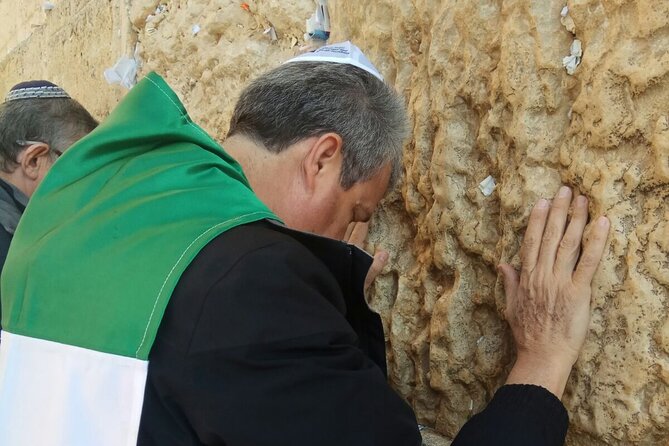
Mount Zion brings together Jewish and Christian traditions. The tour stops at King David’s Tomb and the room traditionally associated with the Last Supper.
The tomb’s identity is not certain. Biblical references place David’s burial in the City of David, below the Temple Mount, and researchers do not agree that this site is his actual burial place. That uncertainty is useful context, not a flaw. Jerusalem has many places where faith, tradition, archaeology, and later interpretation overlap.
The room linked with the Last Supper is also a traditional site rather than a place that can be proven with complete certainty. Your guide can help separate what is supported by history from what is held through religious belief.
The visit lasts roughly 30 minutes. It is short, but the stop gives you a good introduction to the way Jerusalem’s sacred geography works. Several faiths attach meaning to the same hill and the same city.
Walking the Old City and the ancient Cardo
Inside Jerusalem’s Old City, you walk through the Armenian and Jewish quarters before reaching the Cardo. This route gives you a taste of the city’s layered past without requiring a full archaeological tour.
The Cardo was a major Roman and Byzantine road. The southern section visible in the Jewish Quarter dates to the reign of Emperor Justinian, from 527 to 565, and formed part of a route linking important churches in Byzantine Jerusalem.
The exposed stonework helps you picture the city as a working Roman-era center, not only as a collection of modern religious sites. The walk also shows how Jerusalem’s quarters sit close together, with a synagogue, church, market lane, and archaeological remains often separated by only a few turns.
You have about two hours in the Old City portion of the day. That is generous compared with the shorter stops, but it still must cover several major places. Expect walking, steps, narrow lanes, and crowds.
The Western Wall and the Jewish Quarter
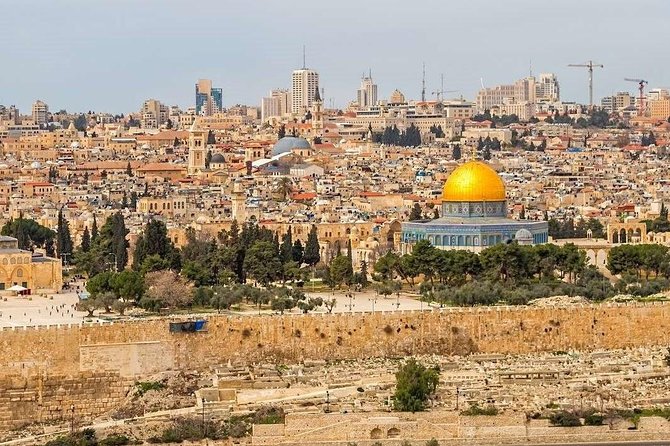
The Western Wall, also called the Kotel, is one of the most important Jewish prayer sites in the world. It is part of a much longer ancient retaining wall connected with the Temple Mount. The visible prayer area is the place where Jewish worshippers may pray closest to the Temple Mount itself.
Your guide can explain why the wall is so important and how its meaning relates to the Temple Mount. The stop is not just a photo opportunity. It is a place of active prayer, so behave respectfully and follow local instructions.
The schedule includes about an hour at the Western Wall, though the precise flow may depend on access and the group’s pace. Dress modestly. Knees and shoulders should be covered for all visitors, men and women.
Via Dolorosa and the Church of the Holy Sepulchre
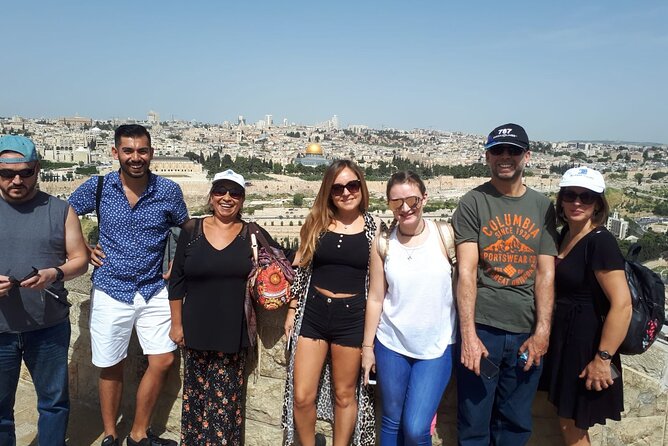
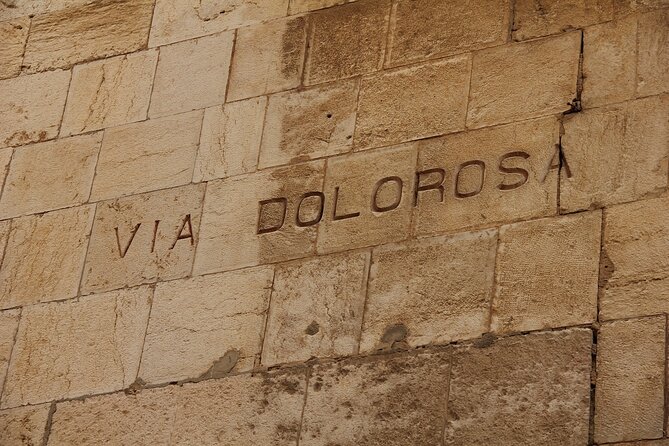
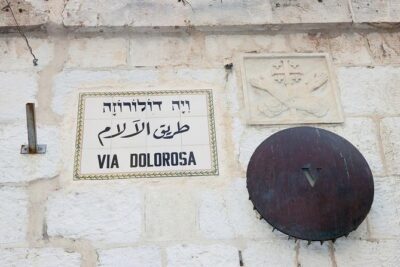
The Christian Quarter brings you to the Via Dolorosa, the processional route associated with Jesus’ path to crucifixion. The lane is narrow and surrounded by the everyday life of the Old City, which can make the visit feel less like a quiet memorial and more like a working city street.
That contrast is part of the place. Religious processions, shops, residents, and tour groups all share the same stone passageways. Your guide’s explanation helps you understand the route’s role in Christian devotion.
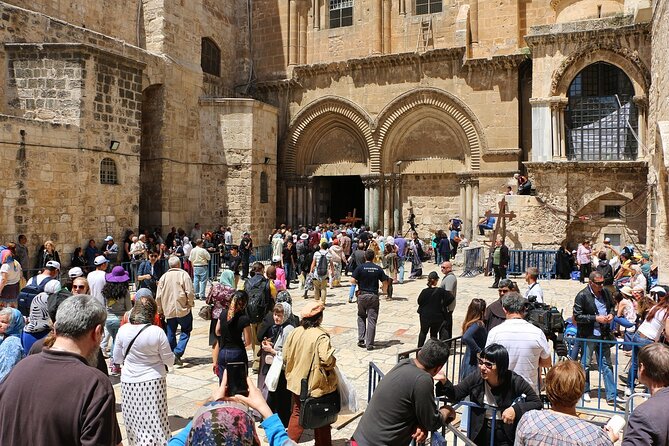
The tour then enters the Church of the Holy Sepulchre, the site identified by Christian tradition with Jesus’ crucifixion, burial, and resurrection. The church is especially important because several major events of the Passion are associated with the same complex.
You have about an hour for this part of the visit. The church can feel intense and crowded, and lines or services may affect how much you see. Keep your expectations realistic. This is not a quiet museum visit, but it is one of the most important Christian sites in Jerusalem.
Returning to the Cardo and balancing the route
The Cardo appears again as a separate stop, with about 30 minutes set aside for the Roman road. This repeated emphasis makes sense because the Cardo connects the religious story of Jerusalem with its Roman and Byzantine past.
If your main interest is religious history, this may feel like a change of pace. I see it as useful balance. Jerusalem is not only a biblical setting. It is also an ancient urban center shaped by Roman rule, Byzantine building, Jewish life, and later periods of change.
The route covers a great deal in a single day. Some people will appreciate that range. Others may wish for more time at the Western Wall or Church of the Holy Sepulchre. You should decide in advance if broad coverage or slow exploration matters more to you.
Bethlehem and the Church of the Nativity
From Jerusalem, the tour continues to Bethlehem. The Bethlehem portion includes an overview of Shepherds’ Field, a visit to the Church of the Nativity, and time at Manger’s Square.
The Church of the Nativity contains a grotto traditionally identified as the place where Jesus was born. The Gospel accounts of Matthew and Luke connect Jesus’ birth with Bethlehem, and the site has been used for Christian worship for centuries.
The church is not simply a Christmas display. Its significance comes from the long history of worship at the site and the way the grotto connects a major Christian story with a physical place. Manger’s Square provides a more open setting after the tight lanes of Jerusalem.
You should allow for a slightly different rhythm here. The Bethlehem stop is listed at about one hour, so you may see the central religious sites without having much spare time for independent wandering. Shepherds’ Field is an overview rather than a lengthy separate visit.
A local guide may join the group in Bethlehem. Past departures have included an additional Bethlehem guide who provided local explanation alongside the main guide. The added voice can help you understand the area beyond the church itself.
Lunch, clothing, and comfort
Food is not included, and lunch is not part of the $225 price. Plan to pay separately for your meal and drinks. The meal experience can vary: one outing included a good-quality lunch that felt expensive, while another restaurant choice was poorly received. Ask what the day’s lunch plan is and how much time and money you should allow.
Do not count on having a leisurely meal. This is a tightly scheduled port excursion, and the priority is returning you to the ship on time. Carry water, wear comfortable walking shoes, and avoid clothing that exposes the knees or shoulders.
The dress rule is firm for places of worship and selected museums. Smart casual clothing is required, and both men and women must cover shoulders and knees. A light layer or scarf can make it easier to meet the rule without dressing heavily all day.
Guides who add context to the day
The guide can make or break a route like this. There is little value in rushing between sacred sites if you receive only a list of names and dates. Guides who combine biblical knowledge with modern Israeli history add much more meaning to the stops.
Yaniv, Avi, and Abraham have each led departures on this route. Abraham, in particular, has been praised for connecting ancient history with present-day Israel and for choosing a pleasant lunch setting with a view of the Old City. Avi has been noted for explaining the history and cultures encountered along the route.
That does not guarantee which guide you will receive, but it gives you a sense of the strongest version of the experience. Ask questions as you go. The tour has enough historical and religious material to support a real conversation, not just a checklist of monuments.
Who should book this Ashdod shore excursion?
I would choose this tour if you have never seen Jerusalem and Bethlehem and want the broadest possible introduction during one port day. It suits you especially well if you value guided context, organized transfers, and a small group over free time.
It is also a good match for people with a strong interest in Christian, Jewish, and biblical sites. The route includes the central religious places, but it also adds Roman archaeology and explanations of modern Israel.
I would think twice if you dislike long days, frequent vehicle transfers, or fixed schedules. You will not have much time to sit in one place or explore side streets at your own speed. The Old City and Bethlehem both reward more time than this excursion can provide.
The tour is recommended by 97 percent of participants and carries a 4.9 rating from 30 reviews. Those numbers fit the experience’s strongest features: capable guides, a small group, a comfortable vehicle, and an efficient route. The weaker points are practical rather than dramatic: pickup confusion can cause stress, lunch may be costly or disappointing, and the schedule is demanding.
Cancellation is free up to 24 hours before the start time. A change or cancellation inside that window is not accepted for a refund. Poor weather or failure to reach the minimum group size can also lead to a rescheduled tour or full refund.
Should you book it?
Book this tour if Jerusalem and Bethlehem are the sights you most want to see from Ashdod and you accept that the day will be fast. The included port transfers and licensed guide make the $225 cost reasonable for a ship passenger who wants one organized outing rather than several separate arrangements.
Choose it with modest expectations about lunch and free time. Confirm your ship details, watch for the COMPASS sign, dress for religious sites, and wear good walking shoes. If you want the main holy places, strong historical commentary, and a small-group format in one day, this is a practical choice.
FAQ
How long does the tour last?
The tour lasts approximately 8 to 10 hours, depending on the ship’s anchoring and departure schedule.
Where does the tour begin?
The tour begins at the Port of Ashdod. The guide is scheduled to wait at the exit of the arrival terminal with a COMPASS sign.
Is pickup from the cruise port included?
Yes. Pickup from Ashdod Port and the return transfer to the port are included and coordinated with your ship’s schedule.
What information must cruise passengers provide when booking?
You must provide your ship name, docking time, disembarkation time, and re-boarding time.
What sights are included in Jerusalem?
The route includes the Mount of Olives, Garden of Gethsemane, Mount Zion, King David’s Tomb, the room associated with the Last Supper, the Old City, the Cardo, the Western Wall, the Via Dolorosa, and the Church of the Holy Sepulchre.
What does the Bethlehem visit include?
The Bethlehem portion includes an overview of Shepherds’ Field, the Church of the Nativity, and Manger’s Square.
Is lunch included?
No. Food and drinks, including lunch, are not included in the tour price.
What should I wear?
Smart casual clothing is required. Knees and shoulders must be covered for places of worship and selected museums, and shorts or sleeveless tops may lead to refused entry.
How large is the group?
The maximum group size is 18 people. The actual group may be smaller on a particular departure.
Just added in Israel
- A Day of Spiritual Discovery in the Upper Galilee★ 5.0 · 7 reviews
- Tour The Mystical City Of Safed★ 5.0 · 11 reviews
- Sea of Galilee – Off the Beaten Track★ 5.0 · 3 reviews
- Galilean Cooking Workshop 2-4 particpants★ 5.0 · 27 reviews
- Kabbalah Heritage Walk★ 5.0 · 23 reviews
- private Full-day Tour to Jericho + the Dead Sea★ 5.0 · 3 reviews
- Druze Culinary Tour of the Western Galilee★ 5.0 · 6 reviews
- VIP Tel Aviv airport Terminal 3 Fast Track Skip Line From plane★ 4.5 · 9 reviews
Bethlehem & West Bank Tours, compared.
Day Tour to Jerusalem and Bethlehem from Tel Aviv
Read our review →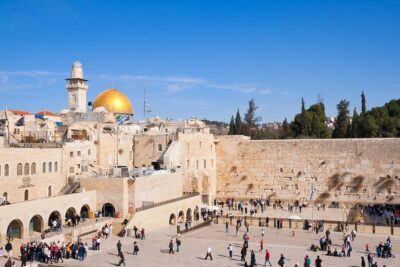
Jerusalem, Dead Sea, and Bethlehem from Tel Aviv
Read our review →
Jerusalem and Bethlehem Day Tour from Jerusalem
Read our review →
Travel to Bethlehem Half Day Guided Tour from Jerusalem & TelAviv
Read our review →
Ashdod Shore Excursion: Jerusalem and Bethlehem – for cruise ship guests only
Read our review →Browse the lists this tour appears in